


Antique Serpentine Cabinet
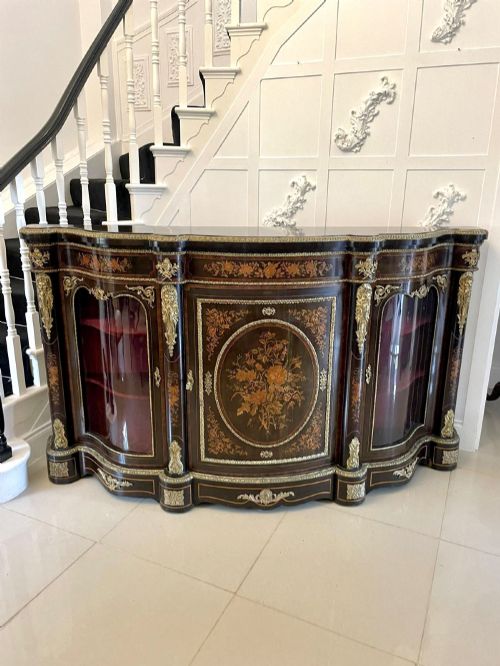
An antique serpentine cabinet brings fluid, curving grace to a room through its distinctive undulating front line.
Antique Serpentine Cabinet
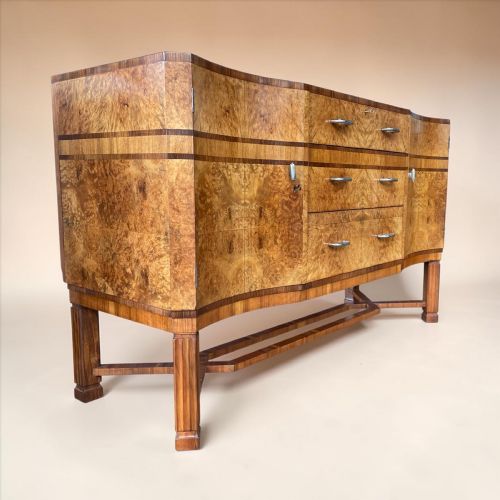
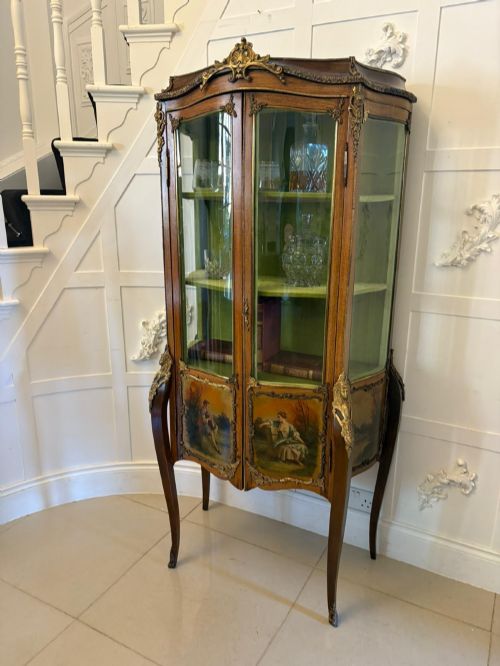
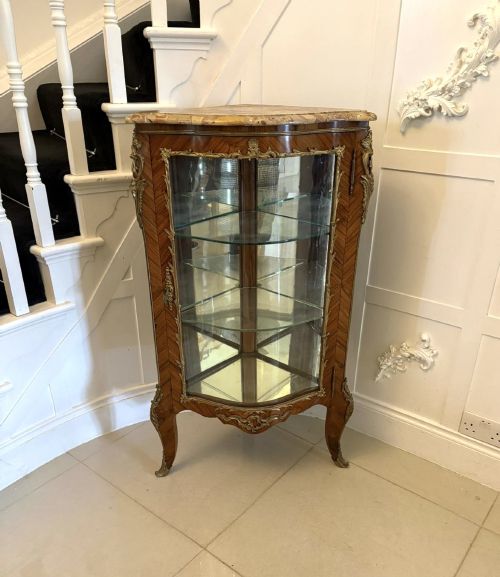
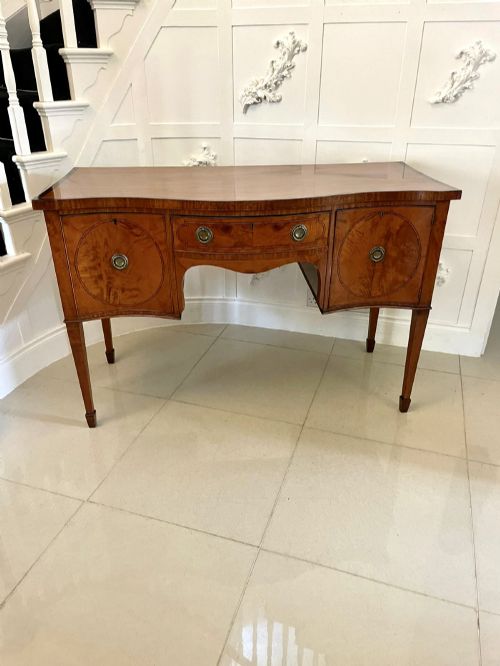
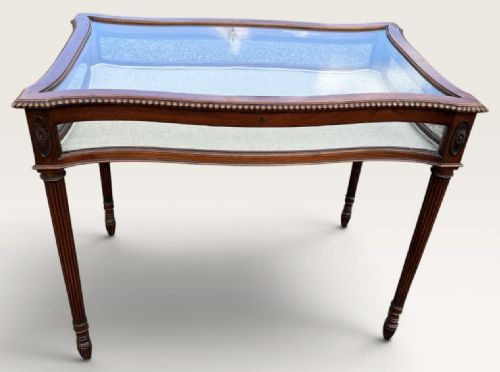
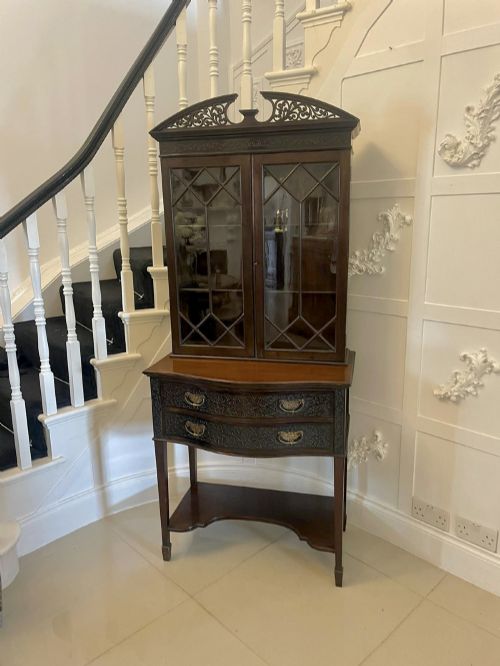
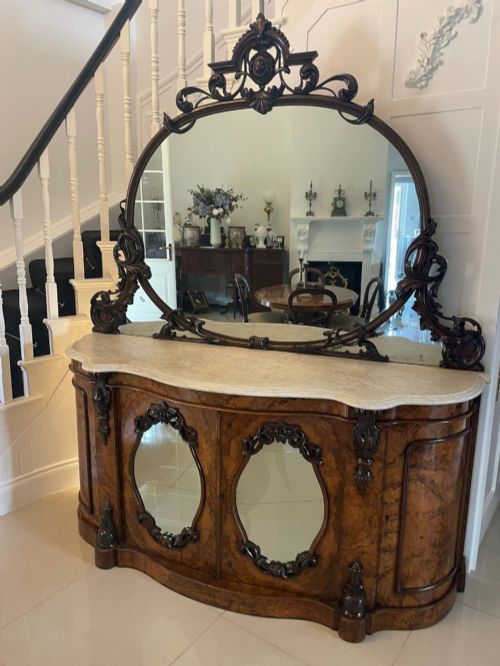
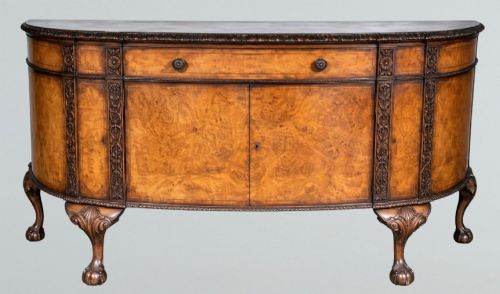
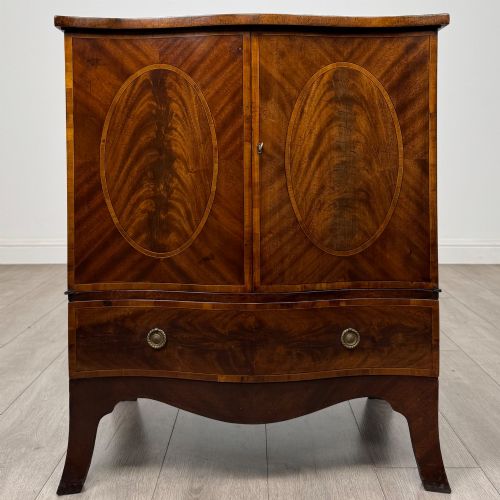
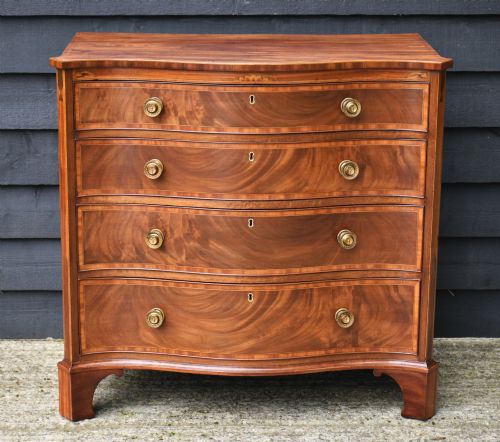
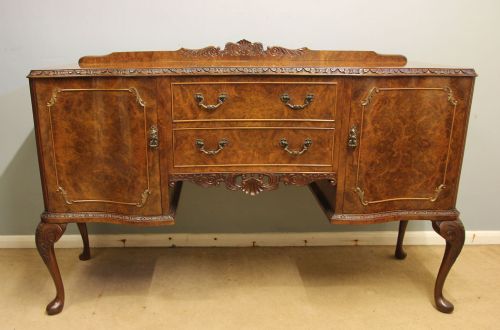
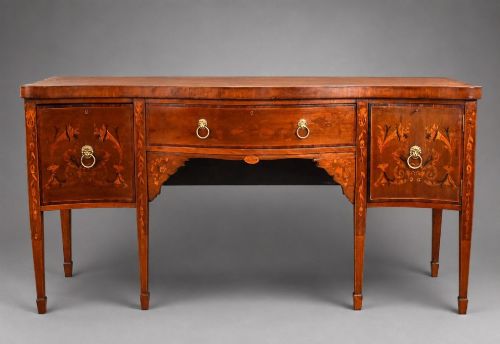
Buyers encounter numerous variations on this page, ranging from grand display cabinets and vitrines to compact bedside tables and chests of drawers. Sideboards and credenzas also adopt this curving profile, often incorporating glazed doors or marble tops.
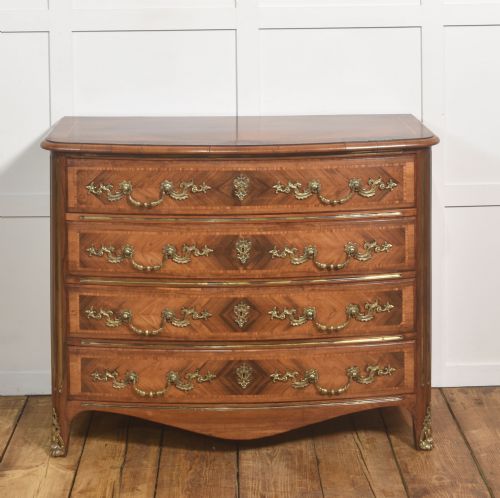
Continental workshops contributed heavily to the selection, with French Louis XV styles and Italian walnut pieces appearing frequently alongside English mahogany and burr walnut examples.
Materials and construction
Cabinetmakers relied on dense timber substrates like mahogany, walnut, and satinwood, frequently applying intricate marquetry, parquetry, and cross-banding in kingwood, tulipwood, and burr veneers. These decorative surfaces follow the complex curves of the front elevation with precise joinery.
Gilded ormolu mounts, brass hardware, and inset marble slabs frequently complete the construction of finer French and English pieces, adding weight and tonal contrast to the timber. Glass panels are shaped to fit the sweeping bends of display doors and side panels.
Several items here include hidden compartments and cutlery sets, proving past owners took their dining accessories rather seriously.
Evaluating craftsmanship
Superior execution shows in the fluidity of the curving front and the seamless alignment of veneers across the undulating drawers and doors. Lesser examples rely on heavy, blocky proportions that obscure the intended lightness of the silhouette.
The precision of the marquetry inlay and the quality of the cast ormolu mounts distinguish standard production items from exhibition pieces produced by major cabinet-making firms.
Edwards and Roberts·Maple and Co·Maison Gagneau·E. Kahn
The Antique Serpentine Cabinet Glossary
- Serpentine
- A furniture front shaped with a convex central sweep between two concave curves. This contour requires advanced woodworking skill to shape and veneer accurately.
- Ormolu
- Gilded bronze mounts applied to furniture for decoration and edge protection. These decorative elements were cast and chased by hand before gilding.
- Marquetry
- Elaborate patterns formed by fitting contrasting veneers into a timber panel. Craftsmen utilised various exotic woods to achieve pictorial or geometric designs.
- Vernis Martin
- A European lacquer technique simulating Asian lacquerware, named after the Martin brothers. It appears on specialised display cabinets and commodes.
- Vitrine
- A glass-fronted display cabinet designed for exhibiting porcelain, curiosities, or books. These pieces often feature glazed side panels to maximise internal illumination.
Antique Serpentine Cabinet: Frequently Asked Questions
What rooms suit an antique serpentine cabinet?
These curving forms work exceptionally well in drawing rooms, dining spaces, and hallways where strict linear furniture might feel too rigid. Their sculpted fronts soften corners and introduce a focal point without dominating the floor plan.
Smaller bedside variants and narrow commodes fit easily into bedrooms and landings, offering useful surface space and storage while maintaining an elegant footprint.
How do I care for marble-topped cabinets?
Marble surfaces require gentle cleaning with a damp cloth and mild, neutral soap to avoid etching the stone with acidic liquids. Avoid placing vinegar, citrus, or harsh chemical cleaners directly on the polished top.
Use protective coasters under glasses and ceramic objects to prevent scratching and staining on antique marble, ensuring the polished finish remains intact over time.
Are these cabinets difficult to clean?
Routine maintenance involves dusting timber surfaces with a soft, dry cloth along the grain to protect the veneer and polish. Avoid silicone-based polishes that can build up a cloudy residue over decades of care.
Glass panels and vitrine doors benefit from standard non-ammonia glass cleaner applied to a cloth rather than sprayed directly, preventing moisture from seeping into the surrounding wooden frames.
How can I tell Georgian pieces from later revivals?
Eighteenth-century examples often display simpler, structural joinery and native timber selections like solid mahogany, reflecting the techniques of the period. Their proportions tend to be restrained, focusing on timber figure rather than heavy ornamentation.
Revival pieces from the Victorian and Edwardian eras frequently incorporate denser marquetry, ormolu mounts, and exotic veneers like kingwood or satinwood, reflecting the eclectic tastes of nineteenth-century makers.