




Antique Security Box
These antique security box pieces are heavy utilitarian iron, steel, and timber chests designed to protect valuables, prized by collectors who appreciate functional historical engineering.
Antique Security Box
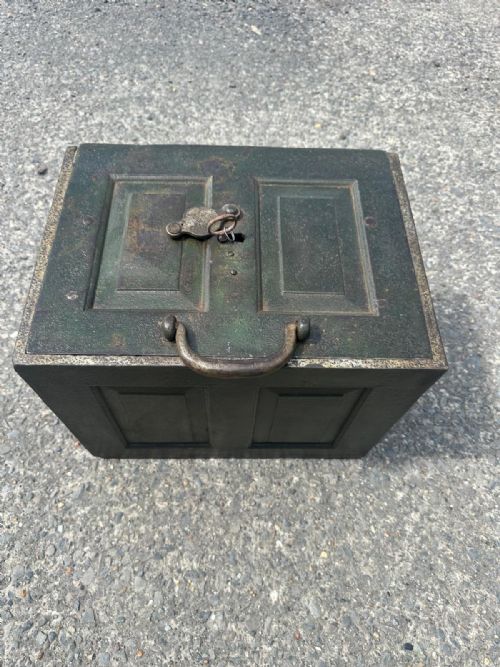
An antique security box encompasses robust iron safes, strongboxes, and cash boxes built to safeguard valuables during the Georgian, Regency, and Victorian eras. These items range from compact cash boxes designed for desks to large chest safes intended for heavier household protection.
The versions most commonly met on this page date from the nineteenth century, including Victorian industrial iterations and earlier Georgian wooden strongboxes. They reflect a period when domestic and commercial security relied on mechanical integrity rather than electronic alarms.
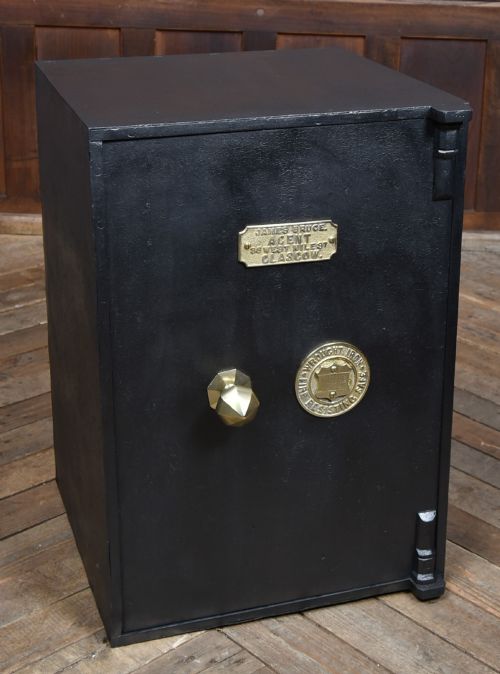
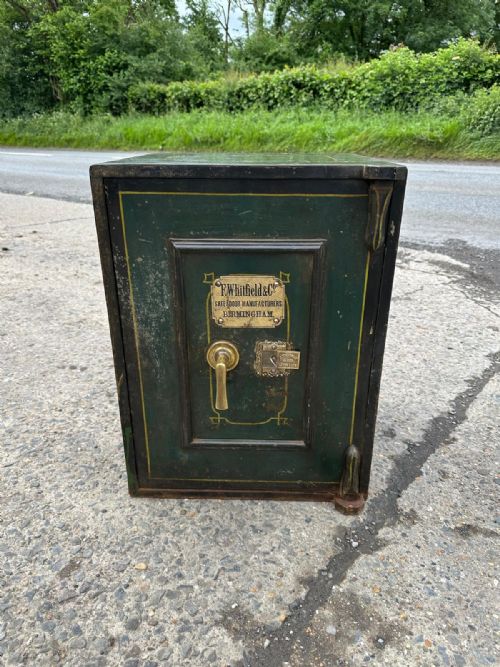
Makers and forms vary significantly across the inventory, spanning English brass-mounted specimens, French combination boxes, and heavy iron safes on bespoke stands. Each piece demonstrates the specific locking mechanisms and structural defenses favoured by its respective era.
Construction and materials
These pieces rely heavily on cast iron, steel, and wrought iron to achieve structural resilience and resistance against forced entry. Blacksmiths and manufacturers utilised these durable metals for bodies, heavy hinges, and complex internal locking mechanisms.
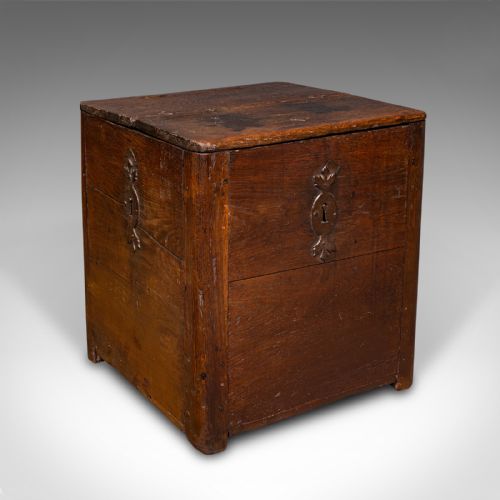
Timber such as oak, wood, and burr walnut frequently forms the exterior or core of strongboxes and chests, occasionally paired with brass and bronze mounts. Craftsmen combined these materials to produce secure containers that doubled as respectable furniture.
Materials represented across the inventory include cast iron, wrought iron, brass, bronze, oak, and burr walnut.
Assessing quality
Quality in these items rests upon the sophistication of the locking mechanism, the survival of original keys, and the preservation of original paintwork or surface colour. Superior examples retain their working combination dials, intricate levers, and maker plates without substantial modern replacement parts.
The integration of secondary cabinetry, such as walnut stands by notable firms, elevates certain models from purely utilitarian iron safes to high-status domestic items. The precision of the ironwork and the thickness of the plate further distinguish standard cash boxes from luxury fireproof safes.
James Bruce Glasgow·F Whitfield And Co·Waring And Sons·Milners·George Price
The Antique Security Box Glossary
- Strongbox
- A heavily reinforced chest designed for the secure storage of money or documents. These containers typically feature iron plating and complex locks.
- Combination safe
- A security container operated by a dial mechanism rather than a standard key. These units often utilise multiple numbered dials to restrict access.
- Cash box
- A smaller portable container utilised for holding currency and minor valuables. They frequently incorporate internal compartmentalisation and secure lid locks.
- Chest safe
- A substantial protective box combining the heavy capacity of a chest with the reinforced plate construction of a safe. They frequently sit upon dedicated stands or feet.
- Box lock
- A specialised internal locking assembly fitted directly into the lid or side of a wooden or metal chest. These mechanisms engage heavy bolts into the frame.
Antique Security Box: Frequently Asked Questions
What is an antique security box?
An antique security box is a heavy-duty container made from iron, steel, or reinforced wood, designed to protect money, documents, and valuables from theft or fire. They range from small portable cash boxes to large chest safes.
These pieces span the Georgian, Regency, and Victorian periods, showcasing the evolution of mechanical locks and heavy plate construction before the advent of modern security systems.
How do I use an antique security box today?
Many collectors utilise these heavy boxes as striking decorative furniture pieces, coffee tables, or secure storage for modern documents and valuables in the home.
Care should be taken with original keys and delicate painted surfaces to preserve the historical integrity of the locking mechanisms and exterior finish.
How do I date an antique security box?
Dating relies on identifying the materials, structural fastenings, and the style of the locking mechanism. Georgian and Regency pieces often feature oak carcasses with brass mounts, while Victorian examples lean towards heavy cast iron and steel.
Maker plates, patent dates stamped into the ironwork, and distinctive dial configurations also provide precise clues regarding the manufacturing era.
Are keys usually included with these safes?
Many listings include original working keys or period replacements that operate the complex internal lever locks and box bolts.
Because these security containers were built to restrict access, surviving keys significantly enhance the historical interest and usability of the piece.