
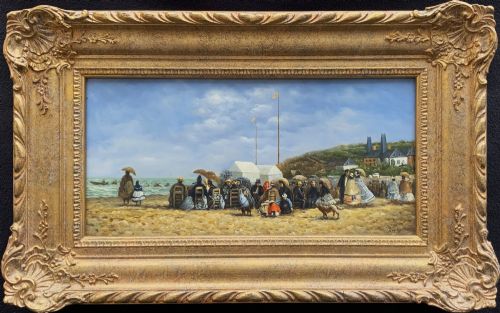

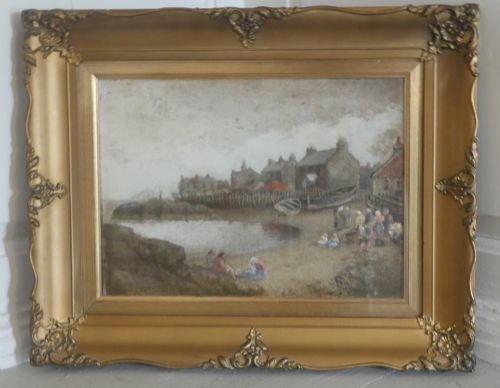

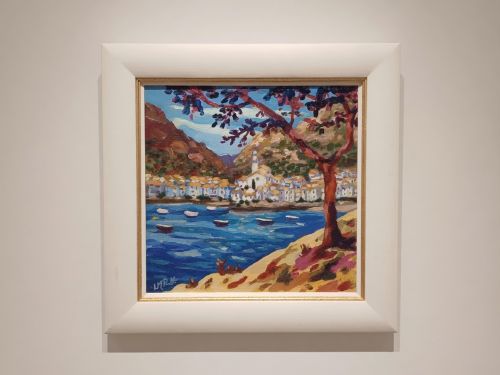
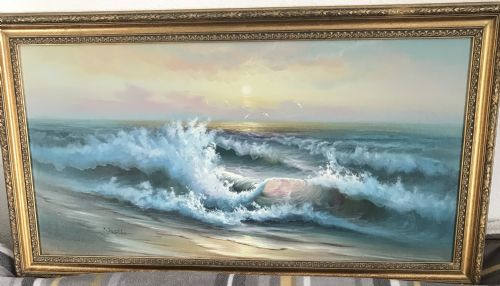


Antique Seaside Landscape
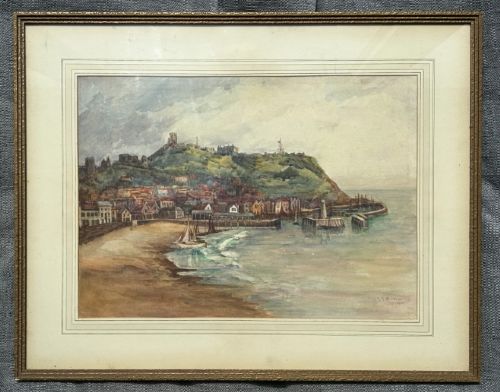
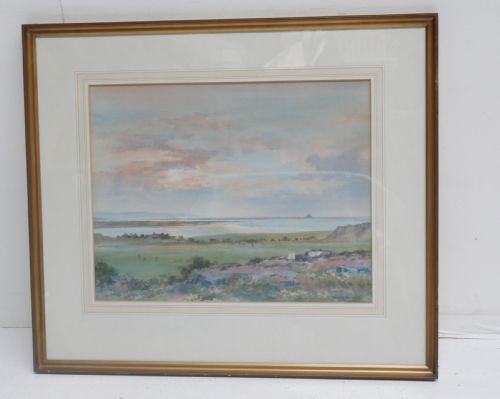
An antique seaside landscape captures coastal life and shorelines, bringing the atmosphere of harbours, cliffs and sandy beaches directly into a room.
Antique Seaside Landscape
When buyers search for an antique seaside landscape, they encounter framed watercolours and oil paintings depicting coastal scenes, fishing harbours and sandy beaches from the nineteenth century into the twentieth century. These works range in style from Victorian fine art and British impressionism to post-impressionism and realism.
The version most commonly met on this page is a nineteenth-century or early twentieth-century watercolour or oil painting on canvas, paper or board. Subjects often focus on recognizable locations such as Yorkshire bays, Cornish harbours, Dorset cliffs and French coastal towns.
Regional schools such as the Scottish School, Newlyn School and various continental European artists are well represented among these coastal works. Scenes frequently include everyday coastal activities, from local fisher folk and gathering children to pleasure piers and village harbours.
How they were made
Artists painted these coastal views using oil paint on canvas and board or watercolour on paper, often framing the finished works in gilt wood and glass. Pigments were applied with careful brushwork to capture shifting light on the sea, chalk cliffs and sandy shores.
Watercolour paintings rely on washes and precise detail on paper, frequently preserved beneath glass within traditional framing. Oil paintings utilise textured layers of pigment on canvas or wooden boards, capturing the heavy atmosphere of the sea and coastal weather.
Listings feature works created across multiple eras, including Victorian, Edwardian, and mid-twentieth-century periods.
What varies in quality
Quality in these coastal paintings depends upon the artist's ability to render light, atmosphere and topographical precision in the landscape. Works by recognised regional painters or listed artists display superior control over composition, colour harmony and the specific character of the coastline.
The condition of the paper, canvas and original framing alters the overall appeal of a piece. Stronger examples retain vibrant pigments and secure framing that protects the delicate medium from moisture and age.
William Banks Fortescue·F A Roylance·John Bedloe Goddard·Sir Thomas Newenham Dean·Alfred Henry Vickers·Percy Brooke·Alfred Robert Quinton·James George Bingley·John Sanderson Wells·Robert Macaulay Stevenson·William Shayer·George Marks·Henry Valter·John Duvall
The Antique Seaside Landscape Glossary
- Watercolour
- A painting method where fine pigment is mixed with water-soluble binders and applied to paper. It creates luminous translucent washes often seen in coastal views.
- Oil on Canvas
- A technique utilising pigments suspended in a drying oil medium applied to stretched fabric. This combination allows for rich texture and deep colour depth in maritime scenes.
- Victorian Fine Art
- Academic painting produced during the reign of Queen Victoria, prioritising narrative clarity and realistic detail. Many coastal depictions from this era record traditional village and beach life.
- Post-Impressionism
- An art movement extending beyond impressionism that explores vivid colours and expressive brushstrokes. Works in this style capture seaside light with heightened chromatic intensity.
Antique Seaside Landscape: Frequently Asked Questions
What periods do these coastal paintings cover?
The works span from the nineteenth century through the Victorian era and into the mid-twentieth century. Most examples date from the Victorian period up to the 1930s.
Represented movements include British impressionism, post-impressionism, realism and the Scottish School. Each era brings distinct colour palettes and brushwork to the shoreline subject.
Where do these seaside scenes usually depict?
Locations feature British coastal spots such as Yorkshire harbours, Dorset cliffs, Cornish fishing villages and East Anglian beaches. Continental European shores in France and Italy also appear.
Many pieces record specific named bays, piers and harbours, offering a topographical record of nineteenth-century and early twentieth-century coastal communities.
How should I frame and display a watercolour painting?
Watercolours require framing behind glass to protect the paper from dust, moisture and ultraviolet light. Acid-free mounts prevent chemical damage to the paper over time.
Display the framed painting away from direct sunlight and damp environments to preserve the delicate pigments and paper integrity.
How do I distinguish between oil paintings and watercolours?
Oil paintings feature a textured surface of built-up pigment on canvas or board, usually displayed without glass. Brushstrokes often show raised impasto.
Watercolours present a flat appearance on paper with transparent washes of colour, and they are protected behind glass within a paper mount.