


Antique Scottish Dresser
An antique scottish dresser anchors a room with robust practicality, offering deep storage and regional timber work that collectors prize.
Antique Scottish Dresser
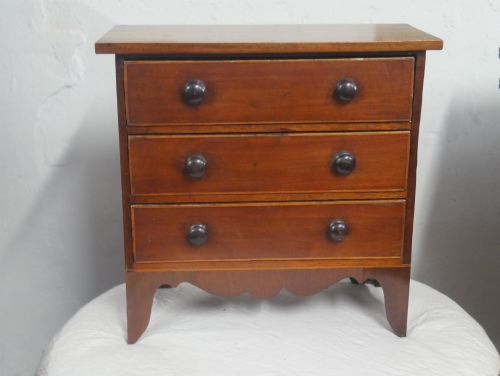
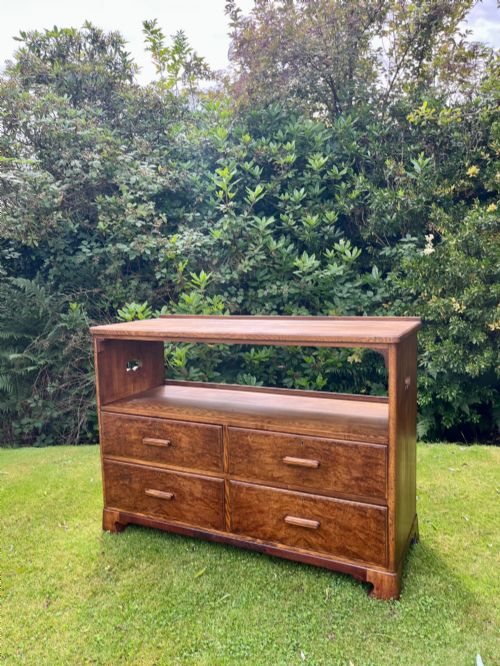
The term antique scottish dresser covers a diverse group of regional case furniture, encompassing kitchen dressers, potboard bases, dairy dressers, and large timber chests of drawers.
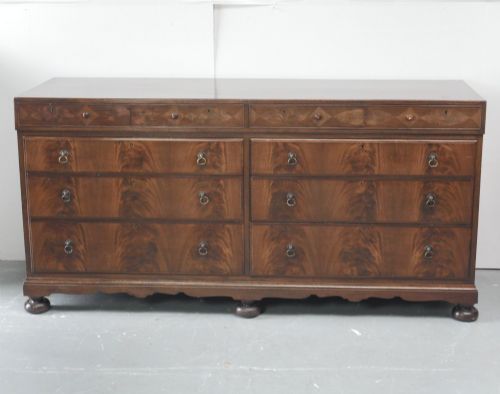
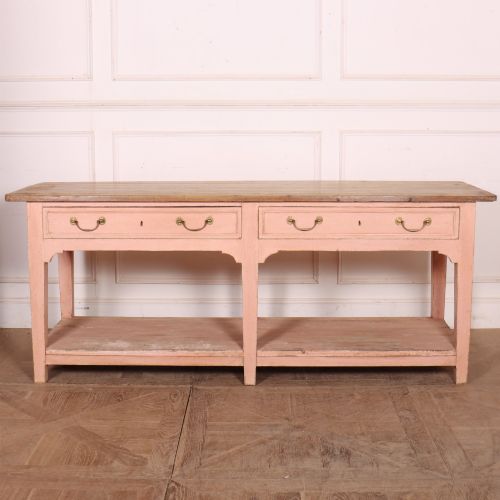
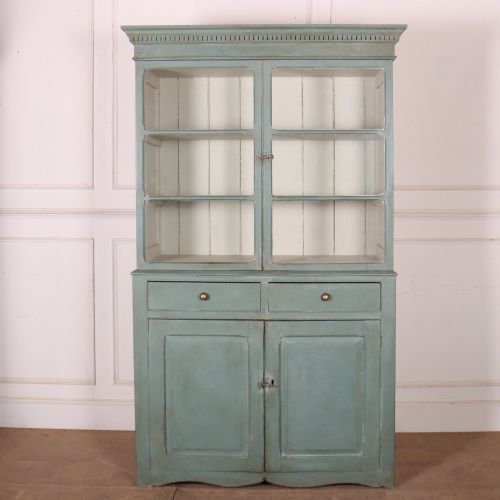
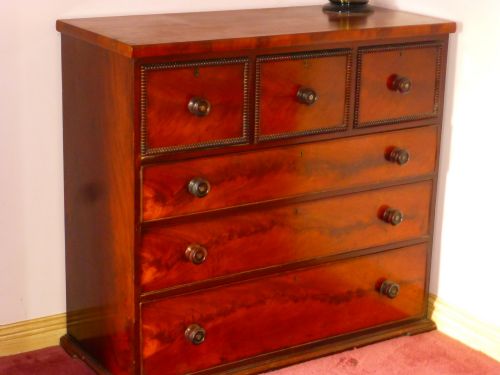
Buyers encountering this search phrase most frequently find robust pine kitchen dressers, oak potboard bases, and finely figured flame mahogany chests dating across the eighteenth and nineteenth centuries.
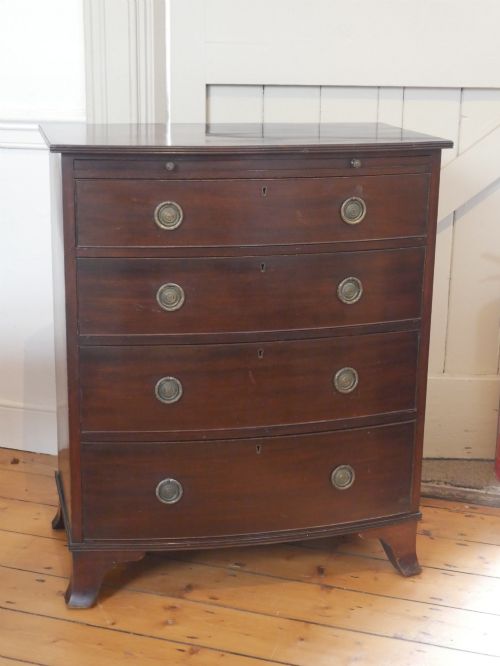
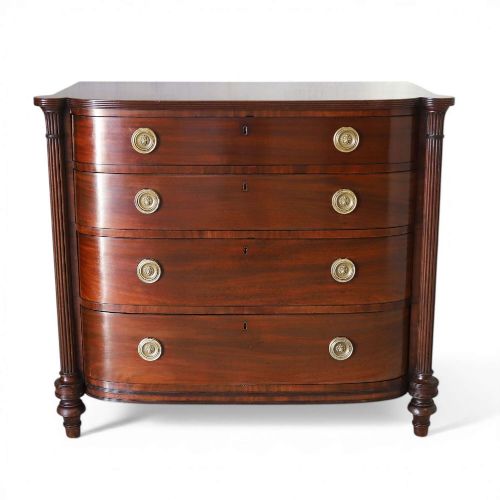
Regional cabinetmakers produced these pieces with distinct proportions, often utilising deep drawers, stage backs, and bow fronts that separate them from English equivalents.
Materials and Construction
Workshops relied heavily on native and imported timbers, pairing solid pine and oak carcasses with figured flame mahogany veneers on principal display surfaces.
Interior secondary woods such as oak appear in robust drawer linings, whilst brass handles, escutcheons, and glass panels complete the structural detailing.
Surface treatments range from clear polish on fine mahogany to original painted finishes and scumbled patination on utilitarian pine kitchen pieces.
Some nineteenth-century gentlemen's chests arrived fitted specifically for organising intricate sporrans and socks.
Craftsmanship and Proportion
Superior examples demonstrate careful timber selection, where book-matched flame mahogany veneers flow evenly across graduated drawer fronts without interruption.
Construction integrity distinguishes workshop output, seen in tight dovetail joints, original brass hardware, and secondary linings that remain entirely intact.
Proportion and scale dictate desirability, with neat bow fronts, serpentine shapes, and untouched original paint finishes commanding greater attention than heavily altered equivalents.
Whytock and Reid·R H & J Simpson
The Antique Scottish Dresser Glossary
- Potboard dresser
- A kitchen dresser featuring an open lower shelf designed for storing pots and heavy earthenware. This board sits raised off the floor on short feet.
- Flame mahogany
- A veneer cut from the fork of the mahogany tree where the branch meets the trunk. This produces a flickering, highly decorative grain pattern.
- Scumbled finish
- A decorative surface treatment where a translucent glaze is manipulated over a lighter base coat to imitate finer wood grain. It appears frequently on utilitarian pine furniture.
- Stage-back sideboard
- A sideboard featuring a raised tiered superstructure at the rear. This section provides additional display or small storage compartments.
- Bow front
- A convex, outwardly curved front elevation typical of many nineteenth-century chests. It softens the rigidity of standard rectangular case pieces.
Antique Scottish Dresser: Frequently Asked Questions
How do I clean a scumbled pine dresser?
Maintain original scumbled or painted surfaces by dusting with a dry, soft cloth rather than using liquid cleaning products.
Harsh detergents strip historic layers of paint, so preserve the patina by applying microcrystalline wax sparingly only when the timber feels dry.
Where were these dressers originally used?
Kitchen dressers and potboard bases stood in large country house sculleries and farmhouses for storing daily provisions and heavy kitchen utensils.
Mahogany chests and stage-back sideboards occupied formal bedrooms and dining parlours of wealthy townhouses.
Are pine dressers waterproof?
Historic pine surfaces lack modern polyurethane protection and absorb moisture readily if liquids remain standing on the timber.
Use protective mats under pottery and wipe away spills immediately to prevent staining the historic softwood.
How do I identify Scottish regional features?
Look for distinctive proportions such as deep top drawers, bold flame mahogany veneer selections, and sturdy oak secondary linings within the carcass.
Cabinetmakers in Edinburgh and regional workshops employed construction methods that differ subtly from London standards.