



Antique Scandinavian Kitchen Table
An antique scandinavian kitchen table brings working utility and muted painted timber into a modern home with quiet authority.
Antique Scandinavian Kitchen Table
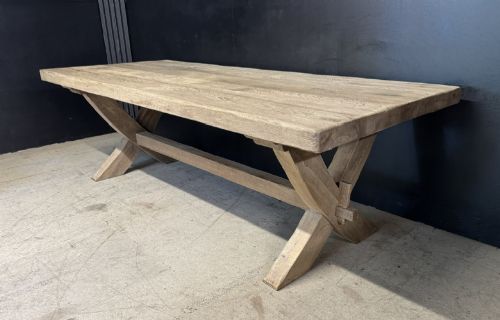
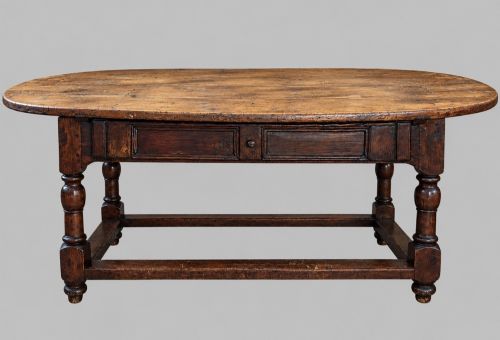
An antique scandinavian kitchen table unites utility and plain timber construction from northern European domestic interiors. Buyers examining this page encounter robust forms designed for daily preparation and dining, originating mostly in the nineteenth century alongside select eighteenth-century and mid-twentieth-century examples.
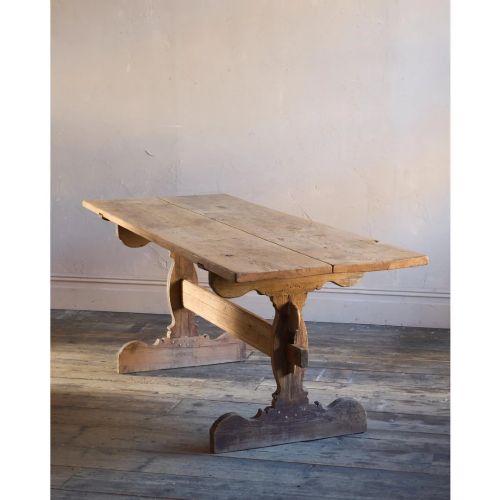
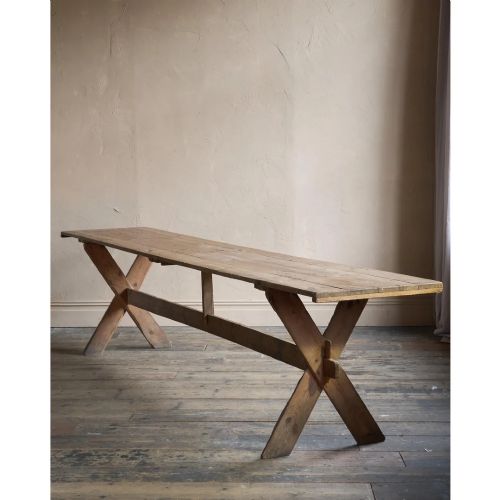
The dominant configurations on this page include trestle bases, cross frames, drop leaves, and specialised bakers or preparation surfaces. Swedish country aesthetics shape the selection, offering versatile dining tables and prep tables built to endure.
Most pieces display the marks of genuine domestic service, fashioned primarily from softwood and pine. Their forms reflect regional Scandinavian country traditions where simple carpentry served immediate household needs.
How they were made
Carpenters constructed these tables using accessible timbers such as pine and softwood, supplemented occasionally by oak and structural brass. Plain timber frames were joined to support heavy daily work without superfluous ornamentation.
Surfaces frequently received applications of paint, including traditional Falu paint, preserving the wood underneath. This combination of painted wood and unpainted top planks formed the practical standard for Scandinavian country workshops.
Antique Scandinavian Kitchen Table Retail Price Guide 2026
Typical asking prices for scandinavian kitchen table among the pieces listed under this phrase on Sellingantiques today, from the lower quarter to the upper quarter. They describe what is for sale here now, not the wider market.
Listings span four distinct periods: the eighteenth century, the nineteenth century, eighteen-seventy, and nineteen-forty.
What varies in quality
Quality rests upon the integrity of the original construction and the character of the aged timber. Tables that retain their structural soundness across trestles and X frames demonstrate superior joinery by regional makers.
The presence and condition of original paint finishes separate standard utility pieces from those with exceptional visual depth. Surface patination accumulated through decades of baking and preparation defines the upper tier of these tables.
The Antique Scandinavian Kitchen Table Glossary
- Trestle table
- A dining or kitchen table supported by side assemblies connected through a central beam. This form provides stable legroom and robust support for heavy preparation tasks.
- Drop leaf
- A table featuring hinged side flaps that fold down to save space or lift up to extend the surface. It offers flexibility in smaller domestic kitchens.
- Falu paint
- A deep red or earth-toned paint traditionally harvested from copper mine waste in Sweden. It protects softwood furniture and architectural timber against harsh weather and wear.
- Gustavian
- The Swedish neoclassical style spanning the late eighteenth and early nineteenth centuries. It simplifies continental European court designs into restrained, lighter country interpretations.
- Preparation table
- A specialised work table designed for baking and food assembly. These tables often feature scrubbed softwood tops and painted pine bases built for continuous kitchen use.
Antique Scandinavian Kitchen Table: Frequently Asked Questions
How do I clean an antique painted table?
Wipe surfaces gently with a dry or barely damp cloth to remove dust without disturbing aged paint layers. Avoid modern chemical solvents that strip historical finishes.
Wax can be applied sparingly to unpainted pine tops to protect the grain while preserving the natural texture of the wood.
Are these tables suitable for daily dining?
Most pieces were built specifically for heavy domestic use, making them durable choices for contemporary dining rooms and kitchens. Their solid pine and softwood frames handle daily family life with ease.
Buyers should check dimensions carefully to ensure comfortable seating clearance around trestles and cross frames.
What is the difference between Gustavian and Scandinavian country styles?
Gustavian design reflects neoclassical restraint influenced by French courts, featuring lighter proportions and subtle carved details. It represents a more formal aesthetic adapted for Swedish interiors.
Scandinavian country style focuses on sturdy, utilitarian forms like trestle frames and bakers tables, prioritizing raw practicality over neoclassical ornament.
How do I date a nineteenth-century pine table?
Dating relies on examining construction marks, nail types, and the wear patterns on pine and softwood timbers. Machine-sawn boards and specific joinery clues help narrow down the production period.
Original paint layers and surface patination also provide strong indicators of age when compared against documented regional styles.