

Antique Satinwood Chairs
Antique satinwood chairs bring pale warmth and refined neoclassical elegance to a room, ranging from painted Edwardian salon seats to grand Regency dining sets.
Antique Satinwood Chairs
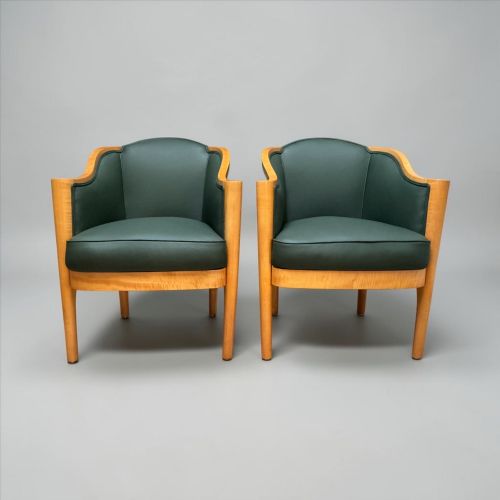
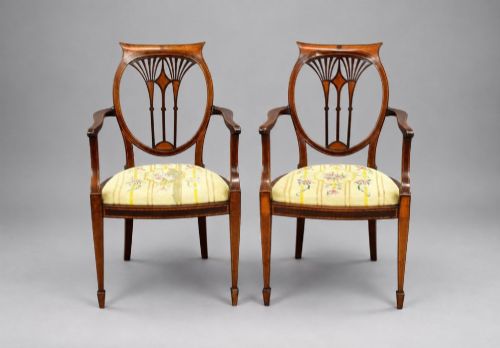
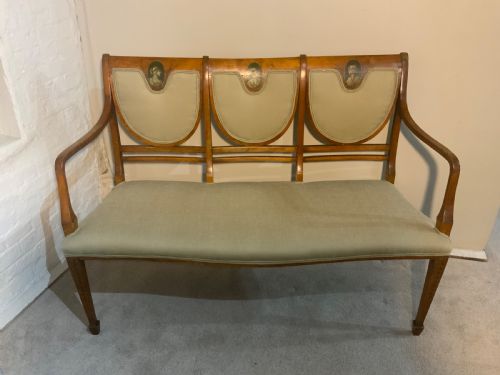
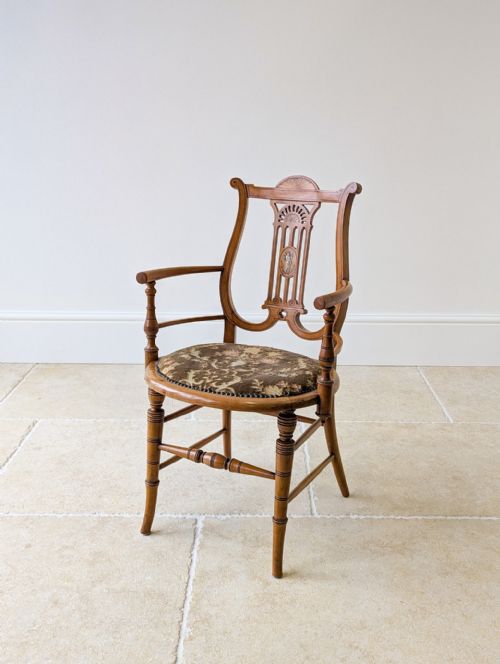
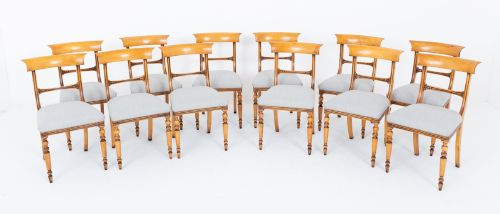
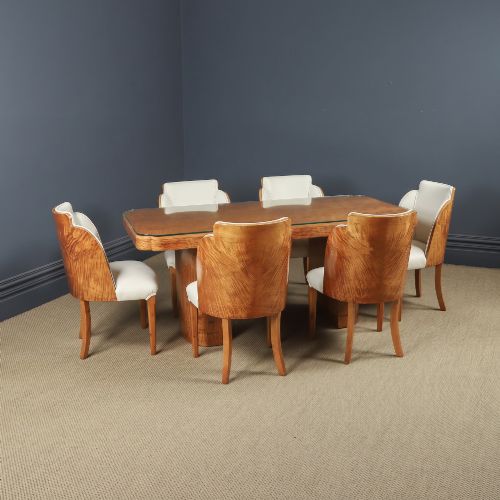
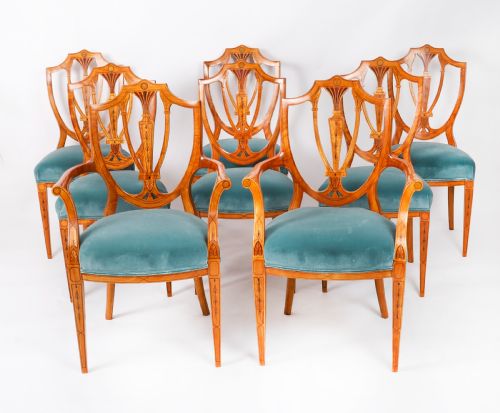
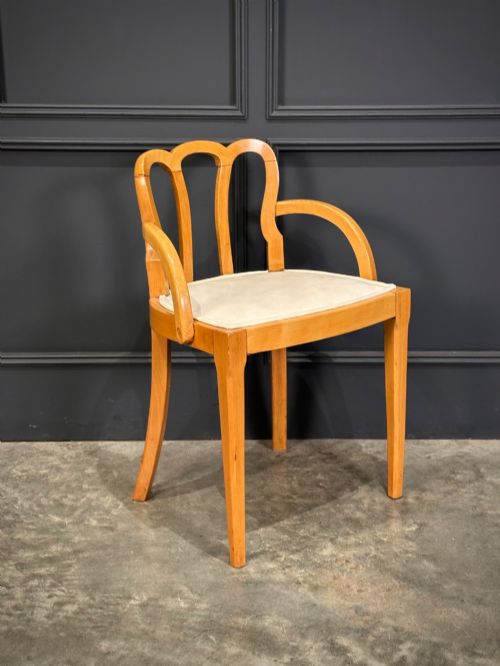
Antique satinwood chairs encompass seating designed primarily for formal reception rooms, bedrooms, and dining spaces, drawing heavily on neoclassical taste. When searching for antique satinwood chairs, buyers encounter forms ranging from single open armchairs and shield-back desk seats to matched sets of dining chairs and occasional salon suites.
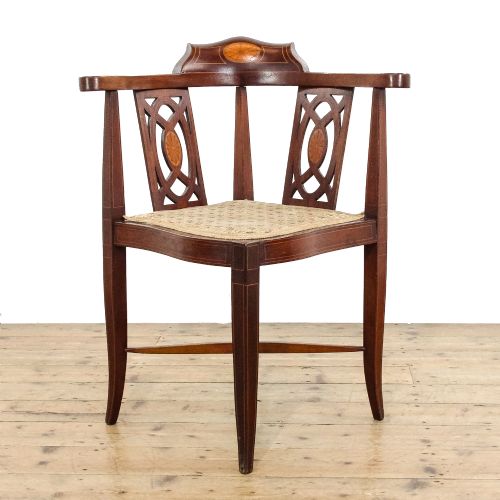
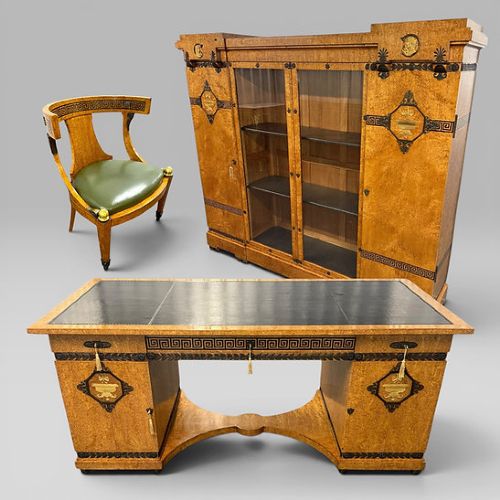
The material appears most prominently through Sheraton Revival revivals of the late nineteenth and early twentieth centuries, alongside Edwardian painted pieces and earlier Regency examples. These chairs often combine pale satinwood veneers with contrasting timbers like mahogany, enhanced by delicate marquetry or string inlay.
How they were made
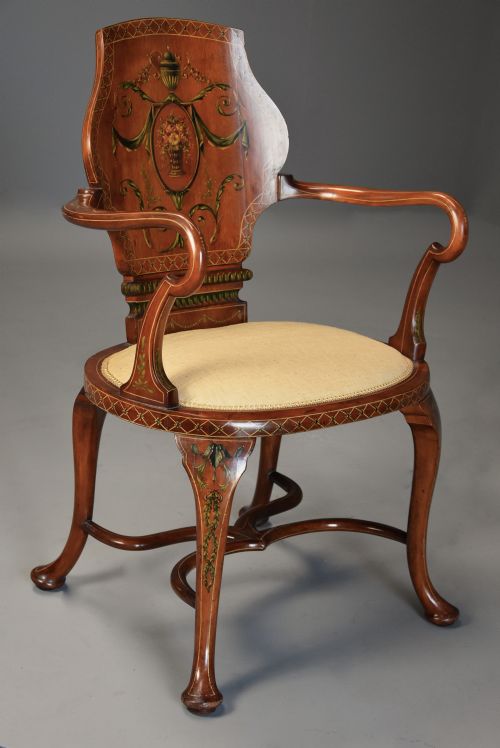
Cabinetmakers utilised dense tropical satinwood, prized for its golden lustre and naturally lustrous grain, typically applied as fine veneers over sturdy secondary timbers like mahogany or birch. Workshops enhanced these surfaces with intricate marquetry, contrasting string inlay, and occasionally hand-painted neoclassical motifs or Chinoiserie scenes.
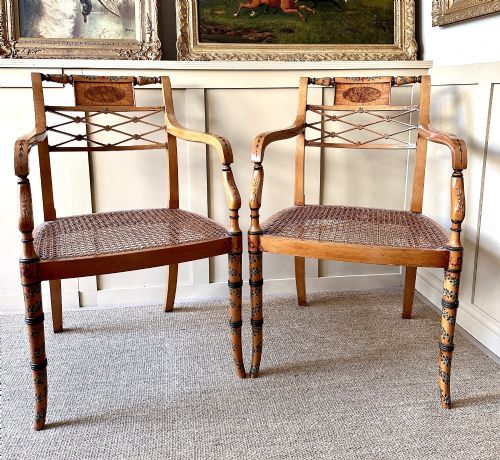
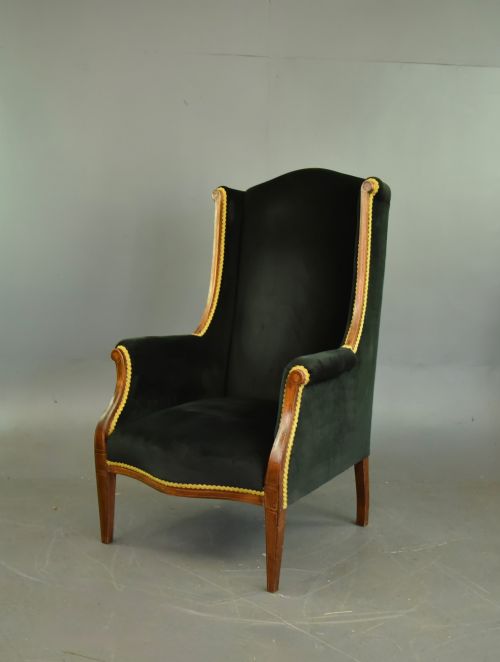
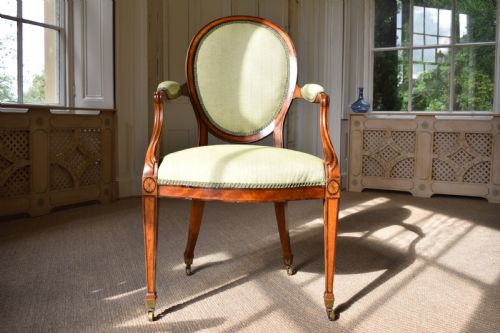
Structural integrity relied on traditional joinery, while seating areas were finished with cane work, tailored leather, or upholstered pads covered in fabric, velvet, or leather. Brass details and subtle ebonising frequently provided structural accents or framing for the pale satinwood panels.
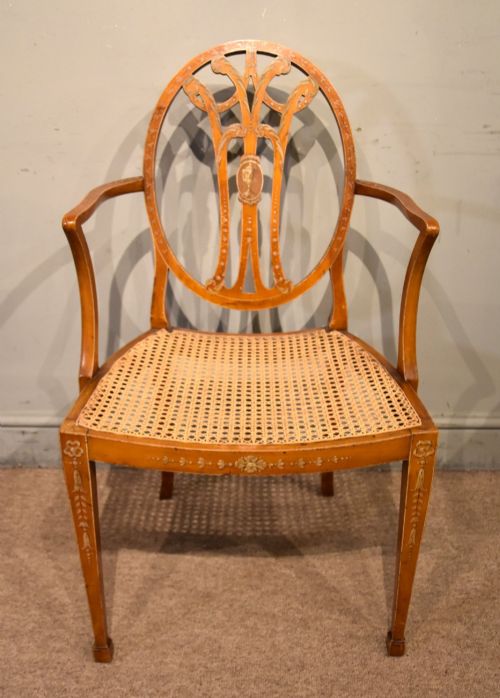
Several armchairs come equipped with cane seats designed to keep Regency aristocrats cool during long summer sittings.
What varies in quality
Quality in these chairs rests upon the precision of the cabinetwork and the intricacy of the decorative embellishments. Master workshops invested significantly more labour into hand-painted details, complex marquetry, and the careful selection of figured satinwood veneers that catch the light evenly.
The structural retention of the frame and the integrity of the original or period upholstery finish also distinguish finer output from more utilitarian manufacturing. Pieces retaining their original cane seats or subtle hand-applied stringing demonstrate superior craftsmanship from established makers.
Mercier Frères·Cowtan & Sons·Bath Cabinet Makers·Hille·Maple & Co
The Antique Satinwood Chairs Glossary
- Satinwood
- A dense, durable tropical timber known for its golden colour and reflective sheen. It was widely used for fine veneers in high-status eighteenth and nineteenth-century furniture.
- Sheraton Revival
- A late nineteenth to early twentieth-century design movement inspired by the neoclassical furniture of George Sheraton. These pieces frequently feature satinwood veneers, painted details, and slender tapered legs.
- Marquetry
- The art of applying decorative pieces of veneer to a structure to form intricate pictorial designs. Craftsmen utilised various tinted woods to create contrasting patterns on chair backs and splats.
- Caning
- A seating technique involving woven rattan material. It provides a lightweight, flexible surface popular on bedroom and salon chairs.
Antique Satinwood Chairs: Frequently Asked Questions
Are satinwood chairs too fragile for daily dining use?
While satinwood veneers require thoughtful care to prevent scratching, the underlying frames are typically constructed from robust hardwoods like mahogany or birch. Dining chairs from these periods were built for regular use, provided they receive sensible domestic treatment.
For heavy everyday service, ensure the joints remain tight and avoid placing them in direct, strong sunlight which can dry out the polished timber finish over time.
How do I distinguish Sheraton Revival from original Georgian pieces?
Sheraton Revival pieces generally date from the late nineteenth or early twentieth centuries, often revealing machine-assisted precision in their stringing and slightly harder, brighter veneer surfaces. Original Georgian examples display eighteenth-century construction methods, hand-cut joinery, and natural patination earned through long age.
Examining the secondary woods underneath and the style of the internal framing usually clarifies the true production era of the chair.
What is the best way to care for satinwood surfaces?
Satinwood benefits from gentle dusting with a soft, dry cloth and occasional applications of quality microcrystalline wax to nourish the timber. Avoid modern silicone-based polishes, which can build up a hazy film over the polished veneer.
Keeping the chairs away from sudden temperature fluctuations and excessive moisture preserves both the delicate inlay and the integrity of the polished finish.
Can I mix satinwood chairs with dark mahogany furniture?
Satinwood pairs naturally with darker timbers because many antique examples actually incorporate mahogany frames or contrasting crossbanding. The pale, golden tone of satinwood provides a deliberate contrast that breaks up heavy arrangements of dark wood.
Using occasional chairs or a small set alongside existing dark furniture introduces visual lightness without disrupting a traditional interior scheme.