

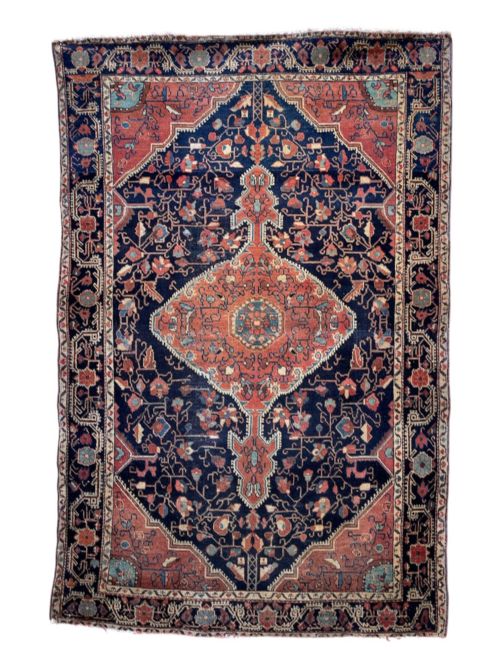
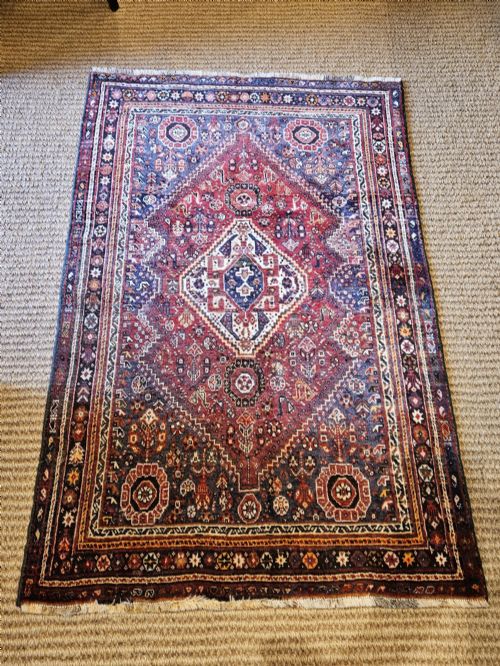
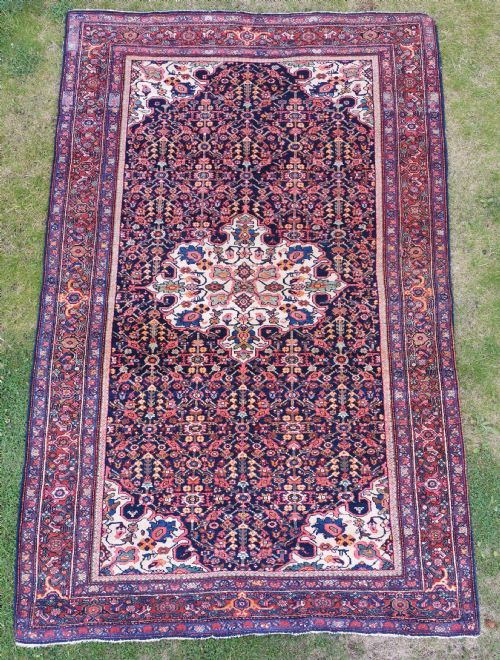

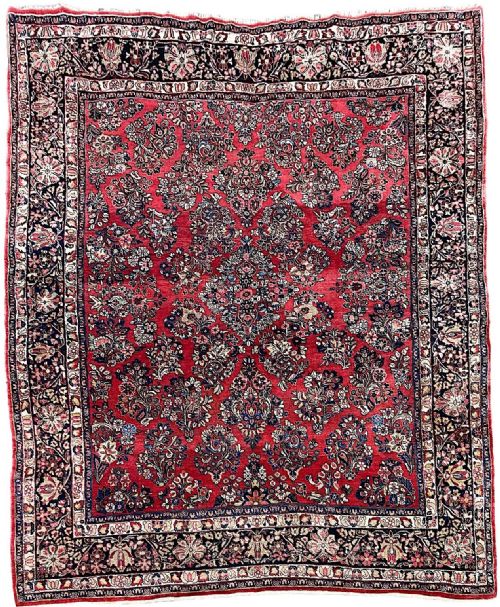


Antique Sarouk Wool Carpet
An antique sarouk wool carpet brings the rich tradition of West Persian weaving into a room through enduring natural materials.
Antique Sarouk Wool Carpet
An antique sarouk wool carpet forms part of a distinctive tradition of floor coverings originating from Western Persia. These pieces range from small village rugs to large room-sized carpets and elongated runners.
The most common examples on this page date from the late nineteenth century through to the early decades of the twentieth century. They encompass related weaving styles such as Jozan, Ferahan, and Mohajeran.
Buyers seek these textiles for their substantial room presence and traditional Persian motifs. They serve both as decorative room anchors and as historical examples of village and town workshop production.
How they were made
These floor coverings utilise wool for the plush pile and foundation yarns, combined with cotton for structural support in the warp and weft. The quality of the wool determines the tactile feel and resilience of the surface.
Weavers knotted the wool pile by hand onto a sturdy cotton grid, creating a dense structure designed for heavy domestic use. Natural dye traditions provided the deep rust, soft tones, and varied background colours seen across the pieces.
Listings span from the mid-nineteenth century to 1930, uniting traditional Persian village and workshop weaving styles.
What varies in quality
The fineness of the weave separates standard village productions from exceptional workshop pieces. A tighter knot count allows for crisper botanical details and greater longevity under foot traffic.
The harmony and complexity of the design also determine the standing of a piece. Examples featuring pictorial elements like birds and pomegranates or unusual proportions demonstrate higher artistry.
The Antique Sarouk Wool Carpet Glossary
- Sarouk
- A style of Persian carpet originating from the Markazi region, known for dense wool piles and traditional floral motifs. They often display soft colour palettes or rich rust backgrounds.
- Ferahan
- A related West Persian weaving tradition associated with fine detail and subtle coloration. These pieces frequently date to the nineteenth century.
- Runner
- A long, narrow carpet format designed for hallways, corridors, or stairs. These pieces maintain elongated proportions while displaying traditional border patterns.
- Boteh
- A traditional teardrop or almond-shaped motif representing a floral shoot or cypress tree. It appears frequently across Persian textile designs.
- Warp
- The vertical foundation threads stretched tightly on the loom before knotting begins. Cotton serves as the standard material for these structural elements.
Antique Sarouk Wool Carpet: Frequently Asked Questions
Where were these carpets made?
These pieces originate from West Persia, specifically towns and villages such as Sarouk, Jozan, and Ferahan.
Local workshops and village weavers produced them for both domestic use and export markets.
How do I care for an antique rug?
Regular gentle vacuuming without a rotating brush helps maintain the wool pile.
Professional cleaning suited for antique textiles preserves the natural dyes and fibres.
What materials are used?
The soft pile consists entirely of wool, providing a dense and durable surface.
Cotton provides the underlying foundation structure for the warp and weft threads.
How do I date a carpet?
Stylistic indicators, knot density, and natural dye variations help narrow down the production period.
Most examples on this page date from the late nineteenth century through the early twentieth century.