


Antique Santos Statue
An antique santos statue brings devotional presence and centuries of carved timber into a room, offering tactile connection to European religious history.
Antique Santos Statue
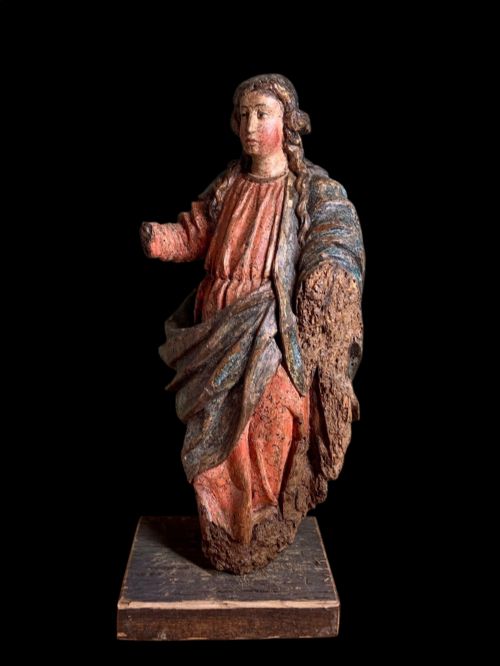
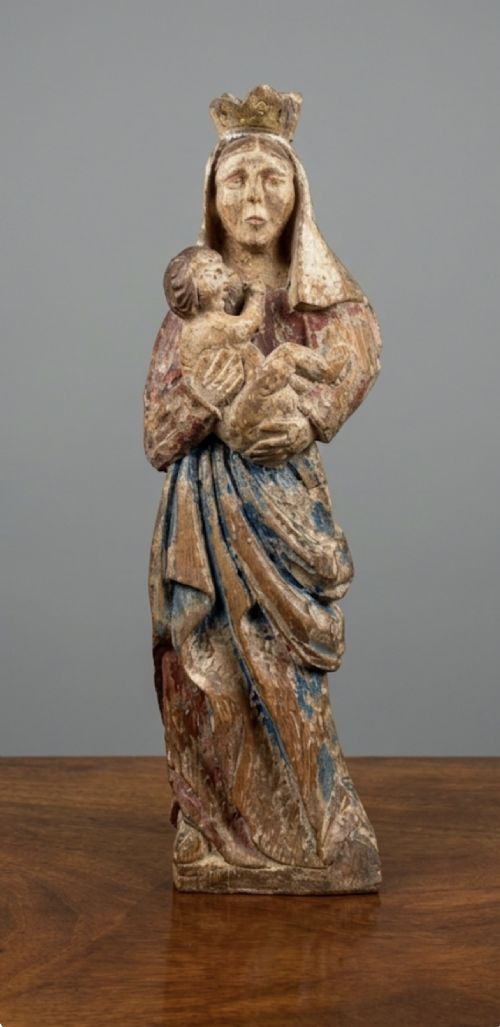
An antique santos statue represents holy figures, saints, or divine subjects intended for private devotion or church processions, taking forms from single standing figures to groups like Mary and Jesus. These sculptures emerge primarily from European traditions across the seventeenth, eighteenth, and nineteenth centuries, including Italian and Spanish origins.
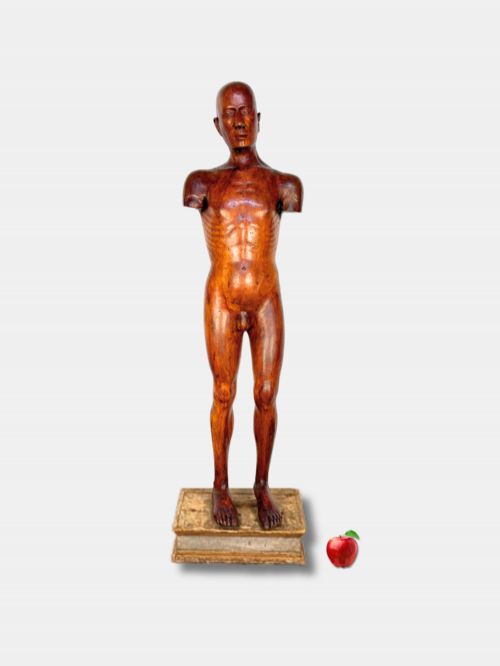
The versions most commonly met on this page span the eighteenth and nineteenth centuries, taking the form of carved wooden figures of saints, Christs, or processional statues. Examples range from life-size male figures on plinths to folk art interpretations and capipote figures designed for dressing in fabric vestments.
How they were made
Makers shaped these pieces predominantly from carved wood, applying layers of gesso to smooth the surfaces before finishing them with polychrome paint, pigment, or gold leaf. Figures intended for processions or devotional dressing often combined carved wooden heads and hands with simple supporting structures for garments.
Artisans employed regional stylistic conventions, drawing on Baroque aesthetics or provincial folk art methods to render the drapery, facial expressions, and anatomical details. The application of polychrome paint and gilding brought naturalism and devotional splendour to the timber substrate.
Some wooden figures wear real fabric clothes over their carved wooden torsos.
What varies in quality
The distinction between standard and superior pieces rests upon the expressive depth of the carving and the preservation of the original surface decoration. Masterful hand-carved anatomical details and sophisticated drapery separate refined workshop output from simpler folk art production.
Survival of the early surface finish, including undisturbed polychrome paint and gold leaf, marks the upper tier of these sculptures. Pieces that retain their original integration of paint, gesso, and timber show greater artistic integrity than those heavily reworked over subsequent centuries.
The Antique Santos Statue Glossary
- Capipote
- A type of devotional figure featuring a detailed carved head and hands attached to a simpler framework designed to wear actual fabric clothing. These statues were frequently dressed in elaborate vestments for religious processions.
- Gesso
- A plaster mix applied to a wooden base to provide a smooth, prepared surface for painting or gilding. It forms the crucial preparatory layer beneath the polychrome finish.
- Processional figure
- A sculpture created specifically to be carried during religious festivals and street processions. These pieces often show lightweight construction or specialised mounting provisions for transport.
- Folk art
- Artistic work produced from an indigenous cultural tradition or provincial craft perspective rather than academic training. Such pieces display charming regional quirks distinct from court or high-church commissions.
Antique Santos Statue: Frequently Asked Questions
How were antique santos used?
These figures were utilised in both private homes and ecclesiastical settings to inspire devotion, mark feast days, and represent specific patron saints. Families maintained household altars where prayers were offered directly to the sculpture.
In public contexts, statues participated in religious processions through town streets, sometimes dressed in elaborate real fabrics to celebrate holy days.
How do I date a santos statue?
Dating relies on stylistic clues, tool marks left by the carver, and the composition of underlying materials like gesso and timber. Seventeenth and eighteenth-century examples often lean toward Baroque drama, while nineteenth-century pieces may display simpler folk characteristics.
The wear pattern of the polychrome paint and the preparation of the wood grain also offer clear indications of chronological origin.
How do I display santos in a modern home?
Placing a santos statue on a simple mantelpiece, shelf, or dedicated console allows its sculptural form and aged patina to stand out. Pairing the weathered wood and polychrome surfaces with neutral backgrounds helps integrate historical religious art into contemporary interiors.
Stable indoor conditions away from direct sunlight and excessive humidity will protect the historic painted wood from degradation.