
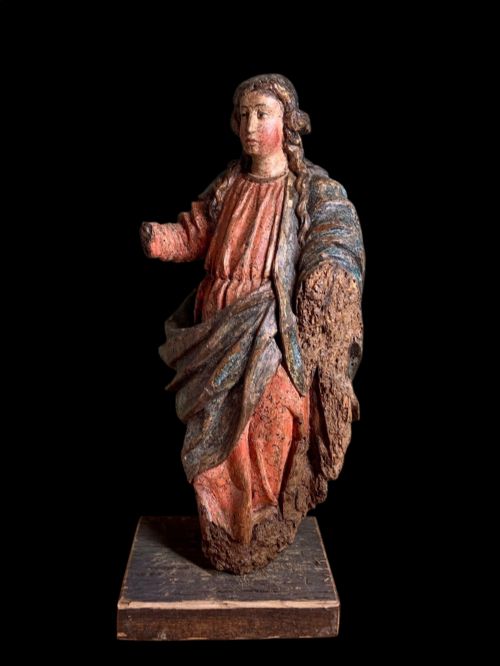
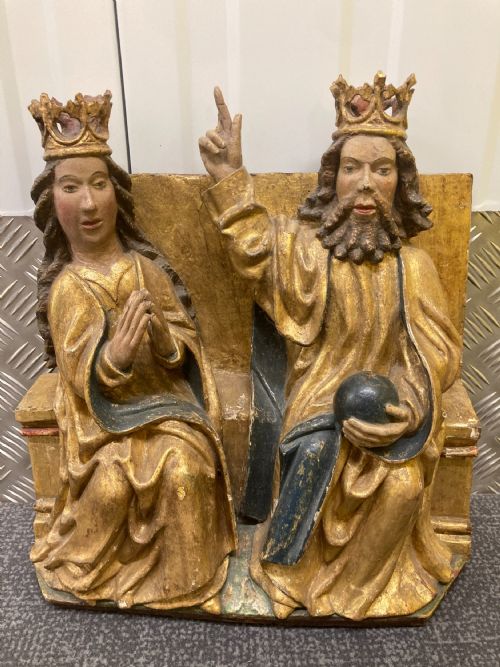


Antique Polychrome Church Figure
An antique polychrome church figure brings centuries of devotion into a room, carved from wood and finished in layers of gesso, paint, and gold leaf.
Antique Polychrome Church Figure
An antique polychrome church figure represents sacred subjects like saints, angels, and the Madonna, carved from timber for liturgical spaces. These pieces span from the late medieval period through the eighteenth and nineteenth centuries, originating from workshops across Italy, Spain, France, and Germany.
The selection ranges from large life-sized sculptures of Christ to processional figures like the Spanish capipote and smaller devotional reliefs of saints such as Joseph, Roche, and Nepomuk. Formats vary from solitary statues to paired angels and multi-figure groups like the Pieta.
Buyers encounter sculptures showing regional European traditions, from Spanish Baroque intensity to Italian grace and Gothic solemnity. Each piece carries the distinct sculptural language of its century, whether carved in oak, softwoods, or gessoed timber.
Assessing quality and craftsmanship
The integrity of the original gesso and polychrome surface dictates value, as surviving primary paint layers demonstrate superior historical preservation. Pieces retaining their original gold leaf and pigment demonstrate higher artistic ambition than later overpainted examples.
Listings feature works spanning from the pre-sixteenth century through the nineteenth century, utilising carved wood, gesso, and gold leaf.
Rouillard Angers
The Antique Polychrome Church Figure Glossary
- Polychrome
- Decorated in multiple colours. This surface treatment combines pigments with binders to render realistic flesh tones and patterned vestments.
- Gesso
- A plaster mix applied to wood. It serves as the foundational white base for painting and gilding.
- Capipote
- A devotional figure with a carved head and hands attached to a dressed armature. These statues were often utilised in religious processions.
- Giltwood
- Timber treated with gold leaf. Artisans burnished this metallic layer to create reflective halos and vestment highlights.
Antique Polychrome Church Figure: Frequently Asked Questions
What is an antique polychrome church figure?
These pieces are hand-carved wooden sculptures depicting religious figures, originally created for European churches, private chapels, and processions.
They combine timber carving with historical paint and gesso layers to represent saints, angels, and biblical scenes.
How were these figures used originally?
Sanctuaries utilised them as focal points on altars, within niches, and as devotional objects for prayer and contemplation.
Some specific forms, such as processional figures, were carried through streets during religious festivals.
How do I live with one?
Place the sculpture away from direct sunlight and sudden temperature changes to protect the fragile wood and historic paint layers.
Mount them securely on stable surfaces or brackets, as many tall or life-sized carvings have narrow bases.
How can I tell the period?
Stylistic clues such as drapery folds, facial carving, and the composition of the gesso ground point toward specific centuries.
Gothic and Renaissance pieces show different structural approaches compared to Baroque or nineteenth-century revival works.