


Antique Salt Glaze Pitcher
These antique salt glaze pitcher pieces are durable stoneware vessels prized for their distinctive pitted texture and historical cobalt decoration.
Antique Salt Glaze Pitcher
An antique salt glaze pitcher is a heavy ceramic vessel created for holding liquids such as ale, water or cider. When you examine this selection, you encounter forms spanning from the seventeenth century through to the Victorian era.
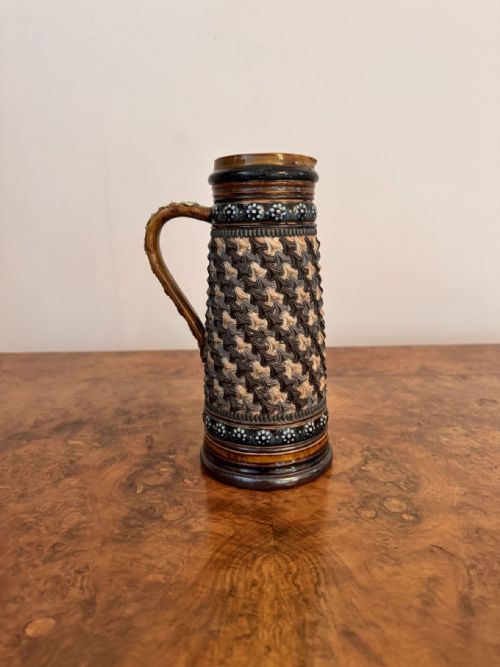
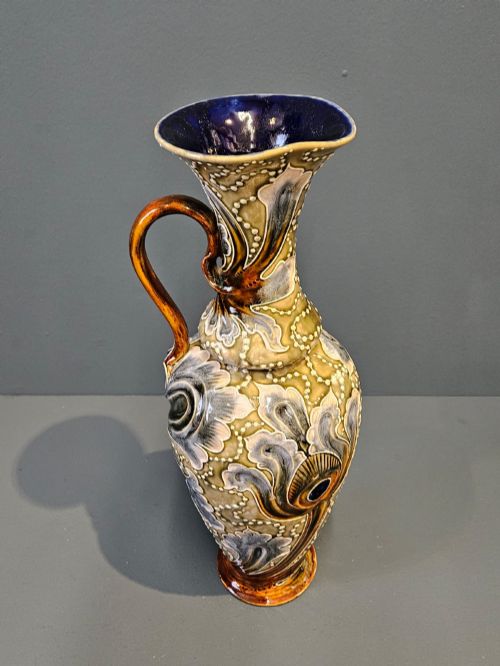
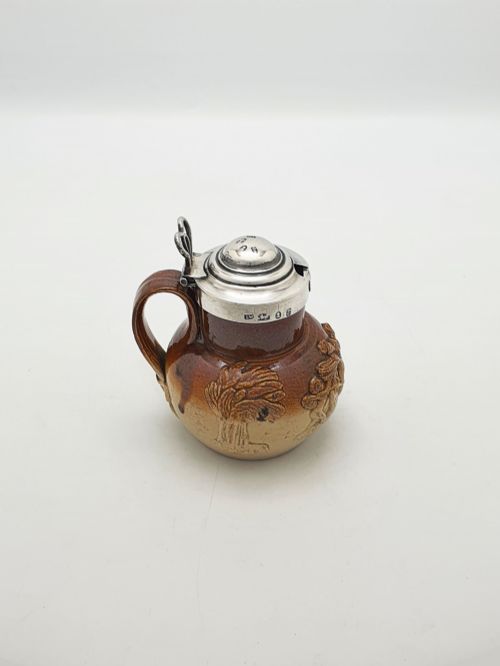
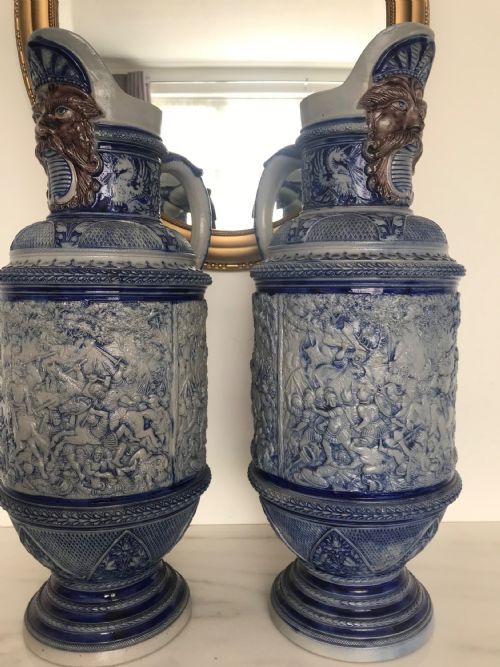
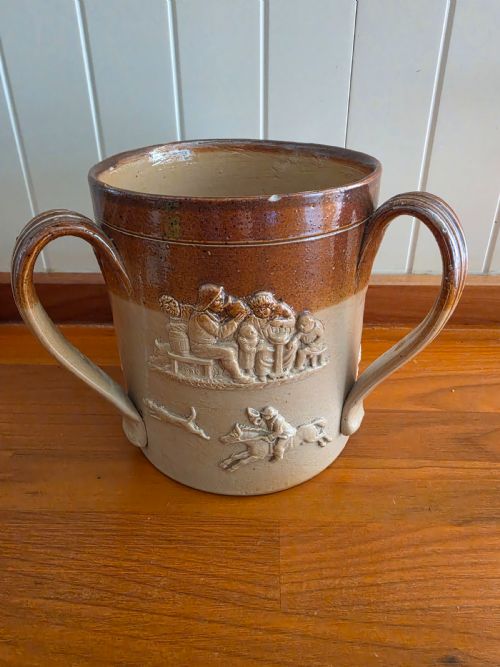
The English and German examples on this page range from plain utilitarian harvest jugs to elaborate exhibition pieces fitted with sterling silver collars. You will find specialised shapes including puzzle jugs, three-handled tygs, and ewers.
Doulton Lambeth and Westerwald productions dominate the offerings here, displaying distinct regional traits. These pots served both domestic table use and commemorative display functions across several centuries.
How they were made
Potters threw dense clay on a wheel and introduced common salt into the kiln during high-temperature firing. The vaporized salt reacted with the silica in the clay body to form a characteristic orange-peel texture.
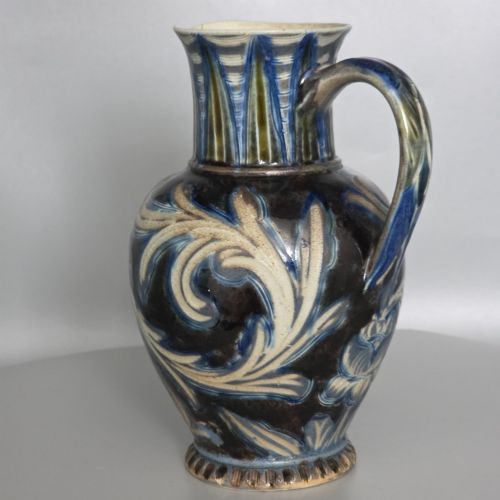
Cobalt oxide was frequently applied beneath the glaze to create deep blue coloration, often complemented by incised patterns or sprigged reliefs. Many vessels were finished with fitted metal rims or hinged lids made of sterling silver or silver plate.
Listings feature stoneware pieces spanning from the 16th-century Siegburg period through to Victorian Doulton Lambeth productions.
What varies in quality
The distinction between standard utility ware and masterworks rests on the crispness of the applied decoration and the ambition of the form. Exhibition pieces and named maker outputs display deeply incised storytelling scenes, elaborate heraldic ciphers, or detailed portraiture.
The integration of precious metal mounts also elevates a piece, particularly when hallmarks verify contemporary silversmith work on Georgian and Victorian bodies. Condition of the delicate salt-glazed surface and intact handles further divides ordinary pots from collector highlights.
Doulton Lambeth·Emma Shute·Simon Peter Gerz
The Antique Salt Glaze Pitcher Glossary
- Salt glaze
- A vitreous coating formed on stoneware by throwing common salt into the kiln during firing. This chemical reaction produces a textured, glossy surface resembling orange peel.
- Cobalt blue
- A metallic oxide pigment used under the glaze to paint detailed motifs and lettering. It withstands the extreme heat required for stoneware firing without losing intensity.
- Sprigged relief
- A separate moulded clay ornament applied to the damp body of a pot before firing. These decorative elements add raised pictorial detail to the vessel surface.
- Puzzle jug
- A specialised drinking vessel with a perforated neck and hollow rim that forces the user to solve a liquid path riddle. It tests the drinker's ingenuity to avoid spilling.
- Tyg
- A multi-handled drinking vessel designed for communal passing around a table. Early examples feature three or more loop handles spaced evenly around the body.
Antique Salt Glaze Pitcher: Frequently Asked Questions
What is an antique salt glaze pitcher used for?
These vessels originally served practical functions in homes and taverns for storing and pouring liquids like ale, water, or cider. They also functioned as commemorative items for royal events and jubilees.
Today, collectors display them as decorative art objects or utilise them as flower vases. Their robust construction makes them resilient display pieces for historical interiors.
How do I identify a Westerwald salt glaze pitcher?
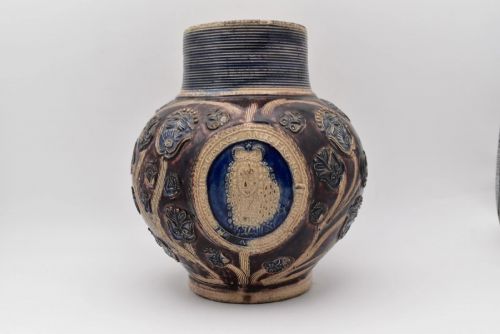
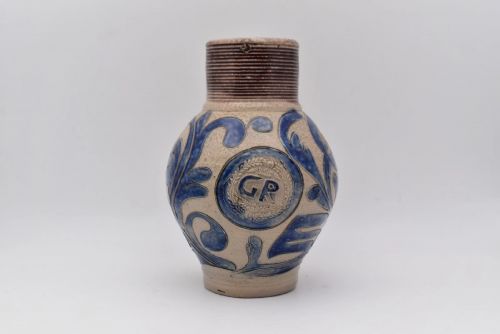
Westerwald pieces originate from the German region known for historic stoneware production, typically featuring distinctive cobalt blue ornamentation painted over grey clay. Look for stamped medallions, rosette motifs, or historical portrait reliefs.
Many examples from this tradition date from the seventeenth and eighteenth centuries. They often display incised geometric patterns surrounding central coats of arms or royal ciphers.
What are Doulton Lambeth salt glaze jugs?
Doulton Lambeth items represent nineteenth-century English pottery production marked by artistic ambition and skilled studio craftsmanship. These pieces frequently incorporate rich brown salt-glazed bodies with applied stoneware reliefs and incised Art Nouveau foliage.
Prominent artists worked within this pottery, sometimes signing their output. They range from simple harvest jugs to elaborate exhibition pieces featuring silver rims.
Why do some pitchers have silver lids?
Silver collars and hinged lids were added to protect the fragile ceramic rim from chipping during use and to seal the contents. Silversmiths often fitted these mounts during the Georgian and Victorian periods.
Such additions usually indicate that the vessel was considered a high-status item. Hallmarks on the silver can also help date the exact year of the metalwork mount.
How do you date an old stoneware jug?
Dating relies on stylistic clues, historical ciphers, maker marks, and the manufacturing technique of the body. Early German pieces often feature Bartmann mask motifs, while Victorian examples lean toward botanical or heraldic designs.
Written ciphers referencing monarchs like William III or Queen Victoria provide a baseline era. Additionally, metal mounts with assay office hallmarks offer precise chronological markers.