







Antique Salon Bench
An antique salon bench offers formal seating rooted in the nineteenth and early twentieth centuries, bringing decorative woodwork and historic upholstery together.
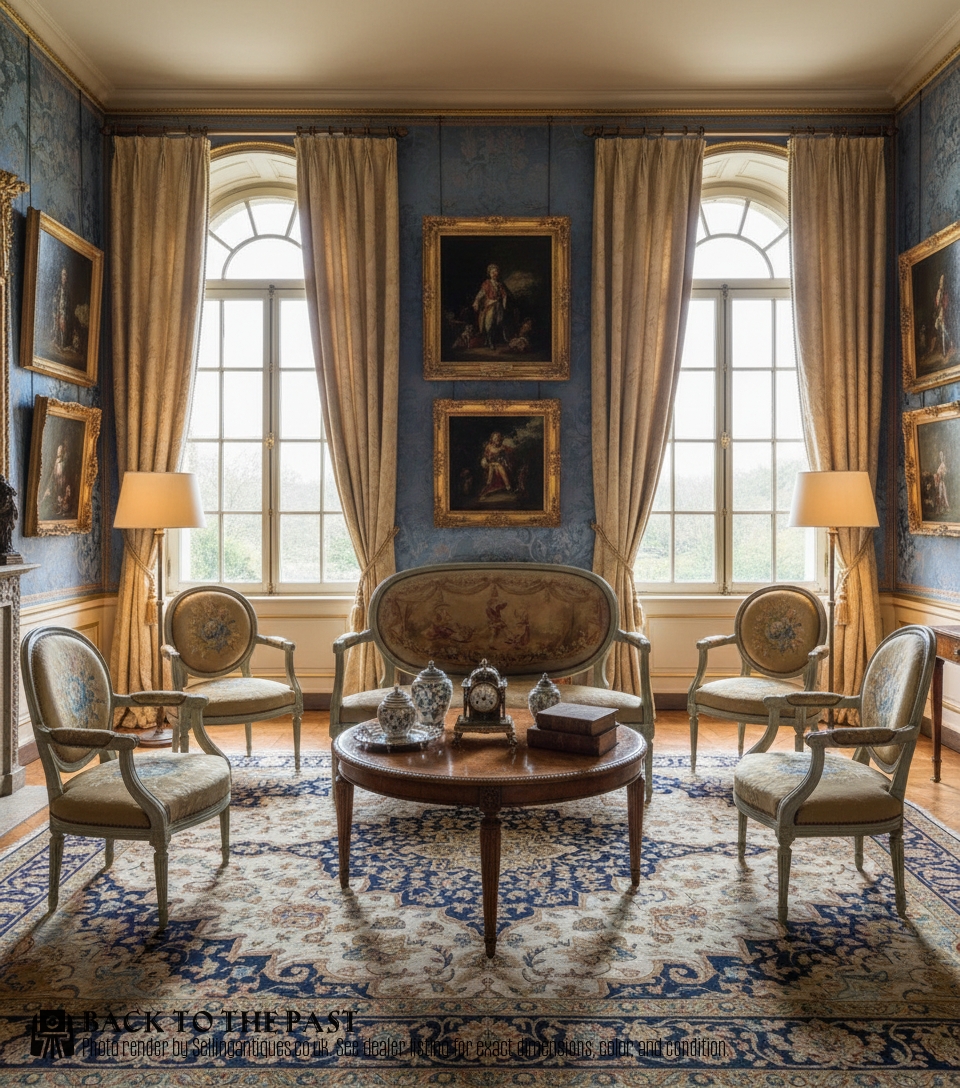
Antique Salon Bench
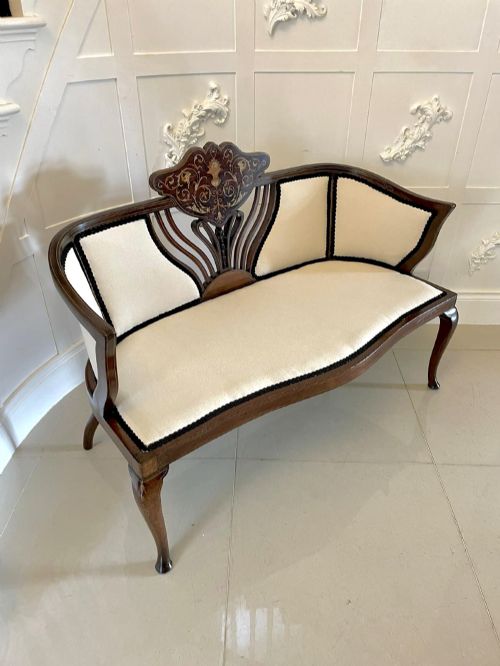
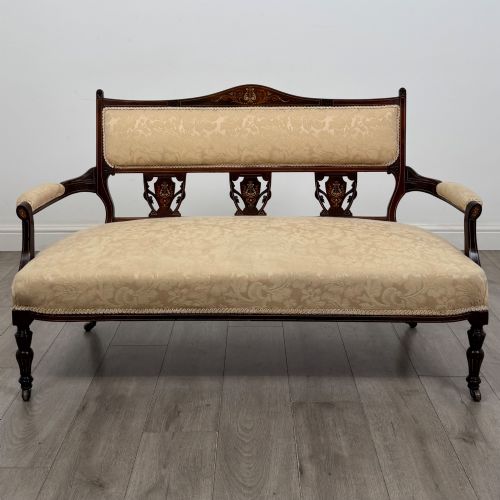
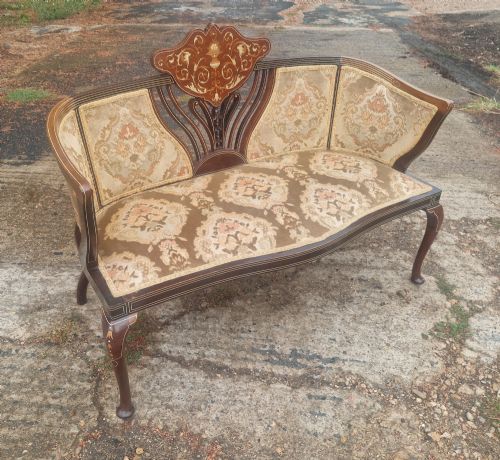
An antique salon bench encompasses nineteenth-century and early twentieth-century settees, sofas, and canapés designed for formal rooms. These pieces originate from periods such as the Victorian, Edwardian, and Regency eras alongside various revival movements.
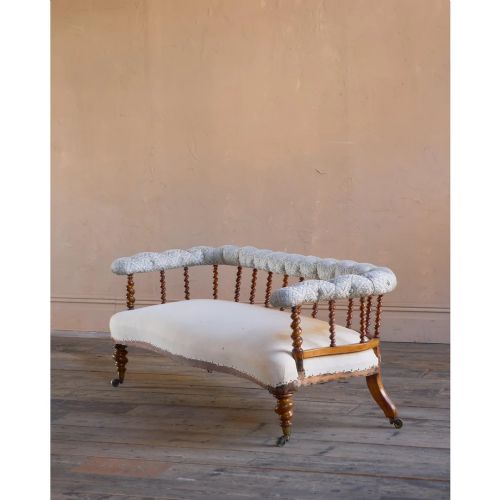
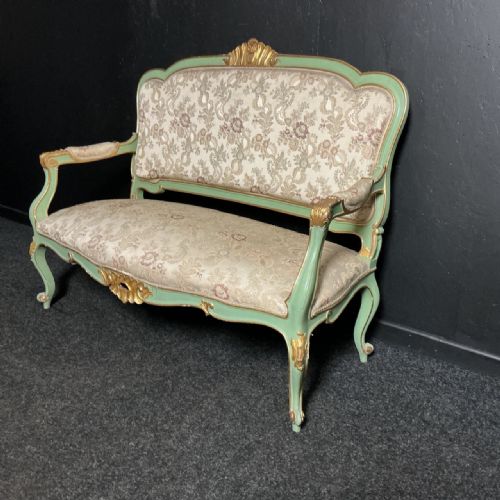
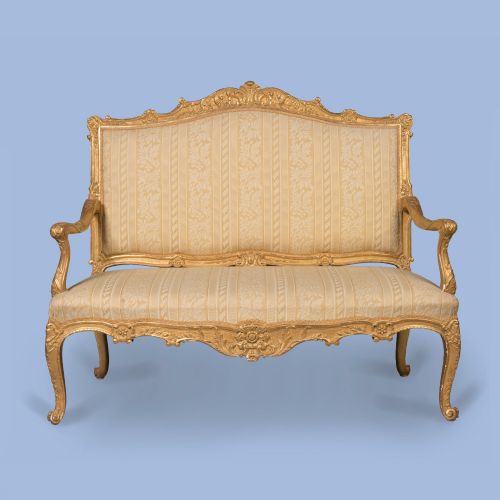
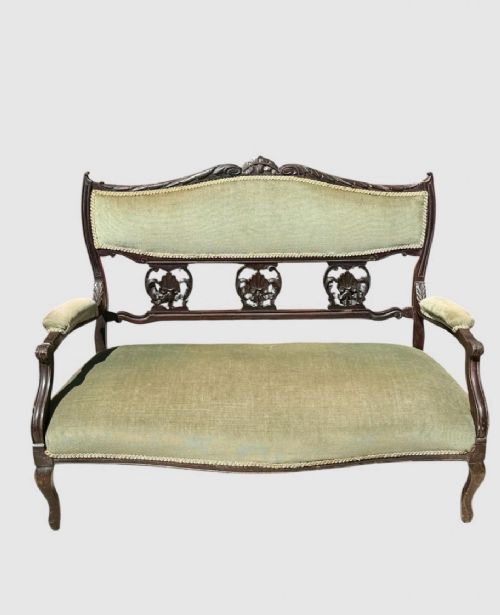
Buyers frequently encounter mahogany, walnut, and giltwood frames paired with fabric, velvet, or silk upholstery. Forms range from spindle backs and end-of-bed sofas to French-influenced Louis XV style seats.
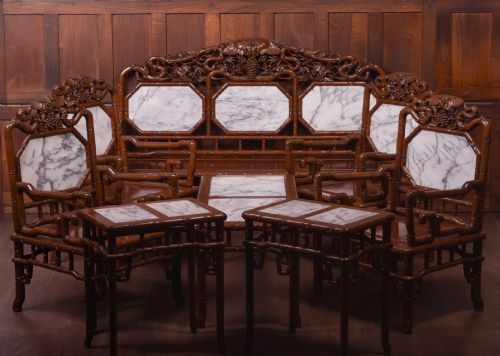
Objects on this page also include parlour suites and window seats spanning the nineteenth century through the early twentieth century. Makers such as C. Hindley and Sons and Baumann appear among the listed works.
Materials and construction methods
Cabinetmakers utilised hardwoods like mahogany, walnut, and satinwood for the structural frames, often applying intricate inlay work, carved details, or parcel gilt finishes. Ebonised timber and oak also feature across specific aesthetic and arts and crafts items.
Upholstered surfaces rely on traditional textiles, including velvet, silk, and general decorative fabrics, sometimes complemented by brass or ormolu mounts. Frames span solid timber construction and bentwood techniques.
Several pieces double as end-of-bed sofas, proving that Victorians brought formal parlour comfort straight into the sleeping quarters.
Distinctions in craftsmanship and preservation
Quality rests in the precision of the timber carving, the execution of inlay or ormolu mounts, and the structural integrity of the frame. Finer examples display deliberate proportions and sophisticated stylistic adherence, whether interpreting Louis XV revival or Edwardian design.
The preservation of original materials, from giltwood surfaces to hand-carved hardwood details, separates standard production from superior pieces. Upholstery condition varies, though the underlying woodwork dictates the baseline merit of each salon bench.
C. Hindley and Sons·Baumann
The Antique Salon Bench Glossary
- Canapé
- An upholstered sofa or settee, frequently associated with French eighteenth-century designs and later revival periods. These items typically feature exposed carved wooden frames.
- Giltwood
- Timber treated with gold leaf or gold paint to create a lustrous decorative surface. This finish appears frequently on French-style salon seating.
- Inlay
- A technique where contrasting materials such as satinwood or bone are inserted into depressions within the primary wood surface. Edwardian and Victorian makers utilised this for linear decoration.
- Ormolu
- Gilded bronze mounts applied to furniture for decorative effect. They are common on Empire revival and neoclassical pieces.
- Settee
- A medium-sized upholstered seat with a back and arms, designed for multiple occupants. The term overlaps closely with parlour sofas and salon benches.
Antique Salon Bench: Frequently Asked Questions
What is a salon bench?
A salon bench is a formal seating piece designed for reception rooms and drawing rooms during the nineteenth and early twentieth centuries.
These items encompass settees, canapés, and window seats built from woods like mahogany, walnut, and giltwood.
How do I identify a French style settee?
French style settees often display carved giltwood frames, cabriole legs, and upholstery inspired by Louis XV or Louis XVI aesthetics.
Makers incorporated decorative motifs and curved wooden structures reminiscent of French chateaux.
What woods were used for these seats?
Framing materials primarily include mahogany, walnut, satinwood, and oak, alongside giltwood and ebonised finishes.
Inlay work and bone detailing frequently accent the primary timbers on Edwardian and Victorian examples.
Where were salon benches placed?
These pieces occupied formal reception spaces, drawing rooms, and parlours to accommodate guests during social gatherings.
Some variations also served as end-of-bed furniture or window seats within large homes.