


Louis XVI Painted Canape
A louis xvi painted canape brings architectural lines and painted woodwork into a room, offering an elegant seat rooted in classical French design.
Louis XVI Painted Canape
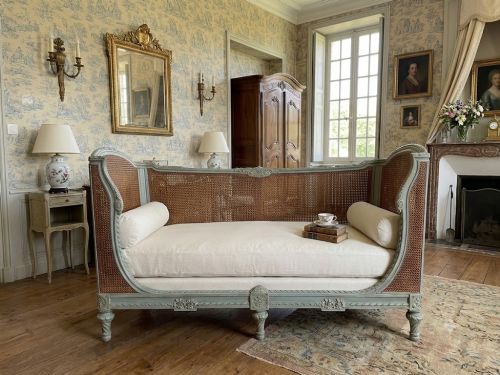
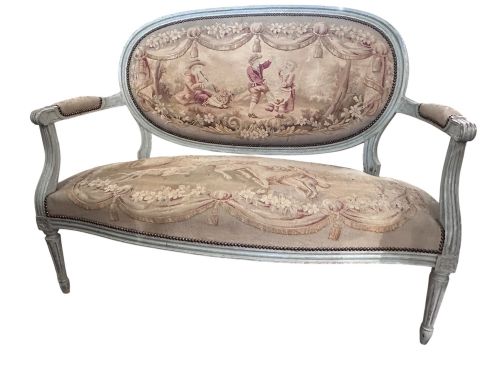
A louis xvi painted canape sits within the broader category of sofas and settees, taking structural cues from classical French furniture traditions. These pieces appear in forms such as daybeds, love seats, and settees, reflecting styles like Louis XVI, French Louis XVI Revival, and French Empire.
The versions most commonly met on this page date from the nineteenth century, nineteen hundred, and nineteen ten, alongside Edwardian and Regency examples. They combine painted wood frames with materials like cane, linen, and various textiles to create structured seating.
Materials and construction
Makers utilised beech and other timbers for the structural frames, applying paint directly to the wooden surfaces to achieve a finished appearance. Some pieces incorporate gilt highlights alongside the paint to emphasise the carved architectural details of the woodwork.
Cane panels provide lightweight backing or seating surfaces on specific variations, while others rely on upholstered foundations covered in fabric, linen, or textile. These construction choices blend rigid wooden framing with flexible support materials.
Some daybeds double as love seats, proving that nineteenth-century artisans understood the eternal utility of a comfortable nap.
What separates fine examples
The standard of a louis xvi painted canape depends on the crispness of the carved woodwork and the fidelity of its stylistic revival. Pieces that maintain clean architectural lines and refined proportions demonstrate a higher level of workshop execution.
The application and preservation of the painted surface dictate much of the visual success of the piece. Original paintwork or carefully maintained finishes hold greater aesthetic coherence than later, unsympathetic alterations.
The Louis XVI Painted Canape Glossary
- Caned
- A seating or backing method utilising woven rattan or similar plant material. This technique provides a breathable, patterned surface within a rigid wooden border.
- Bergère
- An enclosed upholstered armchair or sofa with built-in upholstered sides. It represents a classic French seating form focused on comfort.
- Regency
- A design period spanning the early nineteenth century characterised by classical revival motifs. Pieces from this era draw inspiration from ancient Roman and Greek aesthetics.
- Gilt
- A thin layer of gold leaf or gilt paint applied to a wooden surface. This technique adds metallic highlights to carved mouldings and structural elements.
Louis XVI Painted Canape: Frequently Asked Questions
What is a canape?
A canape is a traditional French upholstered sofa featuring an exposed wooden frame. These pieces often incorporate carved decorative elements along the crest rail and legs.
They function as principal seating furniture in formal rooms, combining structural woodwork with upholstered cushions.
Where were these placed?
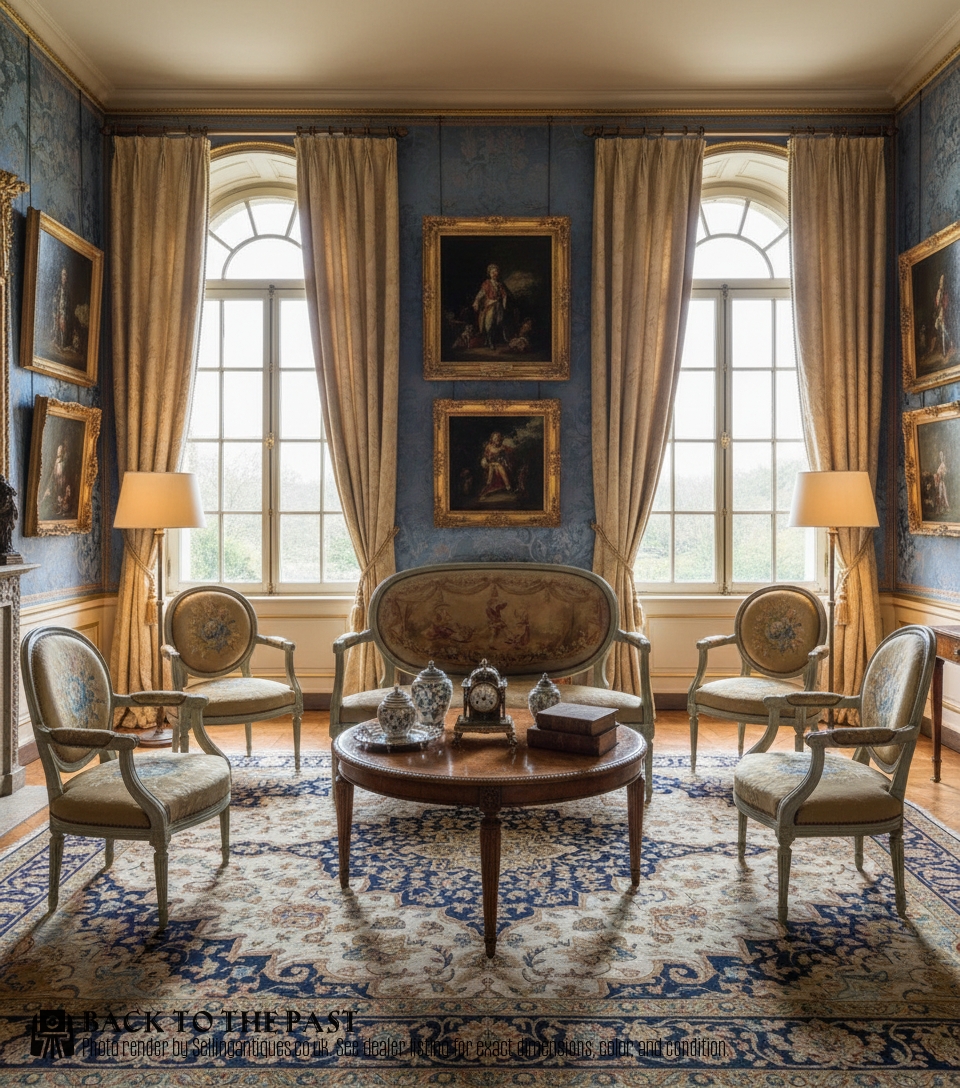
These settees were placed in formal reception rooms and parlours to provide refined seating for guests. Their decorative painted frames suited domestic interiors designed for entertaining.
Daybed variations also allowed for reclining use in private sitting chambers.
Are painted frames original?
Painted finishes on these pieces can be original or applied during later revival periods. The listings include examples with cream painted surfaces and gilt highlights applied to beech frames.
Examining the wear patterns helps determine the age of the surface coating.