




Antique Sailor Figurine
An antique sailor figurine captures maritime history in pottery and bronze, offering collectors tangible connections to nineteenth-century naval life.
Antique Sailor Figurine
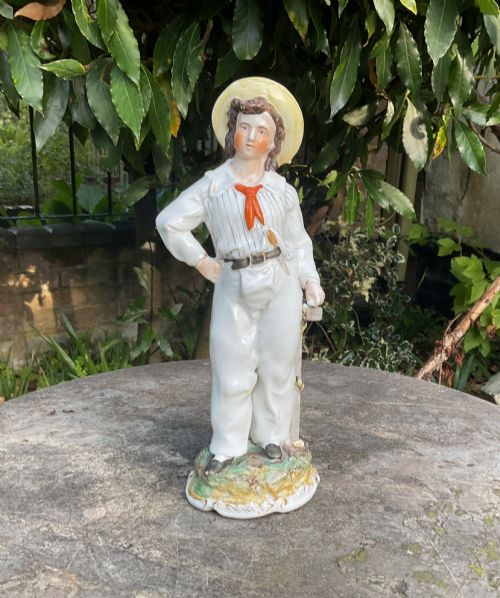
An antique sailor figurine encompasses ceramic pieces, earthenware pottery, and bronze sculptures depicting naval figures, fishermen, and maritime characters. These objects frequently emerge from the Victorian era and the mid-nineteenth century, capturing the public fascination with the sea and military service.
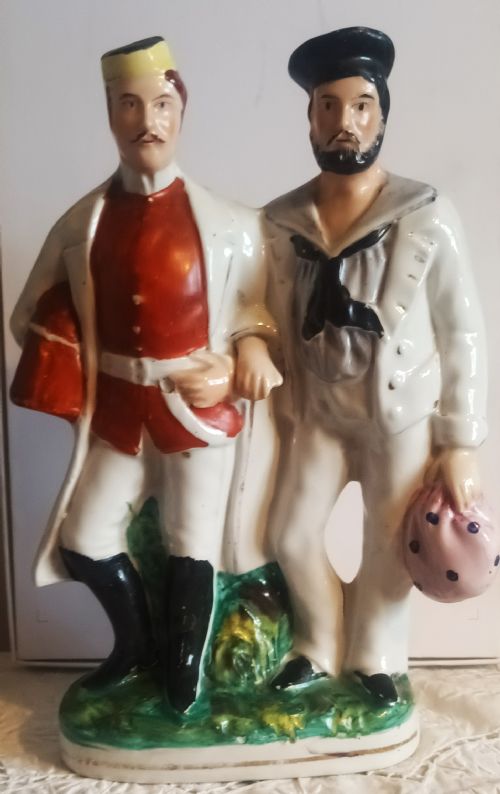
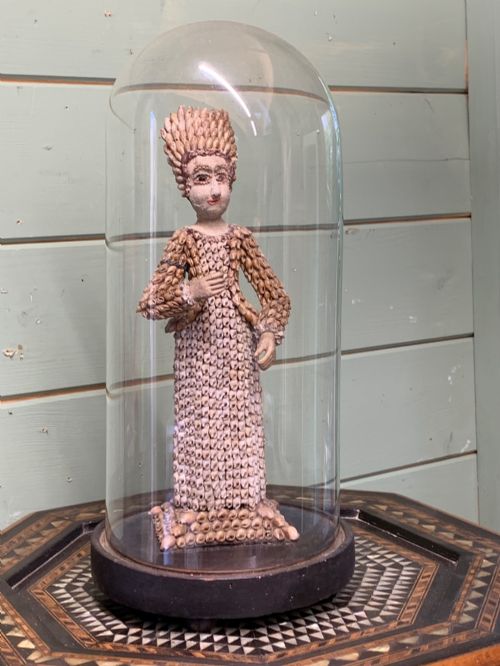
The version most commonly met on this page is the English Staffordshire pottery figure, often bearing titled bases such as Greenwich Hospital Sailor or Ben Backstay and Companion. French foundry work and maritime folk art also appear, occasionally incorporating unusual materials like seashells into the design.
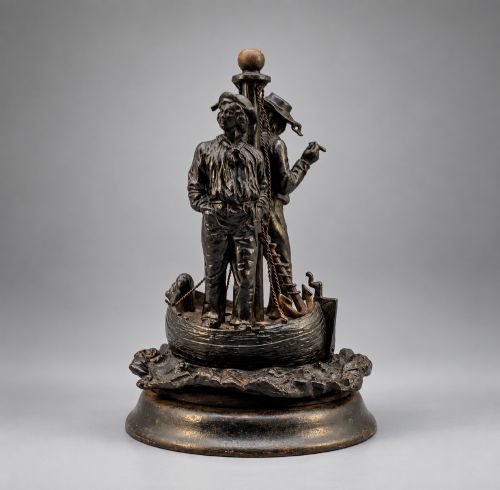
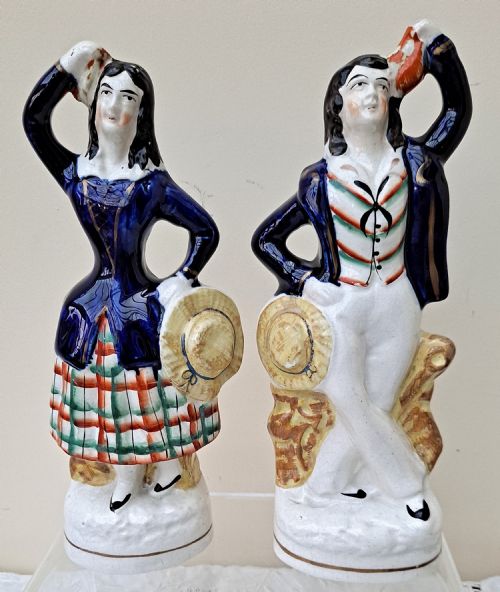
The category extends beyond lone mariners to include companion pieces, figural groups in boats, and related theatrical or patriotic subjects from the 1850s and 1860s. These works served as mantelpiece ornaments that reflected domestic pride in Britain's naval strength and maritime heritage.
Materials and construction
Pottery figures rely on earthenware bodies finished with lead glazes and enamel paint, standard methods for nineteenth-century Staffordshire works. Artisans pressed clay into moulds, hand-painted the details onto the surface, and fired the pieces to set the vibrant colours.
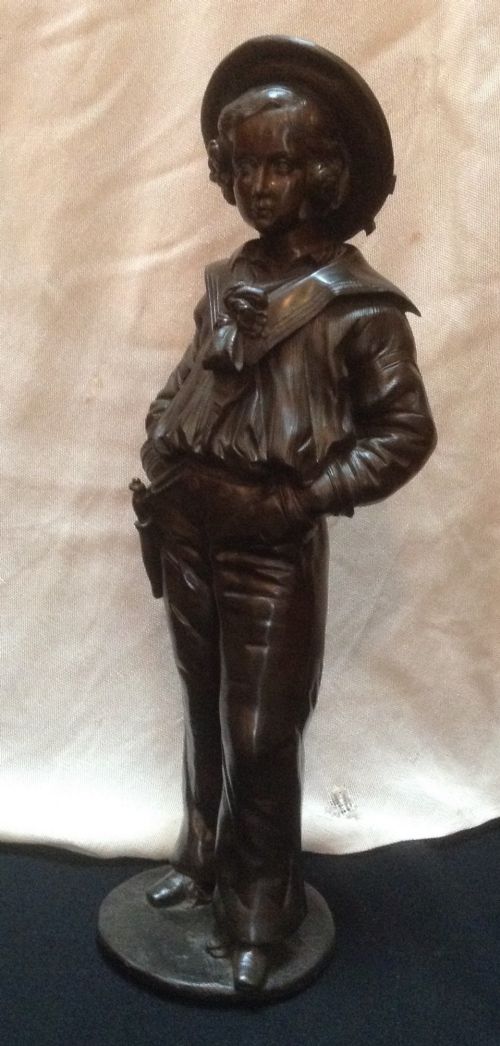
Bronze sculptures and figural groups utilise metal casting techniques, often finished with a dark or patinated surface to highlight the form. Some works combine traditional foundry metal with applied enamel or contrasting textures to define the clothing and equipment of the figures.
Antique Sailor Figurine Retail Price Guide 2026
Typical asking prices for sailor figurine among the pieces listed under this phrase on Sellingantiques today, from the lower quarter to the upper quarter. They describe what is for sale here now, not the wider market.
Listings feature earthenware, patinated bronze, and enamel paint, spanning the Victorian period with a strong concentration around the 1850s and 1860s.
Assessing quality in maritime figures
Quality rests upon the crispness of the modelling and the precision of the hand-painted enamels on earthenware pieces. Finer Staffordshire figures retain clear facial expressions, distinct lettering on the titled bases, and careful application of glaze without excessive pooling.
The Antique Sailor Figurine Glossary
- Staffordshire figure
- A ceramic sculpture produced by the potteries of Staffordshire, England, typically depicting people, animals, or historical events. These earthenware pieces were widely displayed on Victorian mantelpieces.
- Lead glaze
- A glossy coating containing lead oxide applied to earthenware before firing. It provides a smooth, protective surface that deepens the appearance of the underlying enamel paint.
- Patinated bronze
- A metal sculpture treated with chemical solutions or heat to alter its surface colour. This process protects the bronze while giving it an aged, decorative finish.
- Maritime folk art
- Decorative objects created by self-taught makers or sailors using accessible materials. These pieces often incorporate elements like seashells alongside traditional craft methods.
- Majolica
- A type of earthenware covered with an opaque tin glaze and painted with metallic oxide colours. It is known for rich, vibrant hues and glossy finishes.
Antique Sailor Figurine: Frequently Asked Questions
What subjects do these figures show?
The pieces depict naval personnel, fishermen, boatmen, and patriotic subjects from the nineteenth century. Many represent specific historical individuals or theatrical characters of the Victorian period.
Named figures often reference military campaigns, naval hospitals, or popular songs and plays of the era. Makers captured these themes to appeal to domestic buyers with maritime interests.
How do I date an antique sailor figurine?
Dating relies on stylistic clues, manufacturing techniques, and any inscribed titles or registry marks on the base. Victorian examples from the mid-nineteenth century frequently match documented Staffordshire types from the 1850s and 1860s.
Materials also help establish age, as nineteenth-century earthenware and specific glaze compositions differ from later reproductions. Comparing the style of the clothing and lettering provides further chronological context.
Where were Staffordshire figures displayed?
Victorian households placed these ceramic figures on mantelpieces, sideboards, and occasional tables in the main living areas. They functioned as domestic ornaments that signalled the owner's patriotism and interest in the sea.
Because they were made for display rather than handling, many survived in domestic settings. Pairs and companion pieces were often arranged symmetrically on either side of a fireplace.