


Antique Rug Trapping
An antique rug trapping brings the nomadic heritage of Central Asia and Persia into a room through woven horse blankets, bags, and wedding gear.
Antique Rug Trapping
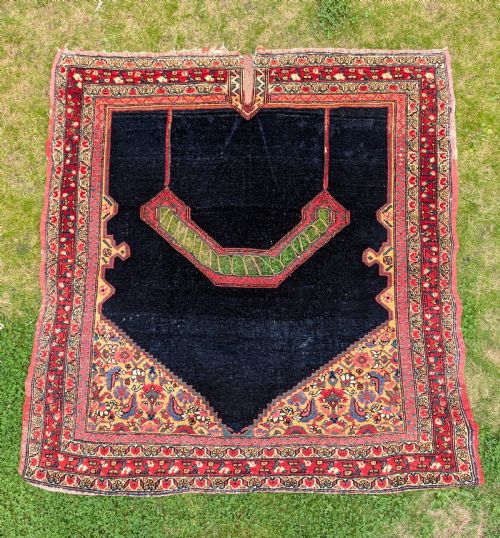
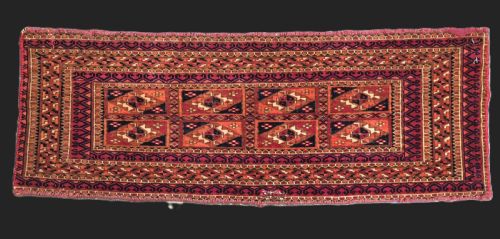
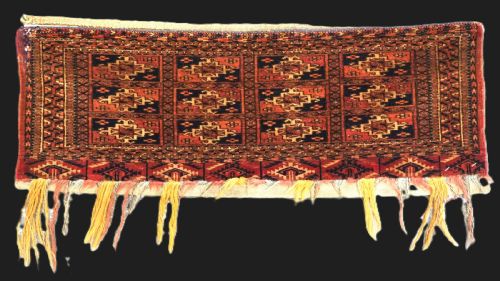
An antique rug trapping encompasses functional and ceremonial nomadic weavings such as saddle covers, horse blankets, camel headdresses, and storage bags. These pieces originate from tribal groups across Central Asia, Afghanistan, and Persia, dating primarily from the mid-nineteenth century through the early twentieth century.
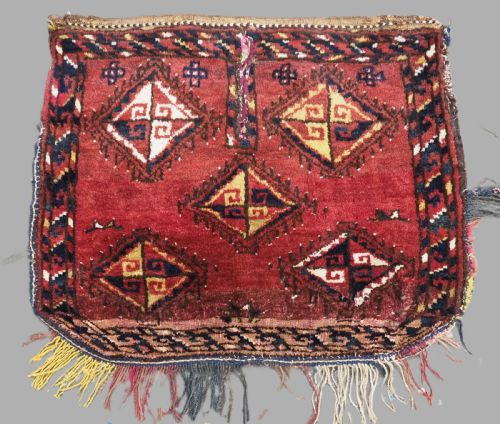
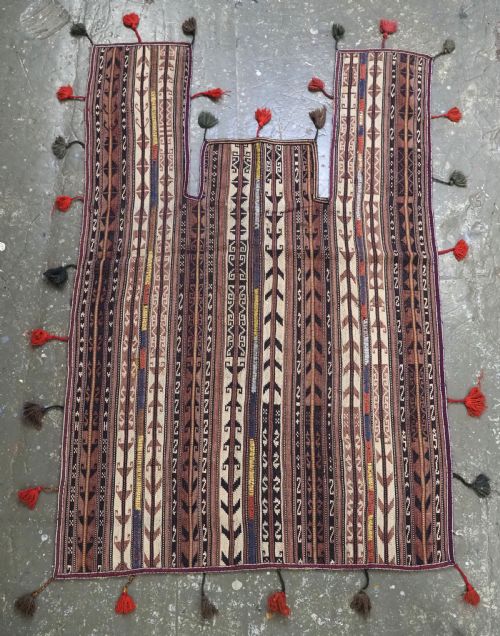
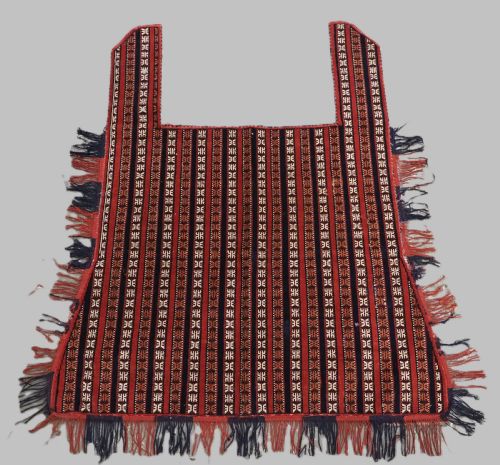
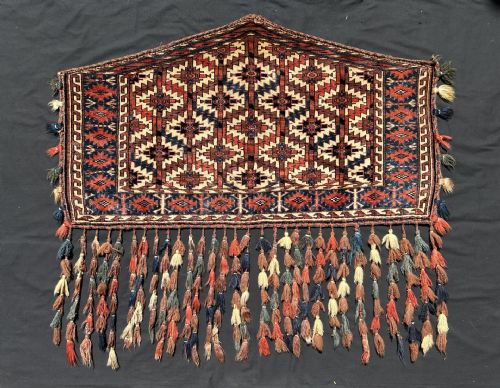
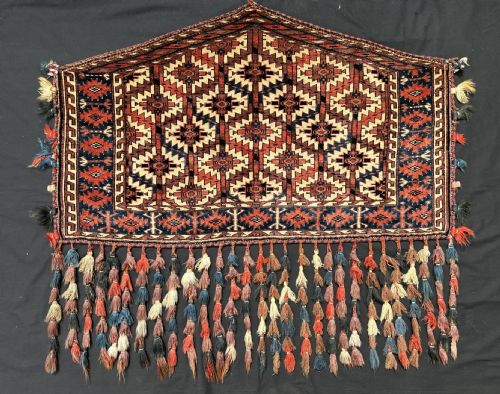
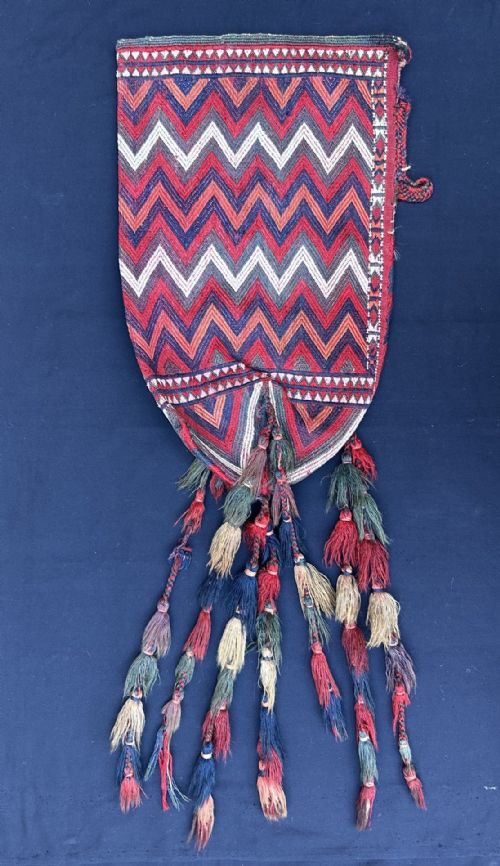
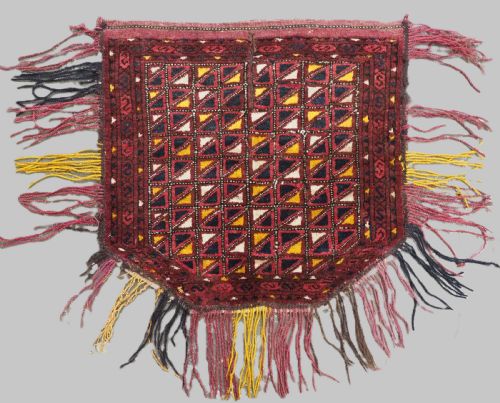
Collectors encounter forms like torbas, asmalyks, and jollars alongside utility bags and cradles. These objects served practical roles in nomadic transport and domestic storage or marked significant ceremonies like weddings.
The material record on this page relies heavily on Turkmen, Baluch, Uzbek, and Qashqa'i tribal weaving traditions. Each piece reflects the specific utilitarian or decorative requirements of its maker's community.
How they were made
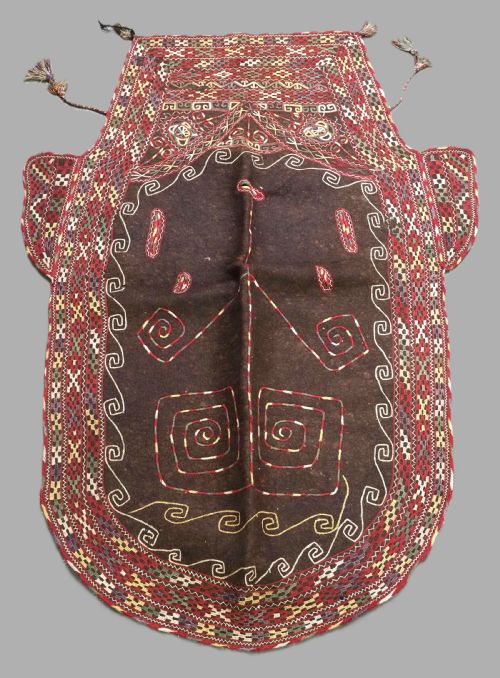
Weavers constructed these textiles primarily using wool foundations paired with natural dyes, cotton, and occasionally silk highlights or thread. Artisans also employed felted wool for heavy ceremonial horse blankets.
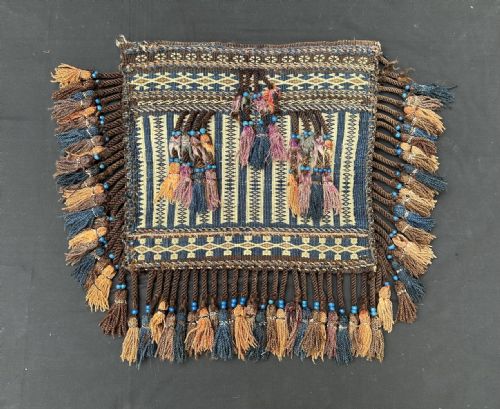
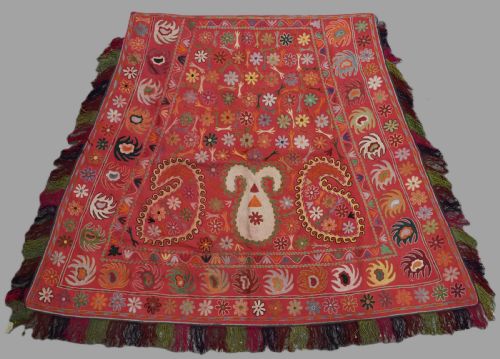
Certain pieces incorporate supplementary details such as glass beads and original tassels or cotton thread embroidery. The density of the weave varies according to the specific tribal tradition and the intended function of the trapping.
Listings feature items dated from the 1850s to the 1920s, dominated by nineteenth-century examples in wool, natural dyes, and felted wool.
What varies in quality
The refinement of an antique rug trapping depends upon the tightness of the weave and the clarity of the tribal guls or motifs. Examples featuring complete original backs, tassels, or uncommon structural formats stand apart from standard fragments.
Artistic execution shows in the handling of natural dyes and the precision of intricate designs such as the curled leaf pattern or multiple guls. The survival of delicate elements like silk highlights and glass beadwork elevates the accomplishment of the weaving.
The Antique Rug Trapping Glossary
- Torba
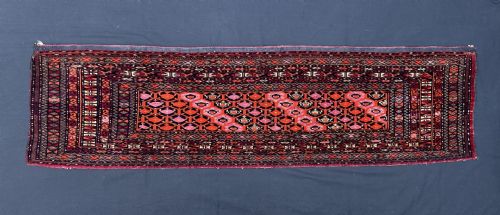
- A small horizontal storage bag traditionally used in nomadic tent interiors for household possessions. These items frequently display distinctive tribal guls across the face.
- Asmalyk
- A pentagonal or wedding trapping hung on the flanks of a bride's camel during nomadic bridal processions. Yomut and other Turkmen tribes wove these elaborate pieces for ceremonial use.
- Gul
- A repeated medallion or primary design motif characteristic of Turkmen and Central Asian tribal weaving. Different tribes utilised specific guls to signify their lineage.
- Jollar
- A long, narrow bag or trapping used for camel transport and tent storage. These rectangular pieces feature organised geometric patterns characteristic of specific oasis regions.
- Chuval
- A large tent storage bag produced by nomadic groups for bulky household goods. Their broad faces allowed weavers to display complex rows of guls.
Antique Rug Trapping: Frequently Asked Questions
What were antique rug trappings used for?
Nomadic tribes utilised these textiles for packing household goods, outfitting riding animals, and decorating transport animals during weddings. Items like torbas stored possessions inside tents, while asmalyks and horse blankets adorned ceremonial processions.
Many pieces fulfilled both practical transport functions and ritual duties within tribal life. Their construction suited the rigorous demands of nomadic migration.
How do you display a rug trapping?
Collectors typically mount these textiles on walls as flat-weave art or place smaller bags on stable surfaces. Their robust wool and tribal motifs lend themselves well to vertical display.
Protection from direct sunlight preserves natural dyes and delicate silk or wool fibres over time. Proper support prevents stretching along the original hanging points.
Which tribes made these trappings?
Weavers belonged to various tribal confederations across Central Asia, Persia, and Afghanistan. Major groups represented include Yomut, Tekke, Ersari, Saryk, and Baluch tribes.
Each tribe maintained distinct weaving structures, colour palettes, and structural motifs. These design variations allow specialists to attribute pieces to specific regions like the Trans-Caspian steppes or the Amu Darya basin.