


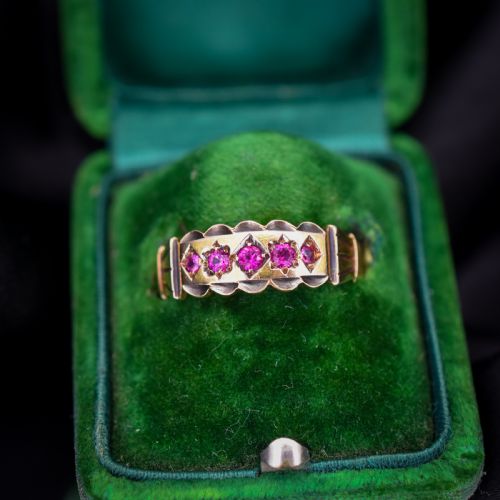
Antique Ruby Band
An antique ruby band brings together rich crimson stones and period gold, offering a tangible piece of history for daily wear.
Antique Ruby Band
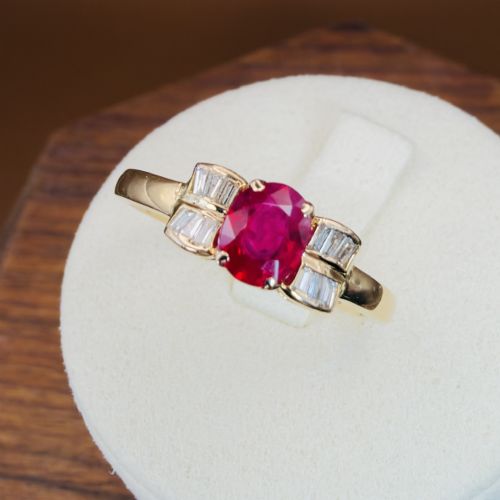
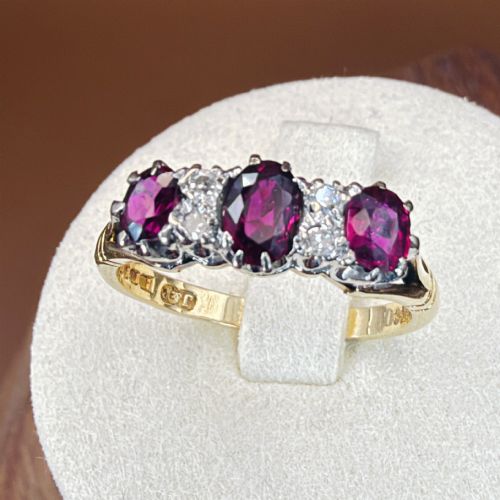
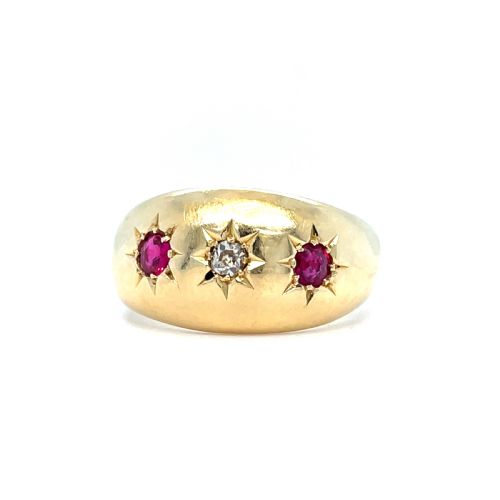
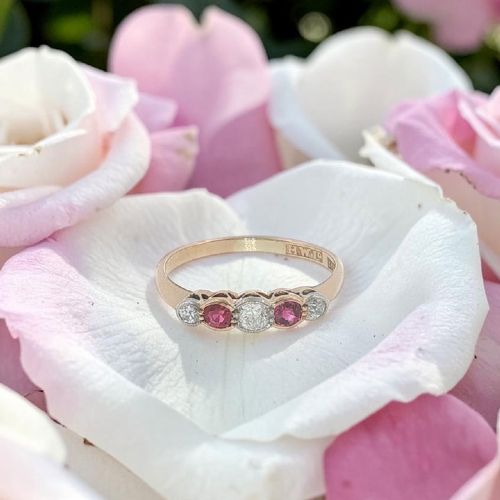
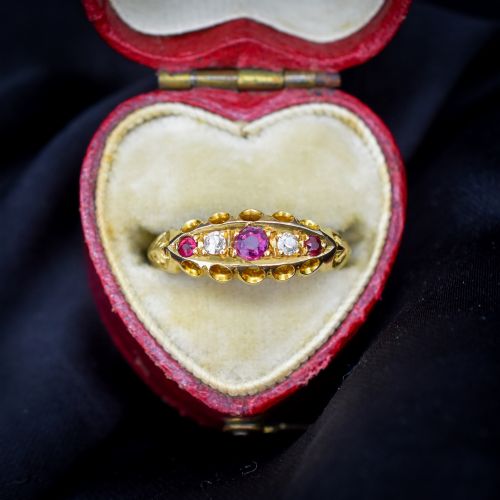
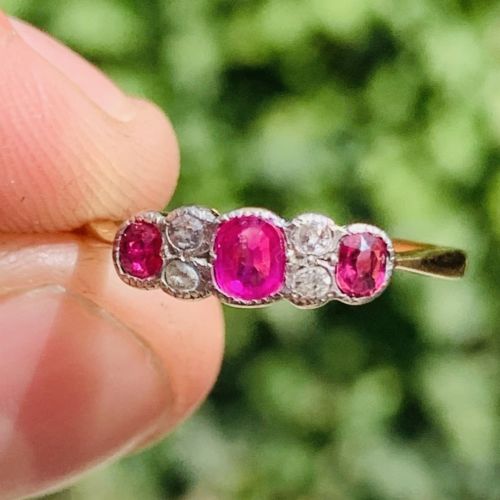
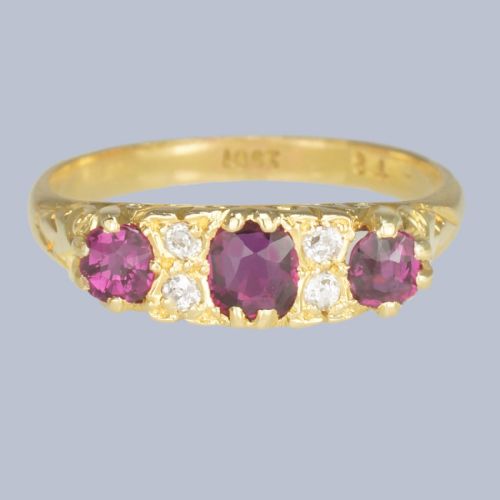
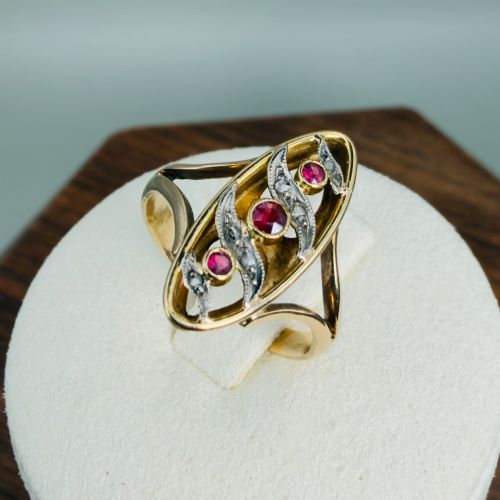
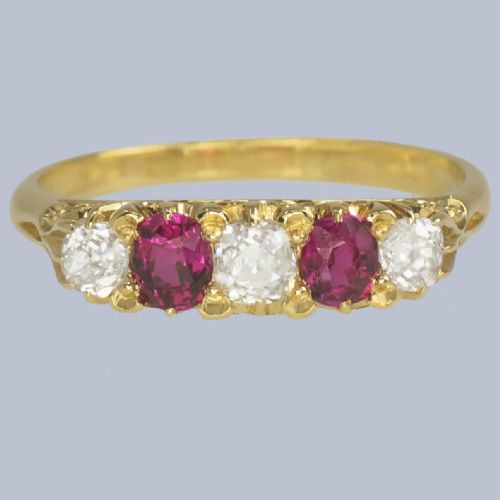
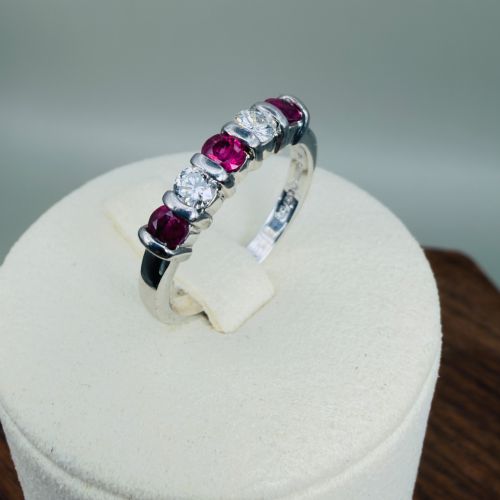
An antique ruby band encompasses finger rings featuring rubies set alongside diamonds, pearls, or garnets within precious metal settings. These pieces primarily date from the Victorian, Edwardian, and Art Deco periods, showcasing traditional craftsmanship through styles such as gypsy settings, starbursts, and five-stone arrangements.
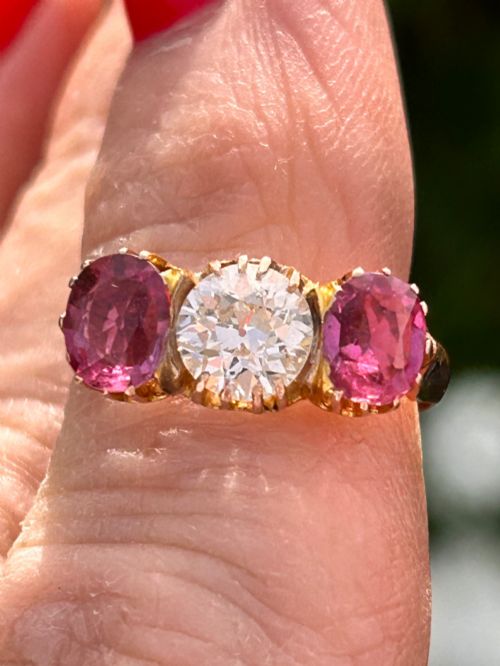
The most common versions met on this page are Edwardian and Victorian creations fashioned in 18ct yellow gold. Many incorporate old-cut diamonds alongside the central ruby, reflecting the prevailing taste for sparkling contrasts during the late nineteenth and early twentieth centuries.
Materials and construction methods
The metalwork relies predominantly on 18ct yellow gold, sometimes paired with platinum sections to secure diamonds effectively in later Edwardian and Art Deco designs. Goldsmiths utilised traditional techniques such as gypsy setting, where stones sit flush into the heavy gold band, and claw or cluster arrangements that maximise light entry.
Gemstone selection paired unheated Burmese rubies with old mine-cut or old European-cut diamonds, set into structured mounts often bearing hallmarks from British assay offices like Chester and Birmingham.
The listings show periods ranging from 1880 through the Victorian, Edwardian, and Art Deco eras, executed in 18ct gold, platinum, and yellow gold.
Factors determining quality
Quality rests upon the natural origin and colour saturation of the ruby, alongside the cut and brilliance of accompanying diamonds. Burmese stones carrying specific geological reports command greater attention for their depth of hue.
The integrity of the original gold band, the crispness of Chester or Birmingham hallmarks, and the precision of the hand-cut gemstone settings distinguish exceptional examples from standard production.
The Antique Ruby Band Glossary
- Gypsy ring
- A style where stones are set flush into a thick band that tapers towards the back. This setting style protects the gemstone girdles and became very popular during the late Victorian era.
- Old mine cut
- An early diamond cut characterised by a cushion shape, high crown, and small table. This cut was hand-faceted before modern machinery standardised diamond proportions.
- Trilogy ring
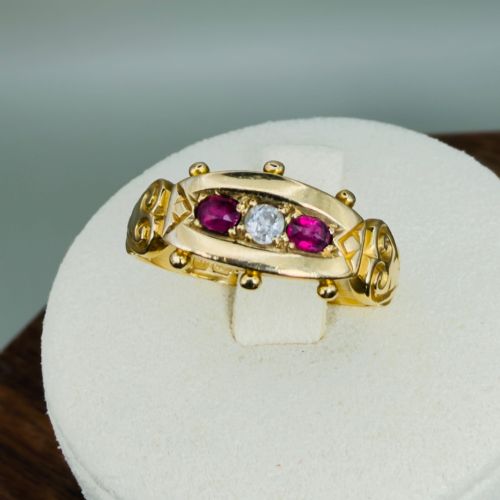
- A ring featuring three primary gemstones arranged in a row, often representing the past, present, and future. In these listings, they typically pair a central ruby with flanking diamonds.
- Navette
- A boat-shaped setting style that points at both ends, creating an elongated silhouette across the finger. This decorative outline frequently incorporates alternating rubies and diamonds.
- Hallmark
- An official stamp applied to precious metals indicating the purity, maker, and assay office of origin. British hallmarks often include date letters that pinpoint the exact year of manufacture.
Antique Ruby Band: Frequently Asked Questions
Can I wear an antique ruby band every day?
Rubies rank high on the Mohs hardness scale, making them durable enough for regular daily wear when mounted securely in robust gold or platinum settings.
However, older rings with low-profile flush or gypsy settings withstand daily tasks better than raised cluster or delicate floral designs, which benefit from occasional removal during heavy activity.
How do I identify a Victorian ruby band?
Victorian examples often display heavier gold weights, distinct Chester or Birmingham assay stamps, and warmer yellow gold hues. Stones from this era frequently utilise old-cut diamonds paired with deep red rubies.
Look for structural characteristics like gypsy settings or starburst motifs, which typify jewellery manufactured during the reign of Queen Victoria and the subsequent Edwardian transition.
What is a Burmese ruby?
A Burmese ruby originates from the Mogok region in Myanmar, historically renowned for producing stones with exceptional natural colour saturation and fluorescence.
Gemmological reports often accompany these specific stones to verify their geographic origin and confirm whether they have undergone heat treatment.
How do I determine my ring size?
Ring sizes in these listings are typically recorded using standard alphabetical sizing letters such as N or K. Measuring an existing ring that fits the intended finger using a professional mandrel provides the most accurate comparison.
Consulting with a specialist jeweller ensures proper sizing, particularly when considering antique bands featuring intricate shank patterns or full hallmarked bands that require careful adjustment.