




Antique Royal Worcester Pot
An antique royal worcester pot brings fine English ceramic artistry to a room, offering painted botanical or animal detail shaped into lidded jars and vases.

Antique Royal Worcester Pot
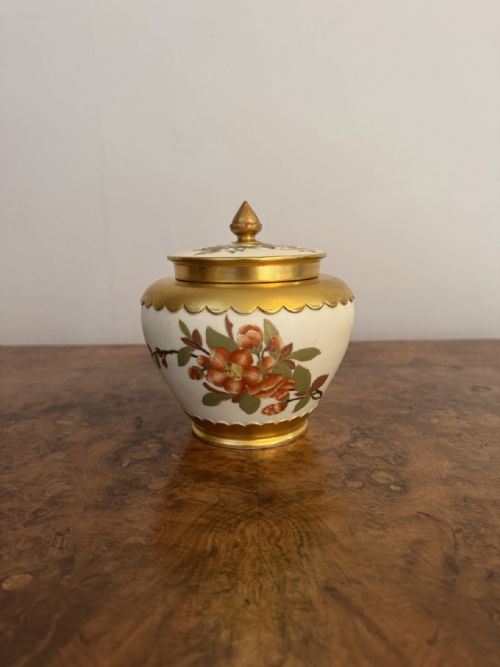
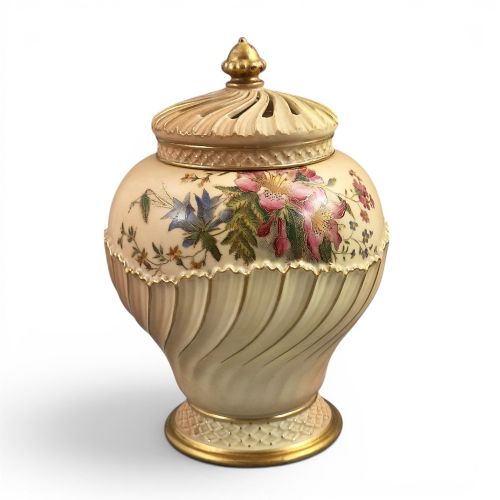
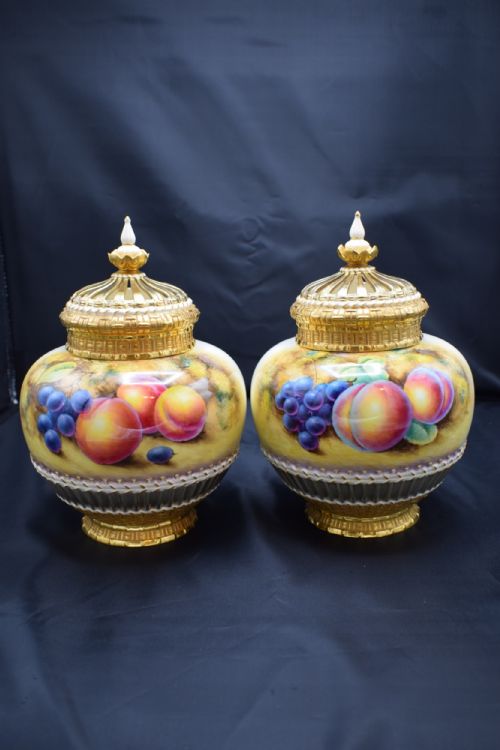
An antique royal worcester pot spans several decades of British ceramic production, most frequently appearing as lidded pot pourri vessels, jardiniere planters, and coffee pots. Buyers exploring this category encounter varied forms ranging from Victorian majolica and late nineteenth-century blush ivory bodies to mid-twentieth-century painted fruit compositions.
The objects take multiple shapes including ovoid jars with crown covers, pedestal vases, and small decorative vessels. Many carry specific artist signatures or specialised factory designations like Hadley Ware, reflecting the diverse output of the manufactory across the Victorian, Edwardian, and later periods.
The selection encompasses both standalone display pieces and paired matching vases designed for formal mantelpieces or side tables. Each version demonstrates the characteristic forms produced in English porcelain and bone china during these active periods.
Materials and manufacture
The pieces are constructed from porcelain and bone china, providing a smooth white ground suited to detailed surface decoration. Artisans applied enamel colours and gold leaf gilding over the ceramic body to accentuate floral motifs, landscapes, and animal subjects.
Many items utilise blush ivory grounds combined with gilt highlights and intricate pierced covers for pot pourri dispersal. Specialised painting techniques allow artists to render naturalistic fruit, Highland cattle, and swans directly onto the glazed surface before final firing.
Several lidded jars retain their original pierced crown covers designed to slowly release dried rose petal scents into Victorian drawing rooms.
Evaluating quality and execution
Quality in these ceramics rests upon the fineness of the hand-painted detail and the reputation of the decorator whose signature appears on the piece. Recognised artists command attention through precise brushwork depicting fruit, animals, or florals.
The weight and crispness of the porcelain body, along with the complexity of gilding and enamel work, separate standard production items from master-level works. Well-modelled covers, such as pierced crown lids on large pot pourri jars, indicate careful factory execution.
James Stinton·Harry Stinton·H Ayrton·William Ricketts·John Smith·C Baldwyn·Kitty Blake·Spilsbury·Raby·M Hunt
The Antique Royal Worcester Pot Glossary
- Blush ivory
- A soft matte cream-coloured ceramic ground used extensively by the factory for ornamental wares. It provides a warm background for hand-painted floral and botanical decoration.
- Pot pourri jar
- A lidded vessel designed to hold dried scented plant material. These containers often feature pierced covers to allow fragrance to diffuse into a room.
- Majolica
- A colourful lead-glazed earthenware style popular in the nineteenth century. This technique produces vibrant relief-moulded surfaces with deep coloured glazes.
- Crown cover
- An ornate pierced lid shaped like a crown used on specific lidded jars. This component allows scent release while concealing the contents within the vase.
- Bone china
- A type of porcelain incorporating animal bone ash for strength and translucency. It forms a durable white body ideal for detailed painting and gilding.
Antique Royal Worcester Pot: Frequently Asked Questions
What is an antique royal worcester pot used for?
These vessels served primarily as ornamental display objects or functional containers for dried scented petals within period drawing rooms.
Lidded jars allowed homeowners to scent domestic spaces while larger jardinieres held indoor plants and floral arrangements.
How do I identify blush ivory pieces?
Blush ivory items feature a distinctive soft matte cream glaze that differs from standard bright white porcelain.
They frequently combine floral hand-painting with subtle gilding across various Victorian and Edwardian vase forms.
Are artist signatures important on these pots?
Signatures by noted decorators indicate higher artistic input and individual hand-painting rather than standard factory transfer printing.
Names associated with specific animal or fruit studies often appear near the base of the decorated surface.
What periods do these ceramics cover?
The available pieces span from Victorian and Edwardian eras through the mid-twentieth century.
Styles evolved from majolica and blush ivory designs into detailed painted fruit and twentieth-century decorative forms.