



Antique Royal Commemorative Pottery
Antique royal commemorative pottery captures historic crowns and jubilees through glazed figures, jugs and plates shaped by centuries of British reign.
Antique Royal Commemorative Pottery
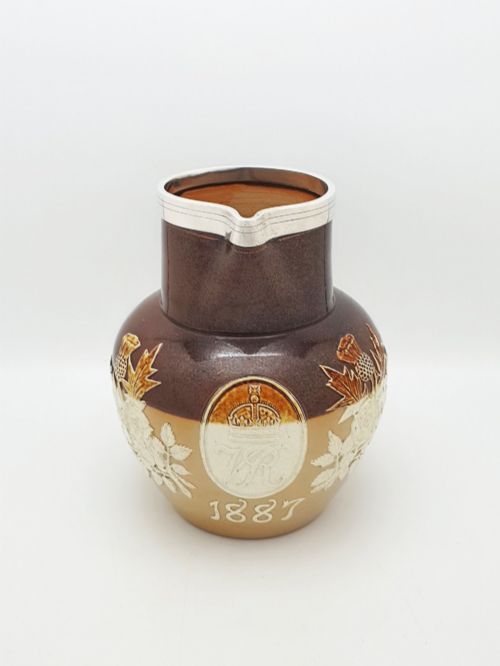
Collectors seeking antique royal commemorative pottery encounter a diverse range of commemorative ceramics, decorative figurines, and jugs spanning from the seventeenth century through to the twentieth century. These pieces record reigns from William III and George III to Queen Victoria and George V, preserving specific royal milestones in clay.
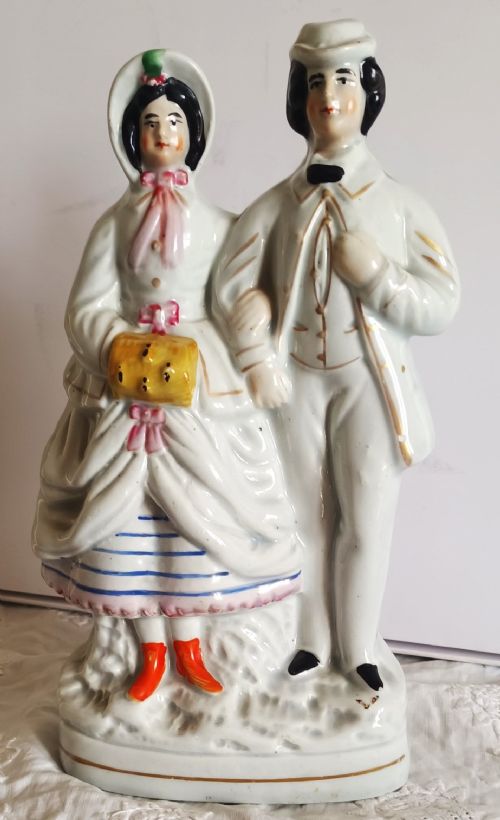
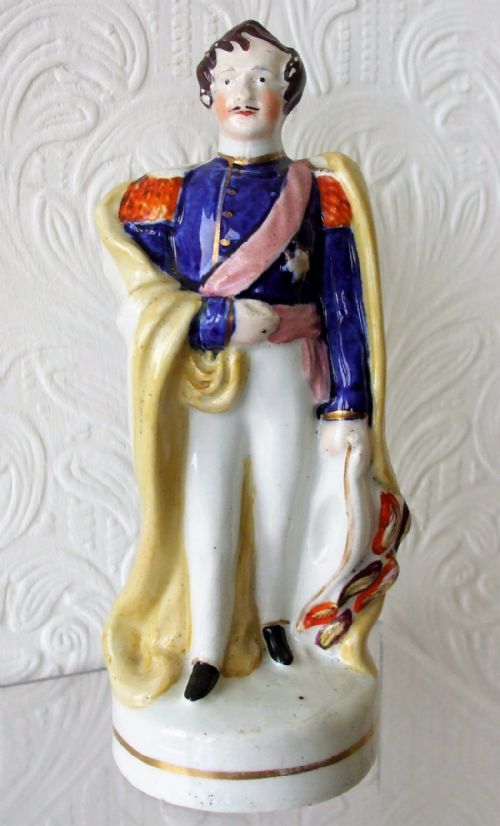
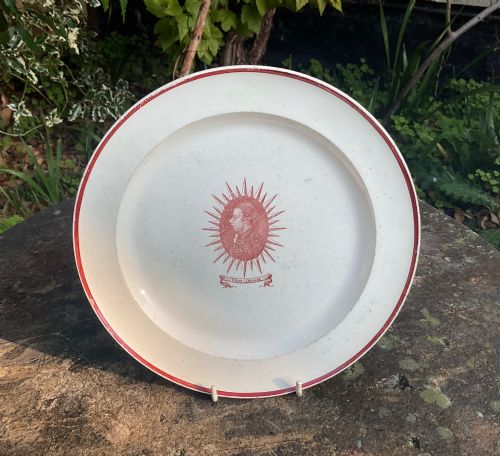
The objects most frequently met on this page include Staffordshire pottery royal portrait figures and commemorative jugs from the Victorian era. Alongside these larger portrait pieces, buyers find creamware plates, Prattware child's sets, and smaller coronation or jubilee cups produced for public celebration.
Forms vary from utilitarian jugs and pitchers to miniature tea sets and decorative plates meant for display rather than daily service. Each piece ties directly to a distinct monarch, capturing the shifting styles of Georgian, Victorian, and Edwardian ceramic production.
Materials and methods of manufacture
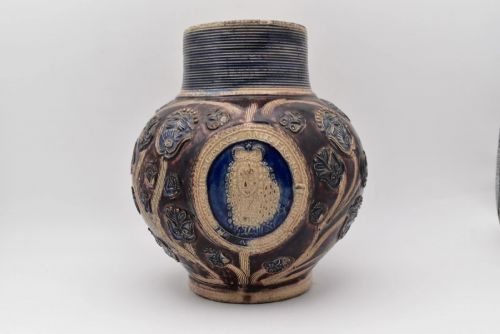
Potters relied on earthenware, creamware, and salt-glazed stoneware as the primary bodies for shaping these commemorative vessels and figures. Early works utilise heavy salt-glazed stoneware or creamware, while later nineteenth-century pieces lean heavily towards Staffordshire earthenware and glazed ceramic.
Decoration was achieved through cobalt glaze, applied enamels, and flow blue transfers to render royal likenesses and inscriptions clearly. Glazes were applied to seal the ceramic body and protect the painted or printed details commemorating the sovereign.
Antique Royal Commemorative Pottery Retail Price Guide 2026
Typical asking prices for royal commemorative pottery among the pieces listed under this phrase on Sellingantiques today, from the lower quarter to the upper quarter. They describe what is for sale here now, not the wider market.
Prince Albert occasionally steals the spotlight from Queen Victoria on sturdy Staffordshire mantels.
Factors determining quality
The preservation of the original glaze and enamel colours dictates the visual impact of each ceramic object. Pieces that retain their bright cobalt tones or vibrant enamel pigments without significant surface degradation stand higher in the range.
Royal Doulton·Doulton Lambeth·Wemyss
The Antique Royal Commemorative Pottery Glossary
- Creamware
- A refined earthenware with a pale yellowish or cream-coloured lead glaze developed in Yorkshire and Staffordshire during the eighteenth century. It provided a smooth canvas for printed and painted royal portraits.
- Staffordshire
- A major English pottery-producing area known for moulded earthenware figures and jugs. Potters here captured numerous royal likenesses for the domestic market.
- Salt-Glazed Stoneware
- A dense, impervious ceramic created by throwing common salt into the kiln during high-temperature firing, producing a pitted texture resembling orange peel. It appears on early pieces such as Westerwald jugs.
- Prattware
- A type of English earthenware featuring underglaze colours, typically blue, yellow, brown, and green, used on figures and child's sets. It gained popularity for bright, multi-coloured decorative wares.
- Loving Cup
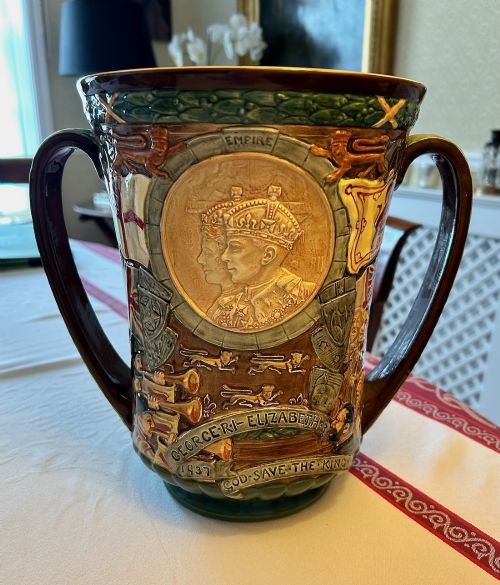
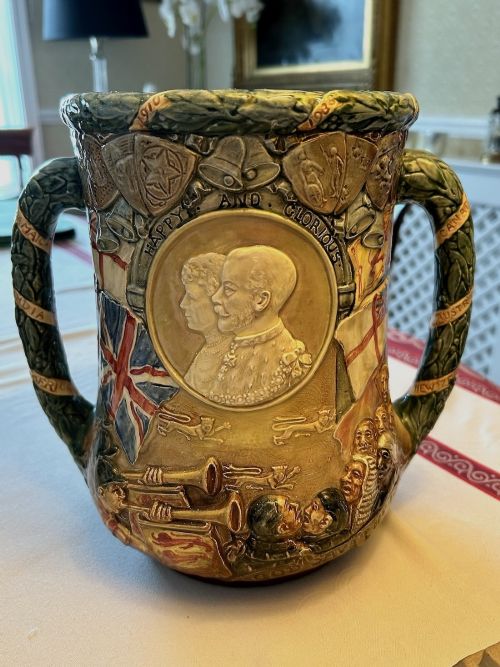
- A large two-handled drinking vessel often produced in ceramic to mark coronations, jubilees, and royal weddings. Guests shared these vessels during celebratory toasts.
Antique Royal Commemorative Pottery: Frequently Asked Questions
What periods do these pieces cover?
The pieces span from the seventeenth century through the Georgian, Victorian, and Edwardian eras up to the mid-twentieth century. Each era reflects the distinct ceramic techniques and artistic styles of the reigning monarch's time.
Collectors will find works ranging from early salt-glazed stoneware jugs to mass-produced Victorian earthenware figures and twentieth-century jubilee cups.
How were commemorative pieces used?
Many items, such as loving cups, jugs, and plates, were created for public display during coronations, royal weddings, and jubilees. Some served functional roles in homes, while others were kept purely as decorative mantelpiece ornaments.
Smaller items like child's sets were intended for domestic use or as educational keepsakes for younger generations to learn royal lineage.
Are these ceramics marked by makers?
Some later pieces feature factory stamps or impressed marks indicating the pottery or manufacturer responsible for production. Earlier works from the Georgian and seventeenth-century periods often rely on stylistic attributes and historical inscriptions rather than formal stamps.
Identifying marks, when present, help narrow down the exact decade of manufacture and confirm the authenticity of the commemorative item.
How should I care for antique pottery?
These ceramic objects require gentle handling and stable indoor environments away from direct sunlight and extreme temperature fluctuations. Dust them softly with a dry cloth and avoid using harsh cleaning agents on the glazed or enamelled surfaces.
Displaying them securely on stable surfaces protects fragile handles and protruding figures from accidental knocks.