

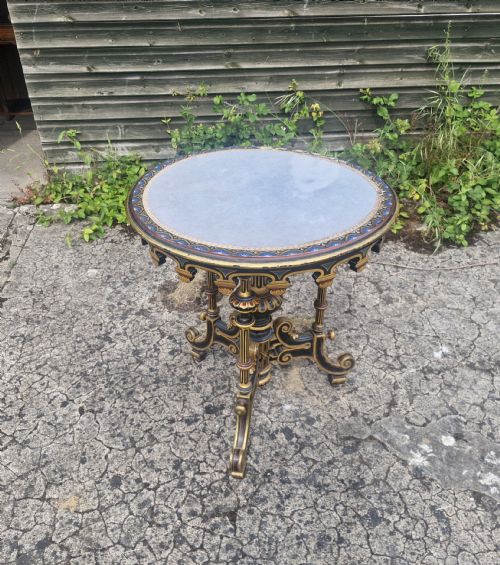


Antique Round Parlor Table
These pieces are the dependable centrepiece of a traditional room, chosen for their social surface and craftsmanship.
Antique Round Parlor Table
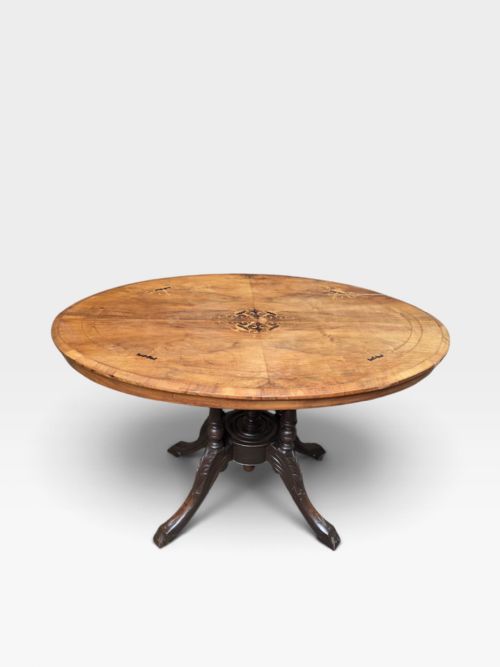
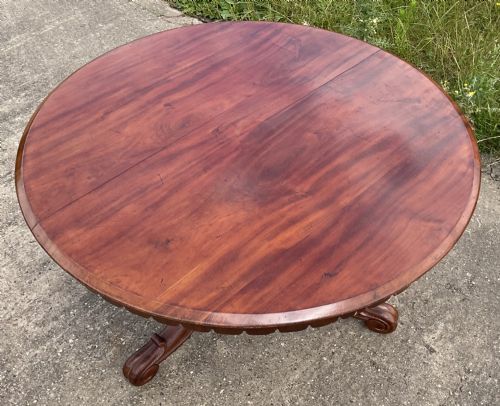
An antique round parlor table is a circular stand designed for nineteenth-century social rooms, often serving as a central display point or a surface for games. The versions most commonly met on this page span the Victorian period and the wider nineteenth century, taking the form of centre tables and occasional tables with circular tops.
Makers and workshops constructed these tables in various regional styles, including French Empire, French Chateau, and Aesthetic Movement designs. Forms range from simple wooden coffee tables and inlaid occasional pieces to elaborate games tables featuring zodiac carvings or specialised surfaces.
How they were made
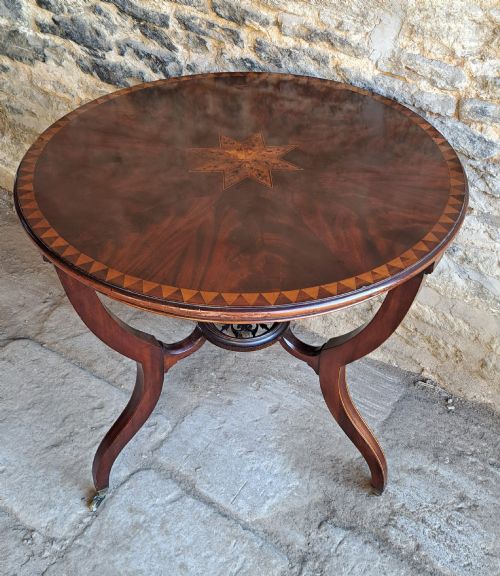
Cabinetmakers utilised dense timbers such as mahogany, walnut, rosewood, and kingwood as the structural foundation, often applying intricate marquetry or wood inlays across the circular tops. Exotic veneers like coromandel and burr root maple appear alongside painted and decorated surfaces.
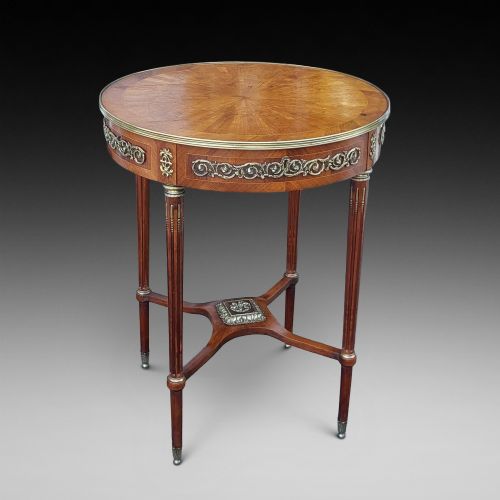
Metal mounts in brass, gilt bronze, or ormolu provide structural reinforcement and decorative contrast, while select pieces incorporate inset marble tops. Joinery methods reflect nineteenth-century standards, uniting solid timber frames with turned or carved pedestals.
Antique Round Parlor Table Retail Price Guide 2026
Typical asking prices for round parlor table among the pieces listed under this phrase on Sellingantiques today, from the lower quarter to the upper quarter. They describe what is for sale here now, not the wider market.
Listings feature circular tables spanning the nineteenth century through the 1940s, utilising mahogany, walnut, marble, and gilt bronze.
What varies in quality
The standard of execution separates standard production items from exceptional workshop output, particularly in the precision of wood inlays, marquetry patterns, and hand-carved details. Grain selection in burr walnut or kingwood veneers heavily influences the visual depth of the surface.
The integration of metal mounts, such as ormolu castings or fitted marble tops, dictates the refinement of the piece. Tables bearing attribution to notable makers or specific stylistic revivals typically exhibit superior joinery and more ambitious ornamental programmes.
François Linke
The Antique Round Parlor Table Glossary
- Centre table
- A freestanding table designed to be viewed from all sides, traditionally placed in the middle of a room rather than against a wall.
- Occasional table
- A small, movable table intended for specific, intermittent use within a principal living space.
- Ormolu
- Gilt bronze ornamentation applied to furniture, popular in French and revival styles for adding metallic contrast to dark timber.
- Marquetry
- Decorative veneer patterns formed by fitting together thin pieces of wood, shell, or ivory to create pictorial or geometric designs.
- Coromandel
- A dense, heavy tropical hardwood prized for its dark grain and contrasting honey-coloured streaks, used in high-status nineteenth-century furniture.
Antique Round Parlor Table: Frequently Asked Questions
What is a parlor table?
A parlor table is a freestanding circular piece of furniture used in nineteenth-century reception rooms for displaying decorative objects, serving tea, or gathering for conversation and card games.
Unlike dining tables, these pieces were scaled for social interaction and placement in the middle of a room rather than functional dining use.
How do I style an antique round table?
Position the table as a central focal point in a room, allowing clearance around the perimeter so the circular top and pedestal base remain visible from all angles.
Keep surface decoration minimal to let the wood grain, marquetry, or marble top remain the primary visual element.
What woods were used for these tables?
Cabinetmakers relied on durable hardwoods including mahogany, walnut, rosewood, and oak for the primary framework and structural integrity of the tables.
Decorative surfaces frequently incorporated finer veneers such as kingwood, coromandel, satinwood, and burr maple to create contrasting visual patterns.
How do I identify a Victorian round table?
Victorian round tables generally feature solid timber construction, turned or carved central pedestals, and circular tops often embellished with marquetry inlay or fine veneer work.
Stylistic markers range from heavy Gothic Revival details to lighter Aesthetic Movement designs reflecting the changing tastes of the nineteenth century.