
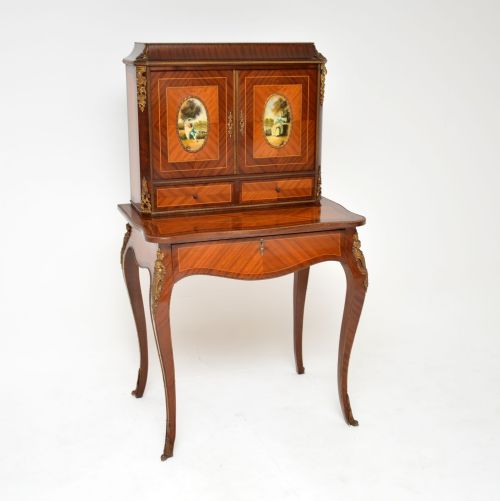


Antique Rosewood Escritoire
An antique rosewood escritoire combines a fitted writing surface with private compartments, offering a handsome piece of period furniture built for correspondence.
Antique Rosewood Escritoire
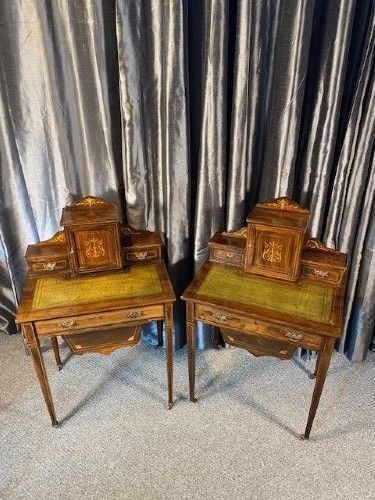
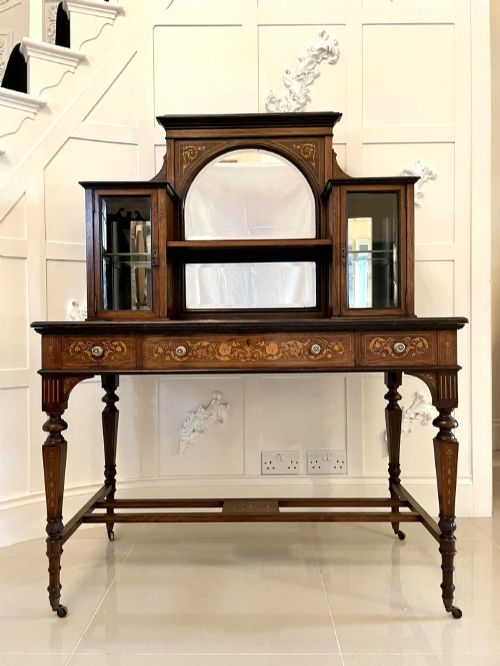
An antique rosewood escritoire is a dedicated writing cabinet or desk designed to keep papers and writing implements tucked neatly away behind a fall-front or writing flap. When you search for this phrase, you meet pieces spanning the nineteenth century alongside later revivals, taking forms such as upright secretaires, bonheur du jours, and ladies writing desks.
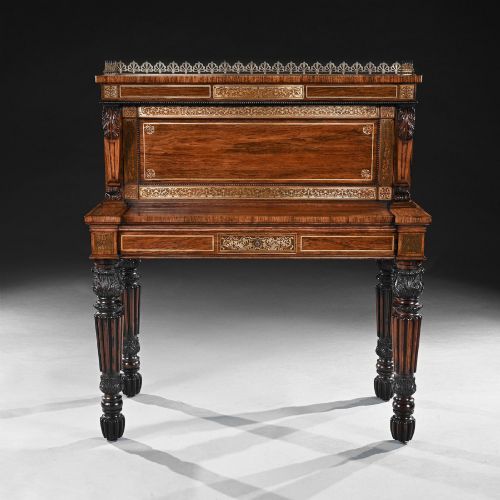
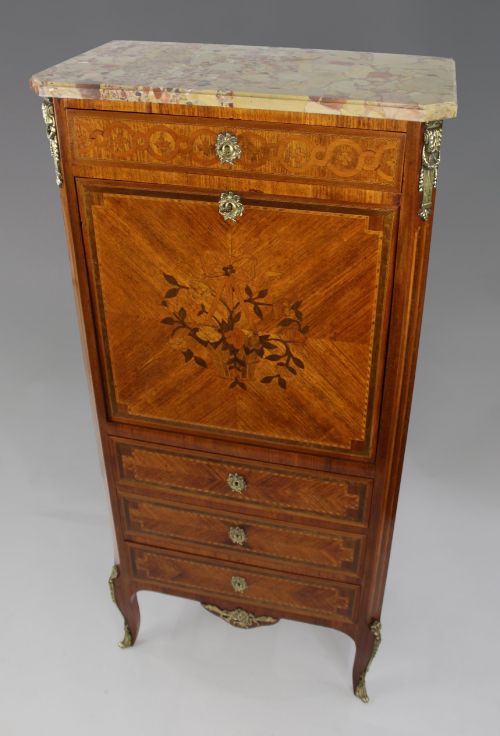
The upright examples often feature a marble top above a drop-down writing surface that reveals small internal drawers and pigeonholes. Other iterations lean towards French Louis XV styles, Regency brass inlay, and Victorian marquetry.
Many of these cabinets incorporate secret drawers or clever hidden compartments alongside their main writing sections. They bridge the gap between ornamental cabinetry and functional workspace, suiting a study or drawing room.
How they were made
Cabinet makers built these pieces using dense tropical hardwoods, applying rosewood veneers over sturdier secondary timbers to create rich, figured grain patterns across the exterior. Marquetry inlay in lighter woods frequently decorates the fall-fronts and writing surfaces.
Metal mounts in ormolu, gilt bronze, and brass accent the corners, drawer pulls, and key escutcheons, particularly on French revival pieces. Leather inserts often provide a smooth writing plane inside the drop-down flap or upon the associated writing tables.
Marble tops, seen on several French variants, required precise stone-cutting to fit the upper surface of the cabinet carcase securely. Brass stringing and inlay demanded meticulous hand-cutting into the rosewood veneer.
Listings feature rosewood, ormolu, brass, kingwood, leather, marble, and gilt bronze across nineteenth-century and twentieth-century pieces.
What varies in quality
The refinement of the marquetry and the crispness of the brass or ormolu mounts set finer examples apart from standard production pieces. Superior cabinets display tight, perfectly fitted joinery on internal secret drawers and smooth action on the drop-down writing flap.
The choice and figuring of the rosewood veneer dictate much of the visual appeal, with symmetrical grain matching marking out superior workmanship. Original marble slabs and intact leather writing surfaces preserve the integrity of the piece.
Attribution to known workshops or adherence to specific period styles, such as Regency brass inlay or French Rococo revival, influences the standing of an escritoire.
Gillows Oxford Street Workshop·John MaClean
The Antique Rosewood Escritoire Glossary
- Escritoire
- A writing cabinet, typically featuring a drop-down front that serves as a desk surface. It conceals internal compartments for letters and stationery.
- Marquetry
- Decorative patterns formed by inserting pieces of wood veneer into a master panel. These designs often feature floral or geometric motifs.
- Ormolu
- Gilded bronze mounts applied to furniture for decoration. The technique was widely utilised by French cabinet makers.
- Bonheur du jour
- A light lady's writing desk featuring a small cabinet or set of shelves on top. The form gained popularity during the eighteenth and nineteenth centuries.
- Secretaire a abattant
- An upright tall cabinet with a hinged fall-front writing flap. It provides substantial storage while occupying a modest floor footprint.
Antique Rosewood Escritoire: Frequently Asked Questions
What is an escritoire used for?
An escritoire provides a private space for writing letters, storing stationery, and keeping personal documents organised. The drop-down flap creates a flat writing surface when needed and closes to hide the clutter.
Inside, small drawers and pigeonholes keep inkwells, paper, and correspondence neatly sorted away from view.
How do I identify a Victorian escritoire?
Victorian examples often display rich rosewood veneers combined with marquetry inlay or walnut and mahogany elements. They frequently reflect revival styles like French Rococo or incorporate intricate brass work.
Construction methods inside the secret drawers and the weight of the timber help confirm the nineteenth-century origin.
Where should I place an escritoire at home?
These compact cabinets suit studies, drawing rooms, or bedrooms where a large desk would overwhelm the space. Their finished backs and decorative marquetry sometimes allow them to sit away from the wall.
Keep them away from direct sunlight and strong heat sources to protect the rosewood veneer and leather inserts from drying out.
Are secret drawers common in these desks?
Secret compartments and hidden drawers are a traditional feature of many period escritoires and cabinets. Makers built them into the internal structure to safeguard valuables and private letters.
Accessing them often requires sliding panels, lifting false bottoms, or releasing spring catches hidden within the pigeonhole section.