


Antique Rosewood Bracket
An antique rosewood bracket is either a precision timepiece housed in rich timber or a architectural shelf designed to hold one.
Antique Rosewood Bracket
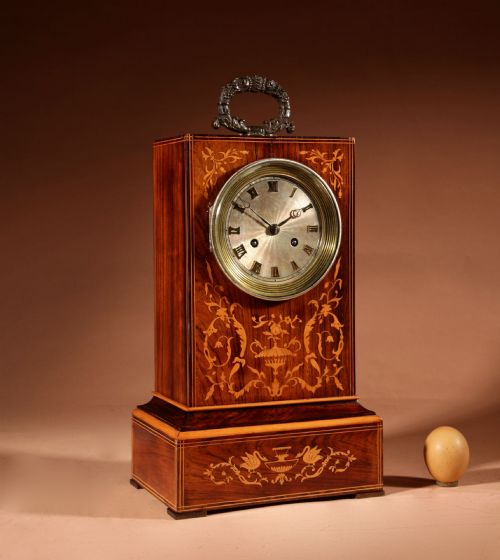
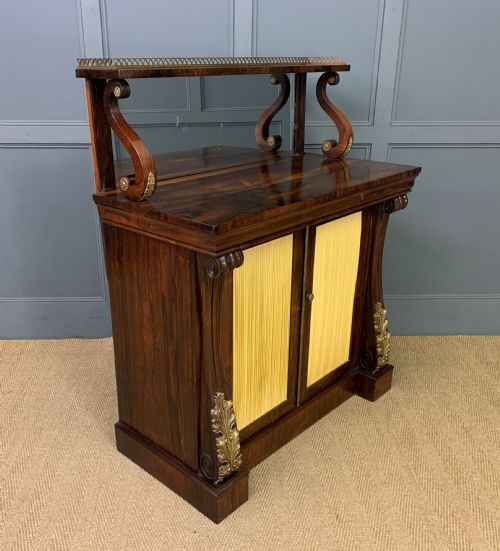
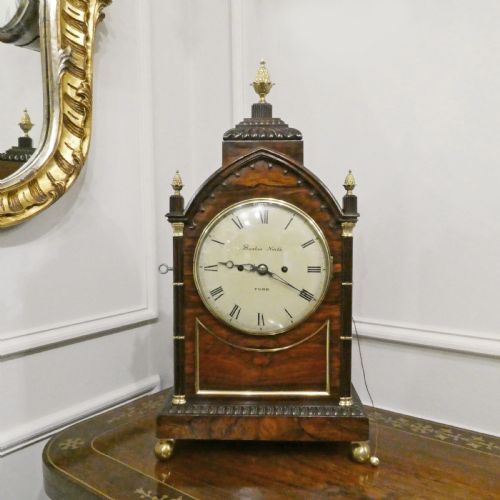
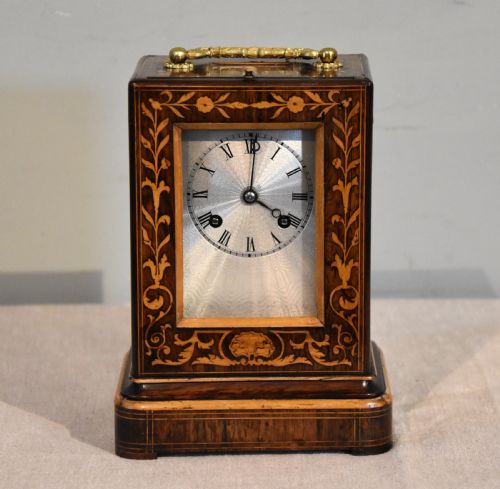
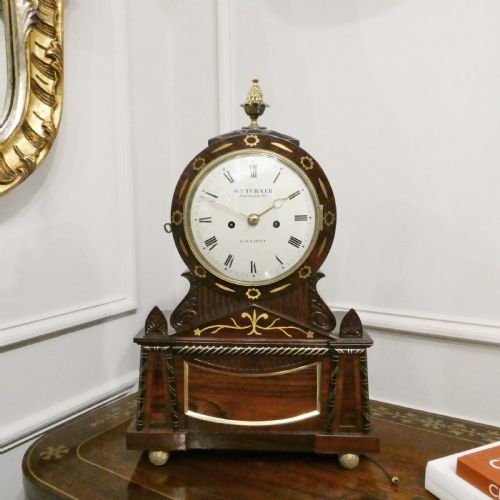
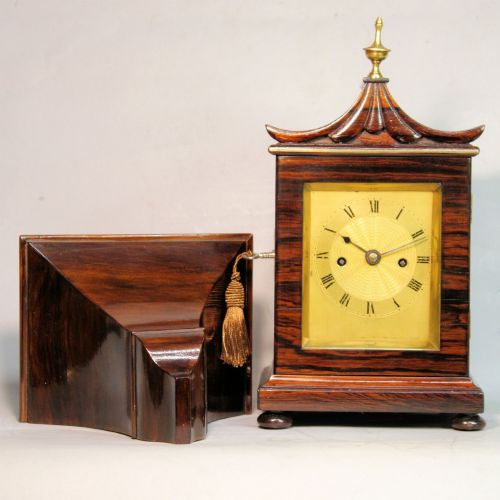
When you search for an antique rosewood bracket, you encounter two distinct forms: freestanding or table clocks housed in architectural timber cases, and wall-mounted shelves designed to support them or other decorative objects. The pieces appearing most frequently across these listings are sophisticated mantel and library clocks spanning the Regency, Victorian, and Georgian periods, alongside functional wooden bracket shelves.
Makers and horologists during the nineteenth century constructed these items in various styles including Regency Gothic Revival, French nineteenth-century marquetry designs, and substantial William IV formats. The timber reveals deep reddish-brown grains, often enhanced with contrasting stringing or brass inlay, giving each piece a distinct architectural presence whether placed upon a sideboard or fixed directly to a wall.
Materials and Construction
Cabinet makers utilised dense rosewood veneers over firmer secondary timbers, selecting pieces with pronounced figuring to catch the light on clock cases and wall shelves alike. Brass inlay and fine boxwood stringing were frequently let into the timber surfaces in geometric or floral motifs, while glass panels protected delicate enamel dials and silvered metal chapters.
Horological housings often incorporated fusee movements driven by chains or cords, demanding precise mechanical skill from makers across London, York, Reading, and continental workshops. Internal components utilised brass and steel, pairing robust striking trains with platform escapements or pendulum regulations.
Listings feature rosewood, brass, glass, enamel, mahogany, silvered metal, boxwood, and fabric across nineteenth-century forms.
Distinctions in Execution
Quality in these items rests upon the crispness of the brass inlay, the intricacy of any marquetry work, and the depth of figure in the rosewood surface. Superior examples demonstrate tight joinery on the timber cases and feature signed movements by established makers whose engraving on the backplate remains sharp and legible.
Lesser pieces exhibit simpler execution with plain timber surfaces, heavier proportions, and unsigned or replacement movements that lack the refined finishing of London or French workshops. The harmony between the architectural case and the dial determines the overall success of the piece.
Barber & North of York·George Orpwood·Seller of Reading·Henry Marc·Arnold and Frodsham·Walker and Hall·Plumbly & Tupman·L.Donne Birchin Lane·Malecot of Paris·Lenzkirch
The Antique Rosewood Bracket Glossary
- Fusee
- A conical pulley used in clock movements to maintain even tension on the chain as the mainspring unwinds. This mechanism ensures more consistent timekeeping throughout the duration of the wind.
- Bracket Clock
- A portable clock originally designed to sit upon a wall bracket or a table. Over time, the name persisted even for larger mantel clocks that stood independently.
- Marquetry
- The art of applying decorative pieces of veneer to a structure to form intricate patterns or pictures. Craftsmen employed contrasting woods and metals to achieve pictorial depth.
- Escapement
- The mechanical linkage that controls the rotation of the gear train by allowing the wheels to move forward at regular intervals. It delivers impulses to maintain the motion of the pendulum or balance wheel.
- Silvered Metal
- A brass or copper dial plate treated with a silver compound to produce a bright, matte finish. Numerals and maker signatures are typically engraved and darkened for legibility.
Antique Rosewood Bracket: Frequently Asked Questions
How do I wind a fusee clock?
Insert the winding key into the dial aperture and turn it steadily clockwise until resistance indicates the mainspring is fully tensioned. Take care not to overwind antique mechanisms.
Ensure you support the key evenly to avoid bending the arbor. Most fusee movements require attention every eight days or once a month depending on the specific train.
Where should I place a bracket shelf?
Fix wooden wall shelves securely into structural studs or masonry using appropriate fixings to support the weight of the timber and any placed object. Avoid positioning them in areas subject to dampness or direct sunlight.
Rosewood benefits from stable indoor humidity and gentle placement away from active heat sources that might cause the timber to dry or split over time.
What is the difference between a library clock and a mantel clock?
Library clocks generally feature smaller, highly portable designs with glass panels on multiple sides to display the movement's inner workings. Mantel clocks are traditionally heavier and more architectural in format.
Both types served domestic and study spaces during the nineteenth century, though library clocks often prioritised visible escapements and travel utility.
How can I tell a Regency clock from a Victorian one?
Regency timepieces often display bolder brass inlay, clean architectural lines, and restrained classical proportions influenced by contemporary taste. Victorian examples frequently incorporate heavier carving, marquetry, or revival styles.
Examining the internal movement and the style of the dial lettering helps confirm the period of manufacture alongside the choice of timber veneer.