








Antique Rosewood Bookshelves
These antique rosewood bookshelves bring rich timber grain and classic architectural proportions to a room, offering sturdy display space for a growing collection of volumes.
Antique Rosewood Bookshelves
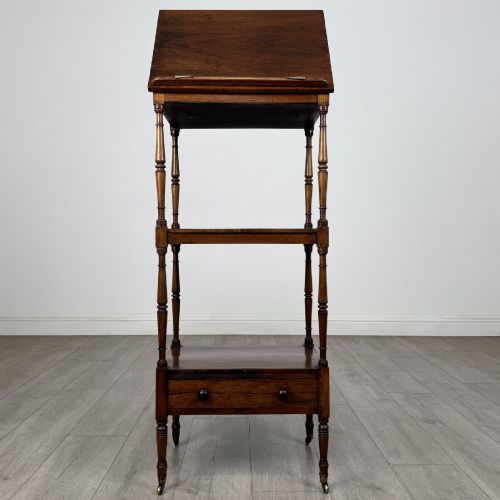
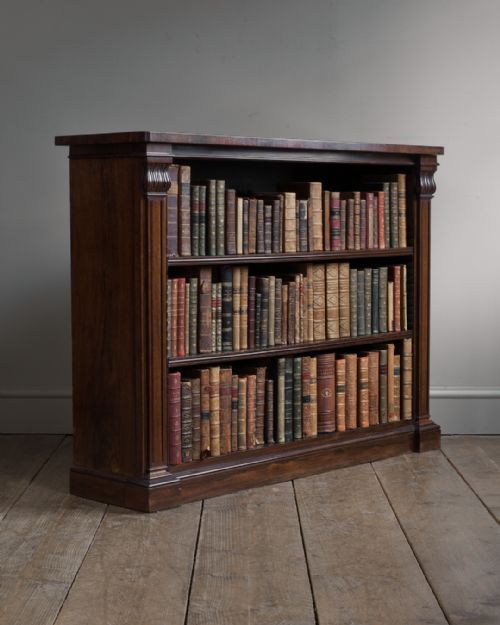
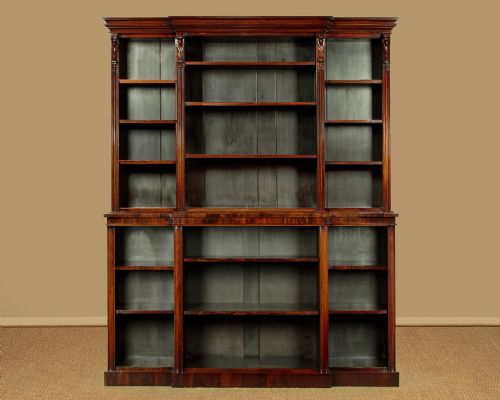
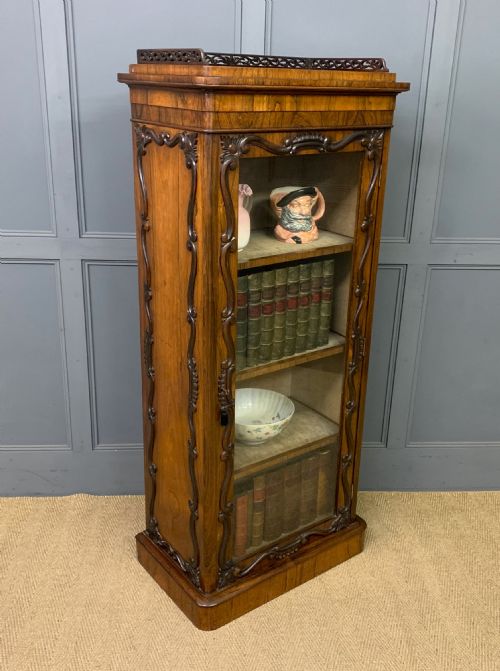
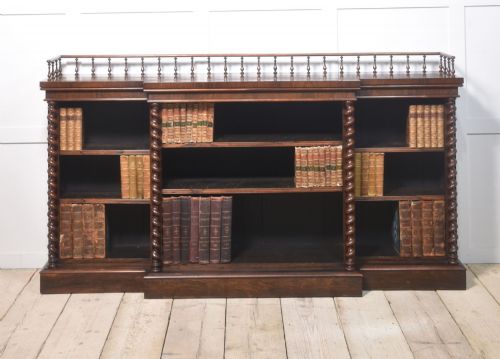
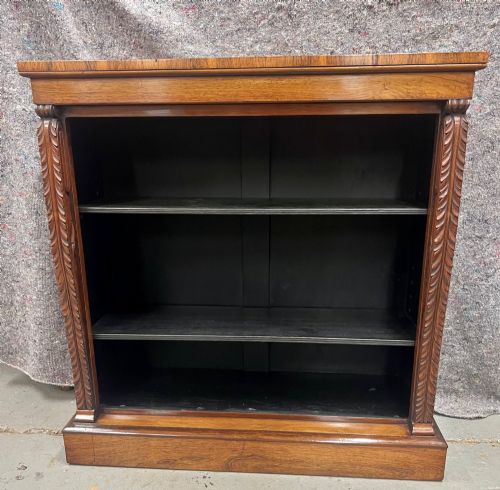
When you search for antique rosewood bookshelves, you encounter pieces spanning the Regency, Victorian, and Edwardian periods. The selection on this page centres on open bookcases, low breakfront units, and tiered whatnots designed to hold libraries in domestic settings.
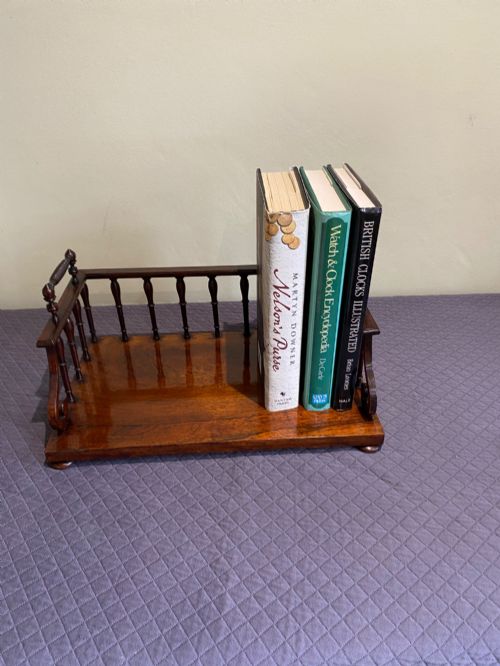
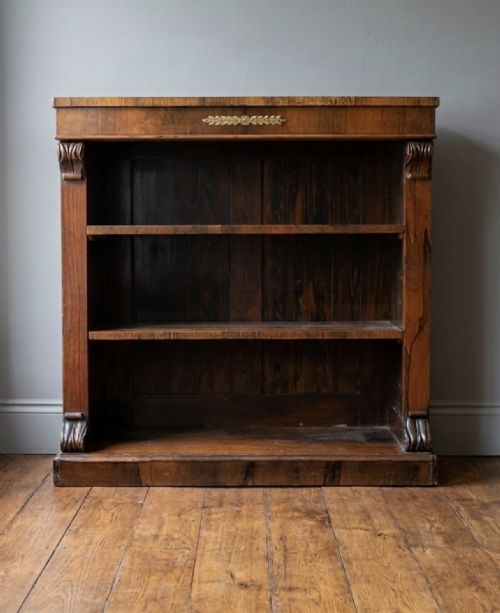
Open bookcases dominate the available forms, often featuring adjustable shelves supported by brass fittings. More compact examples include wall shelves, desk accessories, and multi-tier etageres suited to smaller rooms.
Origins stretch from English workshops to French Empire and Chinese Qing style iterations, reflecting diverse cabinet-making traditions. Pieces range from simple utilitarian storage to grand breakfront library fixtures.
Materials and construction
Makers utilised solid rosewood and rosewood veneer applied over hardwood or softwood carcases. Timber selection prioritised rich, dark grain patterns that were polished to a high sheen.
Brass detailing frequently appears as inlay, grilles, or shelf support ratchets, adding metallic contrast to the timber. Selected pieces incorporate patinated marble tops or glass panels to vary the surface texture.
Construction techniques include carved corbels, turned columns, and tiered platforms secured with traditional joinery. Painted wood surfaces also emerge as a simulated finish on specific nineteenth-century editions.
Antique Rosewood Bookshelves Retail Price Guide 2026
Typical asking prices for rosewood bookshelves among the pieces listed under this phrase on Sellingantiques today, from the lower quarter to the upper quarter. They describe what is for sale here now, not the wider market.
Several bookcases arrive with adjustable brass ratchets that still click into place after nearly two centuries of service.
Quality variations
The distinction between ordinary and superior pieces rests on timber selection and architectural ambition. Finer examples display continuous, highly figured rosewood grain across the primary facades, whereas simpler items utilise plainer veneers.
Subtleties of proportion and enrichment separate standard units from top-tier work. Carved corbels, precise brass adjustable shelf mechanisms, and breakfront profiles elevate a piece beyond basic utility.
James Winter·Samson & Son London
The Antique Rosewood Bookshelves Glossary
- Breakfront
- A cabinet or bookcase whose central section projects forward from the flanking wings. This architectural arrangement creates depth and shadow across the front elevation.
- Etagere
- A set of open shelves for displaying small objects or books, typically with multiple tiers supported by slender columns. These pieces function as versatile stand-alone furniture items.
- Whatnot
- A piece of furniture consisting of a series of open shelves tiered one above the other. Originally used for ornaments and books, it sits easily in corners or against walls.
- Corbel
- A projecting bracket of timber supporting a shelf or upper structure. Carved versions add decorative weight beneath the cornice of a bookcase.
- Waterfall bookcase
- A shelving unit where each tier is successively deeper than the one above, creating a stepped profile resembling a cascade. The design gained popularity during the nineteenth and early twentieth centuries.
Antique Rosewood Bookshelves: Frequently Asked Questions
How do I adjust the shelves?
Many nineteenth-century bookcases utilise brass ratchets or peg supports set into the interior sides. You simply lift the shelf to clear the supports and reposition it at the desired height.
Original mechanisms move smoothly within their vertical tracks. Care should be taken when handling older timber to avoid binding the shelf against the interior walls.
Can these hold heavy books?
Solid rosewood and sturdy hardwood carcases easily support standard octavo volumes and reference books. Adjustable shelving systems distribute weight effectively across the vertical uprights.
Heavier folios sit best on the deeper lower shelves of breakfront or cabinet formats. Checking the thickness of the timber helps determine appropriate load limits.
Where should I place a rosewood bookcase?
Position these units away from direct sunlight and strong heat sources to protect the polished timber finish. Stable indoor humidity prevents the rosewood veneer from drying or lifting.
Low bookcases and whatnots function well beneath windows or as room dividers. Open shelves look best against neutral walls that allow the dark grain to stand out.
How do I date a rosewood bookcase?
Dating relies on architectural style, construction methods, and hardware details. Regency and William IV pieces often display classical columns and brass inlays, whereas Victorian examples feature heavier carved corbels.
Examining the interior timbers and backboards reveals construction traits typical of specific decades. Plain softwood carcases beneath rosewood veneers frequently point to mid-nineteenth-century manufacturing methods.