

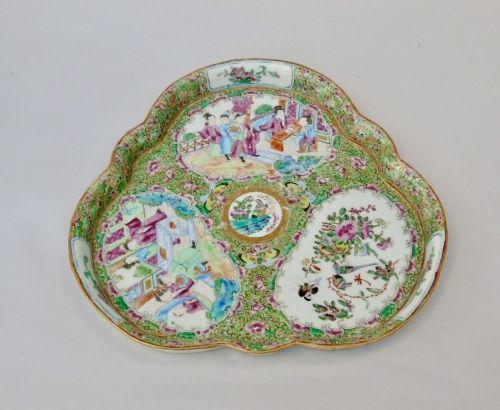


Antique Rose Tray
An antique rose tray brings hand-painted floral artistry to the table, combining historic porcelain and earthenware traditions in decorative forms.
Antique Rose Tray
An antique rose tray encompasses painted porcelain and earthenware serving pieces featuring floral decoration, often taking the form of decorative trays, dishes, and dessert sets. These items span periods from the eighteenth century through the twentieth century, originating from Chinese export kilns, Scottish potteries, and French workshops.
Buyers encountering this selection will frequently find Chinese export porcelain featuring famille rose enamels alongside European pieces like Wemyss pottery painted with cabbage roses. Forms range from simple rectangular dishes and trefoil trays to complex dessert sets and pierced chestnut baskets.
The aesthetic merges botanical illustration with functional tableware, reflecting both Eastern export trade and domestic British and continental production. Each piece records specific period techniques, from eighteenth-century overglaze enamel work to early twentieth-century earthenware painting.
How they were made
Potters shaped hard-paste porcelain and glazed earthenware into trays and dishes before applying detailed hand-painted designs. Artisans utilised overglaze enamels to render rose motifs in vibrant pinks and reds, frequently integrating gold leaf or gilt highlights along the rims.
Kiln firing set the hard-paste porcelain bodies and their initial cobalt blue or polychrome decorations, after which intricate enamel work received secondary low-temperature firings. Chinese export pieces and Scottish pottery alike depended on skilled brushwork to define the botanical subjects across surfaces.
Antique Rose Tray Retail Price Guide 2026
Typical asking prices for rose tray among the pieces listed under this phrase on Sellingantiques today, from the lower quarter to the upper quarter. They describe what is for sale here now, not the wider market.
Listings feature hard-paste porcelain and glazed earthenware from the 18th, 19th, and 20th centuries.
What varies in quality
Quality in an antique rose tray rests upon the precision and delicacy of the hand-painted rose motifs, where fluid brushwork distinguishes superior examples from standard production. The crispness of the porcelain or earthenware body and the preservation of overglaze enamels and gilding further separate tiers of execution.
Excellence also shows in the sophistication of the form, such as pierced basketwork or complex shaped edges like trefoil outlines, combined with the historical significance of the workshop or export origin.
Wemyss
The Antique Rose Tray Glossary
- Famille Rose
- A palette of opaque overglaze enamels dominated by pink or rose colours, introduced in Chinese porcelain during the Qing dynasty. This technique allowed artists to create shaded floral designs with remarkable depth.
- Hard-paste Porcelain
- A dense, vitrified ceramic material fired at high temperatures, composed of kaolin and petuntse. It provides a durable, ringing body for eighteenth and nineteenth-century export wares.
- Overglaze Enamel
- Mineral pigments applied over a previously fired and glazed ceramic surface, requiring a second, cooler kiln firing to fuse the colours. It permits a brilliant range of hues on decorative trays.
- Gilding
- The application of gold leaf or powdered gold to ceramic surfaces, highlighting rims and decorative borders. On antique trays, it accentuates the painted floral scenes.
- Trefoil
- A decorative three-lobed shape resembling a clover leaf, frequently utilised for the contours of porcelain dishes and small serving trays.
Antique Rose Tray: Frequently Asked Questions
How do I identify Chinese export pieces?
Chinese export items, including those featuring famille rose enamels and canton styles, display specific porcelain bodies and hand-painted motifs tailored for Western markets during the eighteenth and nineteenth centuries.
Examining the paste, glaze texture, and specific enamel colours helps distinguish these pieces from later European earthenware interpretations.
Were these trays used for serving?
Many of these pieces functioned as decorative trays, dessert sets, and dishes for presenting food or holding small items in period interiors.
Their forms range from flat rectangular dishes to pierced chestnut baskets and card trays, balancing utility with ornamental display.
How should I care for antique porcelain?
Hand washing in warm water with mild soap is essential to protect delicate overglaze enamels and gold leaf highlights from abrasive damage.
Avoiding sudden temperature changes and harsh cleaning agents preserves the fragile ceramic body and the hand-painted rose designs.