
Antique Roll Front Desk
An antique roll front desk brings hidden mechanics and structured pigeonholes to a room, offering a tactile writing surface that conceals paperwork behind sliding wooden slats.
Antique Roll Front Desk
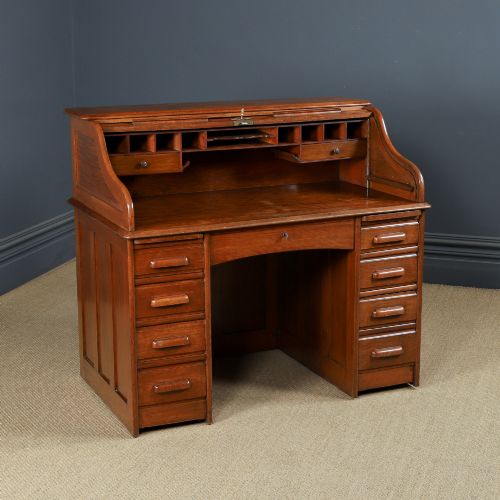
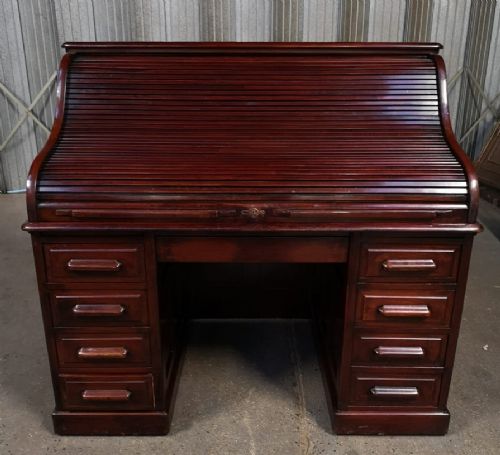
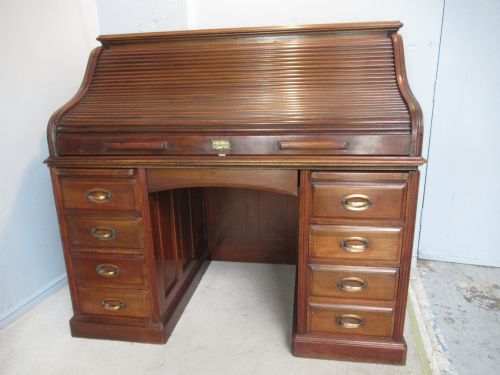
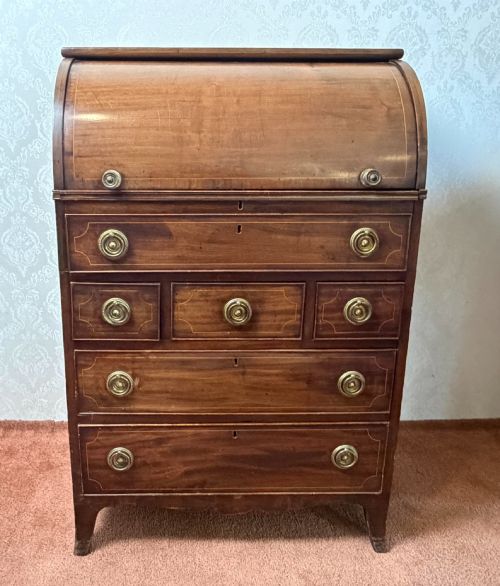
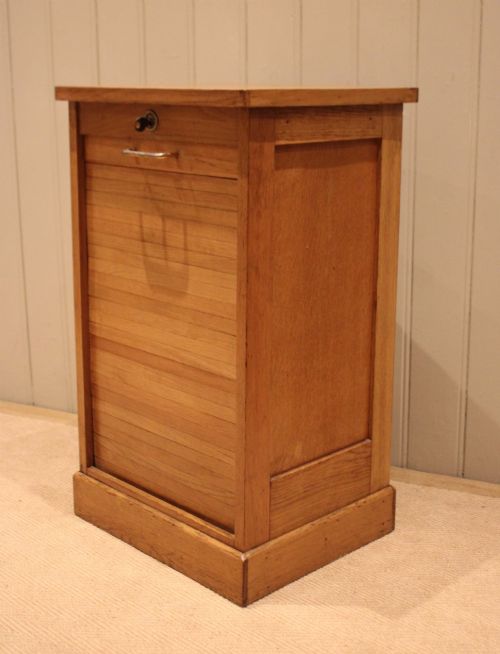
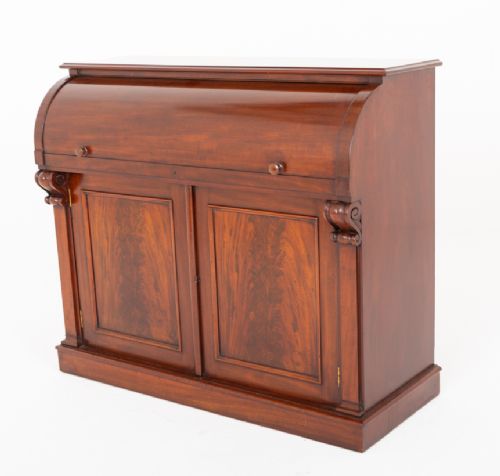
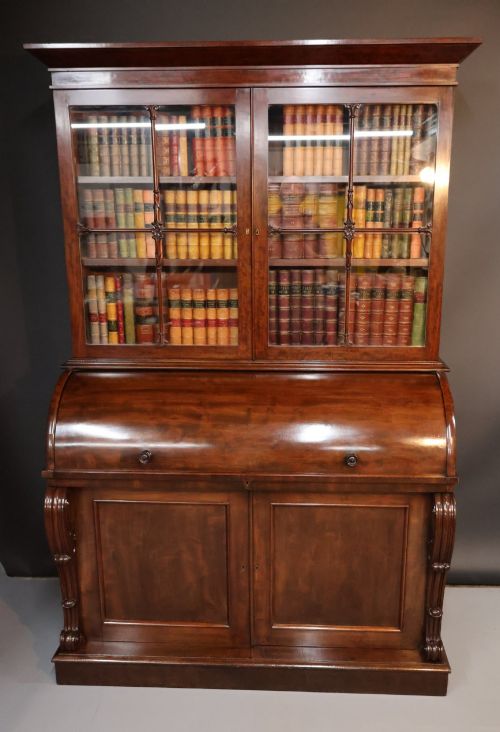
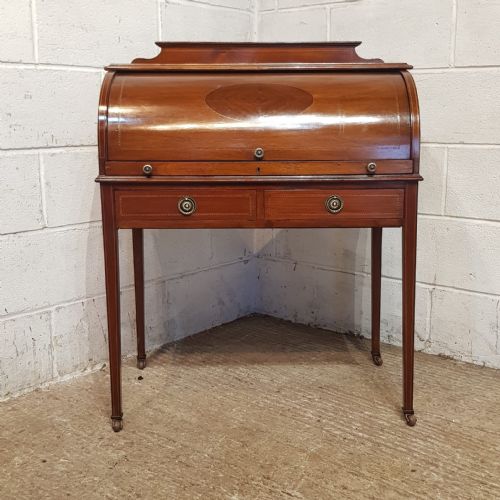
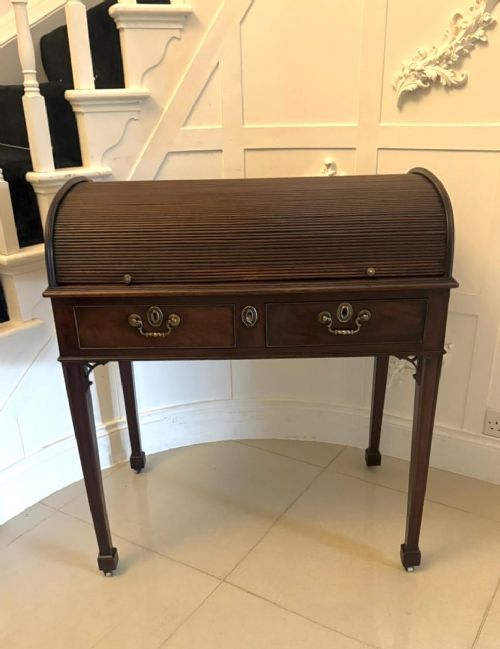
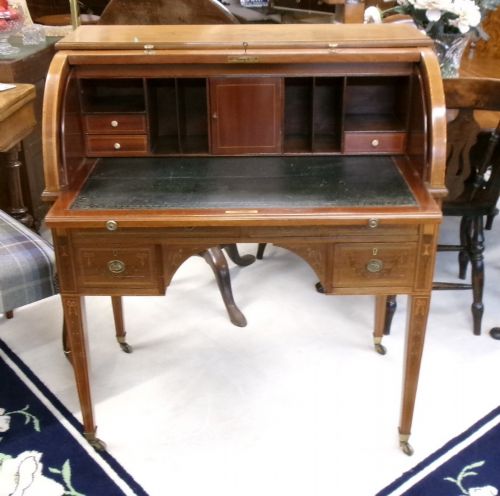
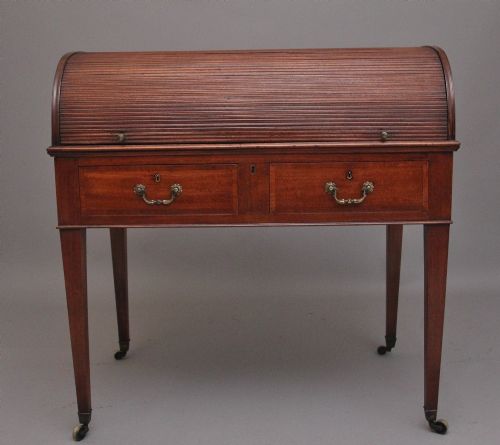
An antique roll front desk functions as a workspace with a flexible tambour or solid cylinder shutter that draws down to secure the interior. These pieces appear most frequently in 19th-century oak and mahogany editions, spanning compact office pedestals and larger bureau bookcases. Buyers search for this specific form to manage correspondence while keeping a study or home office visually tidy.
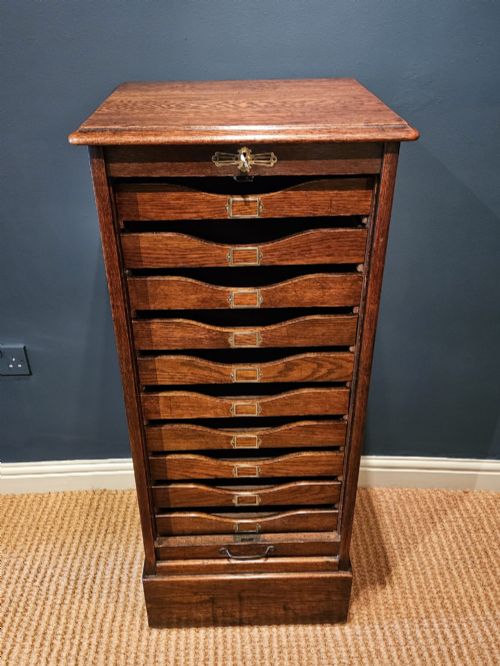
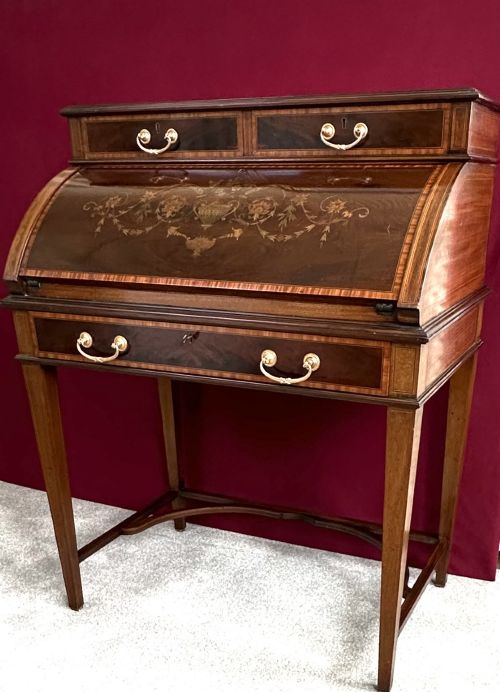
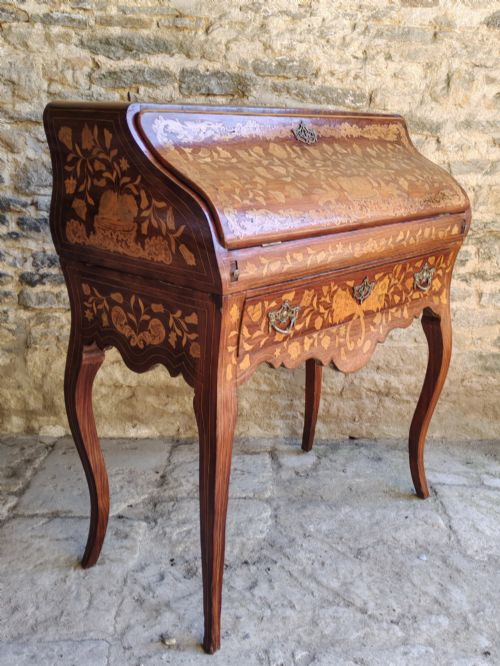
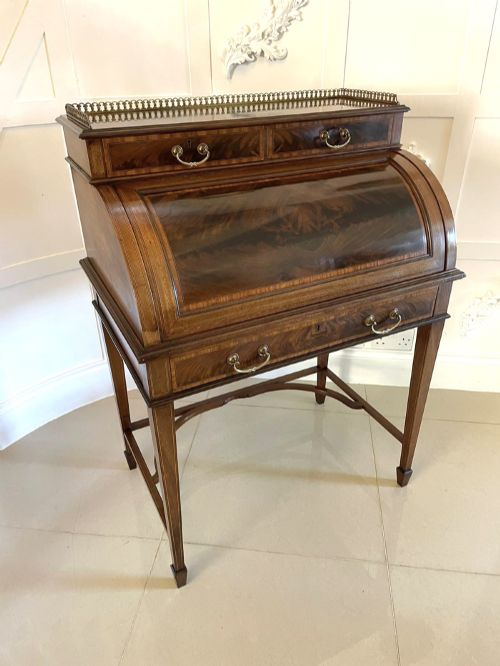
The material palette ranges from robust Edwardian oak to polished Victorian mahogany, complemented by satinwood, walnut, and occasional fruitwood inlays. Forms vary from simple office tambour cabinets to freestanding cylinder desks with pull-out writing slides and integrated filing compartments. Each variant reflects the domestic or commercial storage needs of its period.
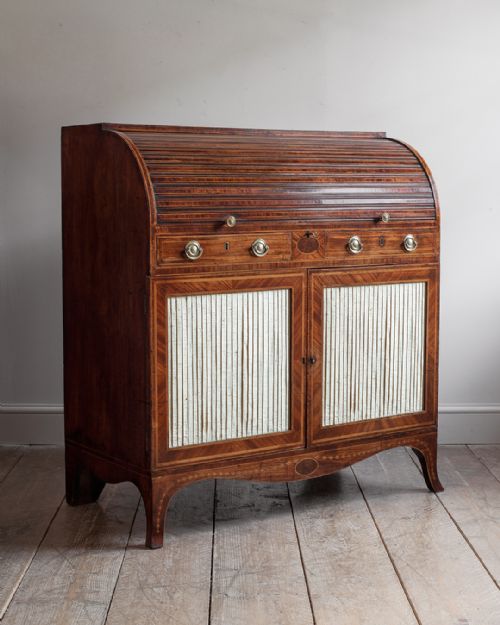
Georgian and Regency examples show refined inlay work, whereas Edwardian and later 19th-century iterations focus on practical pedestal configurations. Selecting an appropriate piece involves balancing room proportions against the depth of the roll mechanism and the internal arrangement of small drawers.
Materials and construction
Cabinet makers constructed the curved shutters of an antique roll front desk from narrow vertical strips of solid timber glued to a strong fabric or leather backing. This flexible tambour mechanism runs smoothly within precision-cut side grooves, requiring exact alignment to prevent binding over time. Carcase frames use dense hardwoods like mahogany and oak, joined with traditional dovetails for structural longevity.
Surface finishes rely on French polish applied over mahogany, walnut, or satinwood veneers, highlighting the natural grain patterns of the wood. Brass fittings secure internal compartments, and pull-out writing surfaces often feature inset leather writing skivers tooled with gilt borders.
The listings show oak, mahogany, satinwood, and walnut as the primary woods used across 19th-century and Edwardian roll front desks.
Assessing craftsmanship and execution
Quality reveals itself in the smoothness of the roll action and the precision with which the individual wooden slats close together without sagging. Superior examples feature secondary timbers of matching quality inside the drawers, alongside hand-cut dovetail joints and original brass hardware.
The refinement of the internal stationary compartments and the presence of intricate marquetry or satinwood banding distinguish standard office models from master cabinet maker productions. Structural integrity depends on the stability of the tambour tracks and the absence of warping in the main cylinder housing.
Maple & Co. London·Edwards & Roberts·Boston Chair Company
The Antique Roll Front Desk Glossary
- Tambour
- A flexible shutter made from narrow strips of wood glued to canvas, allowing it to curve around a track and conceal the desk interior.
- Cylinder desk
- A writing desk featuring a rigid, quarter-circle solid wood cylinder that rotates backward to open the workspace.
- Pedestal desk
- A heavy freestanding table supported by two banks of small drawers rather than simple legs.
- Bureau bookcase
- A combination piece having a writing compartment below and enclosed shelving above.
- Writing slide
- A pull-out board positioned above the drawer pedestals to extend the available writing surface.
Antique Roll Front Desk: Frequently Asked Questions
How do I maintain the tambour mechanism?
Keep the wooden tracks clean from dust and debris using a dry cloth. Avoid applying heavy wax or oils inside the running grooves, as buildup can cause the slats to stick.
Periodically check that the backing fabric remains secure to the individual wooden strips. Smooth operation relies entirely on the alignment of the side channels.
What is the difference between tambour and cylinder desks?
Tambour desks use a flexible shutter made of many narrow strips of wood that bend around a curved track. Cylinder desks employ a single solid piece of curved wood that rotates on a pivot.
Both styles achieve the same goal of concealing the desk interior, but the tambour mechanism requires more intricate internal joinery.
How do I date an antique roll front desk?
Examine the secondary timbers used inside the drawer construction and inspect the style of the brass hardware. Earlier Georgian and Regency pieces display hand-cut dovetails and fine mahogany veneers, while Edwardian versions often feature heavier oak frames.
Maker stamps or paper labels inside the drawers provide the most direct evidence of origin and date.
Can I fit a modern laptop inside a roll front desk?
Interior dimensions vary significantly between compact Edwardian office cabinets and larger Victorian pedestal models. Measure the depth of the pull-out writing surface and the clearance beneath the closed shutter before attempting to store modern technology.
Many period desks were designed for ledgers and stationery rather than modern monitors or keyboards.