


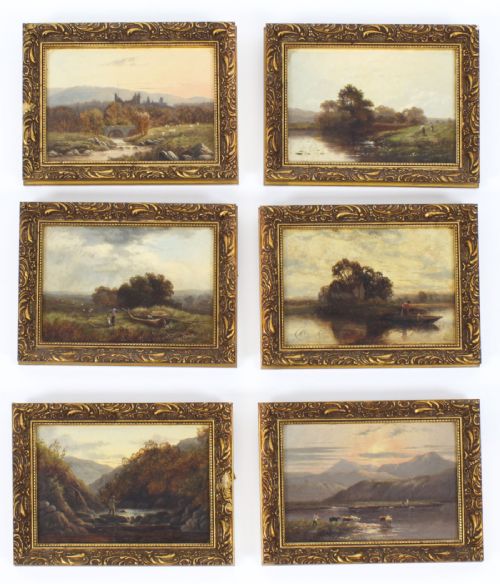


Antique River Scenery Painting
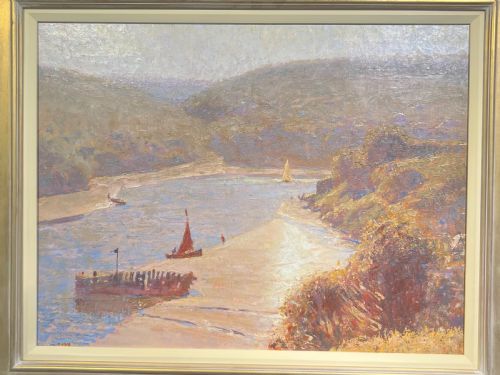
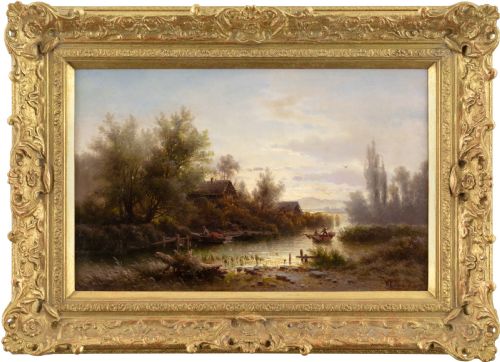
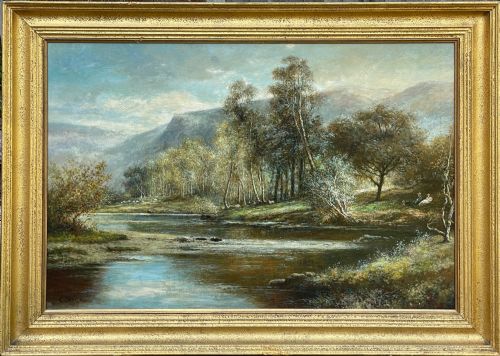
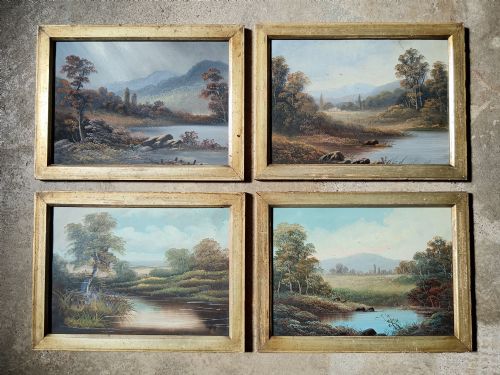
An antique river scenery painting captures flowing water and tranquil banks, offering a timeless view of historical landscapes for your walls.
Antique River Scenery Painting
An antique river scenery painting portrays waterways, bridges, and pastoral banks, captured by artists working through the nineteenth and early twentieth centuries. These works span intimate watercolours on paper and substantial oil paintings executed on canvas, wood panels, or heavy opaque gouache. You will encounter varied regional views ranging from Yorkshire rivers and Welsh valleys to Scottish highlands and Alpine streams.
The selections on this page draw predominantly from Victorian, Edwardian, and Georgian periods, reflecting British landscape painting traditions and nineteenth-century realism. Common formats include single framed canvases, paired compositions, and larger series depicting specific rivers and pastoral settings. Figures, livestock, and historic bridges frequently inhabit these riverbanks, anchoring the natural scenery in a distinct era.
British Impressionism and Victorian Naturalism heavily influence these works, emphasising natural light, atmospheric conditions, and authentic rural topography. Whether you examine a delicate watercolour sketch or a grand oil painting, each piece documents historical topography through period painting techniques.
Materials and methods
Artists painted these scenes primarily using oil paint on canvas, wood panel, or paper, alongside watercolour paints applied to paper supports. Canvas pieces stretched across wooden frames often rest within period gilt wood and gold leaf frames that enhance the visual depth of the artwork. Heavy opaque gouache also appears on selected works, offering a dense, matte finish distinct from traditional transparent watercolour washes.
Makers mounted these compositions using traditional joinery for the wooden stretchers and protective glass layers for delicate watercolours on paper. The physical construction relies on period materials, preserving the original substrate integrity from the nineteenth and early twentieth centuries.
Materials documented in the inventory include canvas, oil paint, paper, wood, gilt wood, gold leaf, and glass.
Factors determining quality
Quality in an antique river scenery painting rests on the confidence of the brushwork, the handling of natural light, and the compositional balance of water, land, and sky. Finer examples display subtle tonal gradations and precise topographical rendering that convey atmospheric depth without stiffness. The integration of incidental elements, such as grazing cattle or figures picking flowers, adds narrative life to superior compositions.
The physical preservation of the medium and the originality of the mounting significantly influence the standing of each piece. Intact original oil paint surfaces free from excessive overpainting, paired with period gilt wood framing, elevate the overall integrity of the artwork.
Albert Rieger·William Mellor·Amos Green·William Hoggatt·Thomas Swift Hutton·Robert John Hammond·James Poole·Thomas E Francis
The Antique River Scenery Painting Glossary
- Gouache
- An opaque watercolour medium composed of ground pigments bound in water-soluble gum. It dries to a matte, reflective finish that allows artists to build rich, solid colour passages.
- Gilt Wood
- Wood carved and coated with a thin layer of gold leaf or metallic powder. This traditional framing material provides a warm, reflective border suited to nineteenth-century canvases.
- Wood Panel
- A rigid flat wooden support used as a base for oil painting before canvas became dominant. These panels offer a stable, durable surface that preserves fine brushwork over centuries.
- Watercolour
- A painting method where natural pigments are suspended in a water-based solution. Applied in translucent washes on paper, it captures delicate atmospheric effects and light.
- British Impressionism
- A late nineteenth and early twentieth-century painting movement focusing on everyday subjects and natural light. Artists prioritized loose brushstrokes and plein-air observation over rigid academic finish.
Antique River Scenery Painting: Frequently Asked Questions
What periods do these paintings date from?
The listings span from the Georgian era through the Victorian and Edwardian periods, stretching into the early twentieth century. Most works cluster around the nineteenth century and the early nineteen-hundreds.
Artists from these decades worked within established British landscape traditions, recording changing rural views before modern industrial development altered the riverbanks.
Are these paintings executed in oil or watercolour?
You will find both oil paintings and watercolours represented across the selection, alongside works in heavy opaque gouache. Oils typically appear on canvas or wood panels, while watercolours are executed on paper.
Each medium offers a distinct visual texture, with oils providing rich surface buildup and watercolours delivering transparent atmospheric delicacy.
Do the paintings include original frames?
Many listings feature period frames, including ornate gilt wood and gold leaf constructions that complement the age of the artwork. These frames help protect the edges of canvases and paper supports.
Original frames provide context regarding how the artwork was displayed historically, though framing styles vary widely across different decades.
How do I identify a Scottish or Welsh landscape?
Artists often titled their works with specific geographical markers, noting locations such as Scottish stone bridges, Swiss mountain streams, or Welsh rivers. These titles appear directly in the painting details and historical records.
Topographical clues within the scenery, such as highland terrain or specific river bends near Bolton Woods, further clarify the depicted region.
What subjects typically appear alongside the rivers?
Common secondary subjects include figures picking flowers on riverbanks, cattle grazing near the water, and historic stone bridges crossing the stream. These elements add scale and narrative interest to the composition.
Human and animal life helps ground the natural scenery in a specific rural context typical of nineteenth-century realism.