
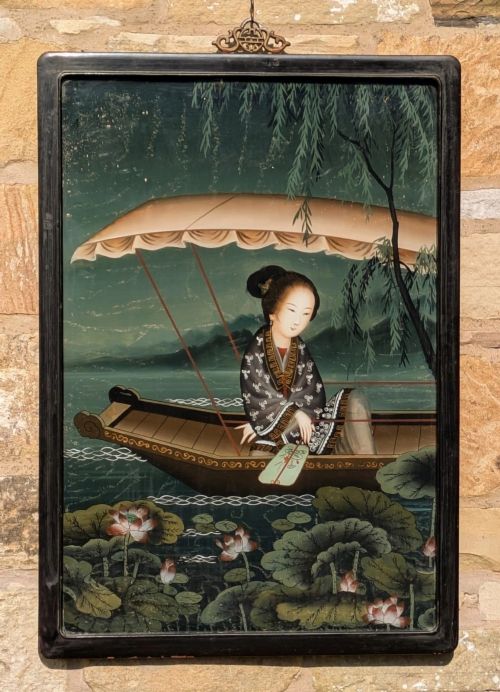
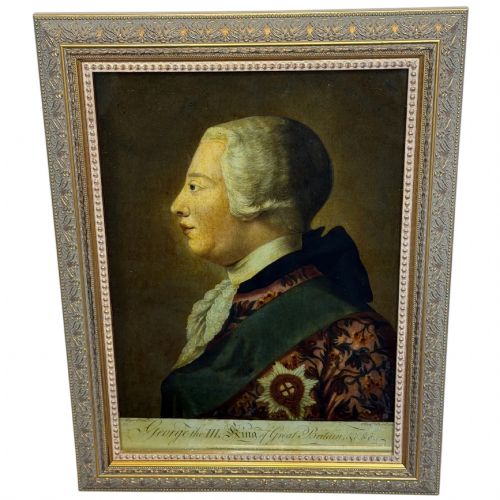
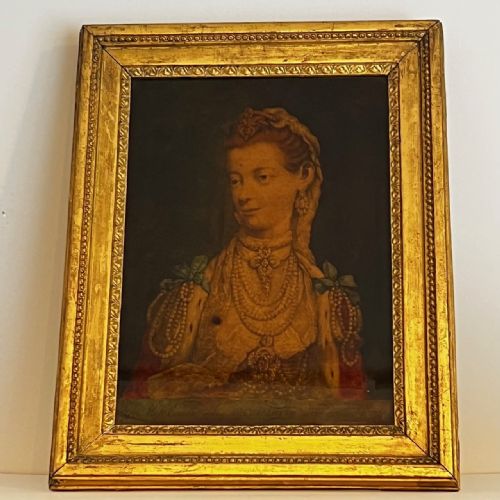


Antique Reverse Glass Artwork
Antique reverse glass artwork brings together delicate pigment and clear pane to create portraits and scenes that catch the light from behind.
Antique Reverse Glass Artwork
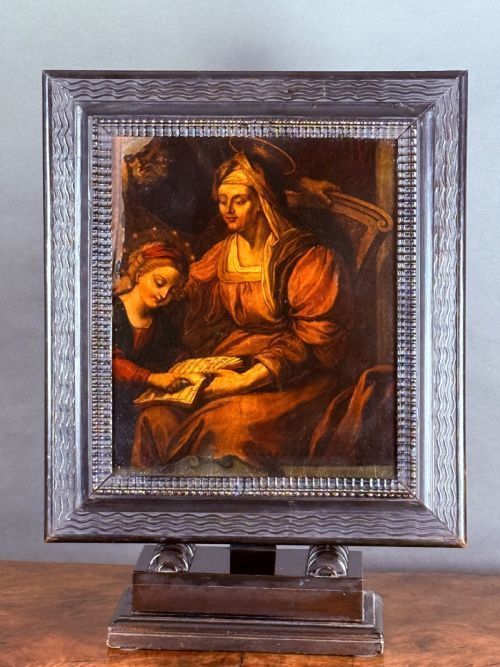
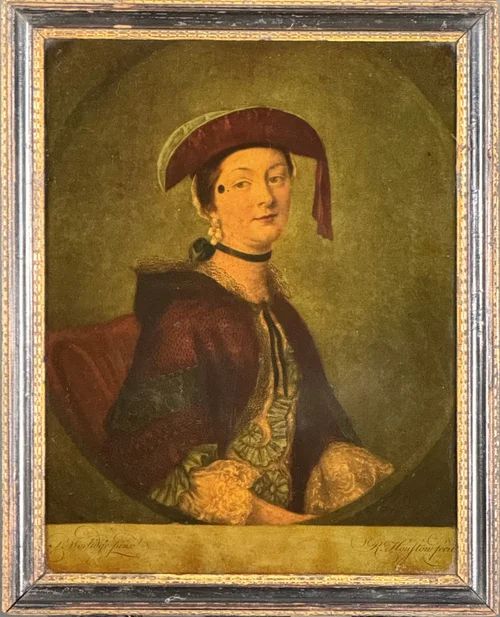
Antique reverse glass artwork spans several centuries of intricate painterly skill, decorative print application, and delicate mirror work. When looking for antique reverse glass artwork, buyers encounter pieces ranging from early eighteenth-century mezzotints to nineteenth-century chrystoleoms and Chinese export panels.
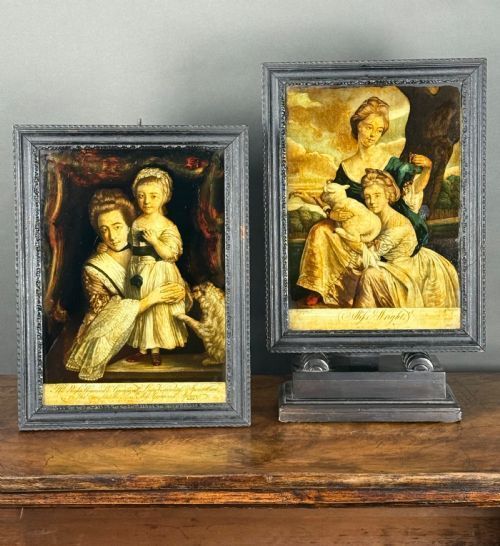
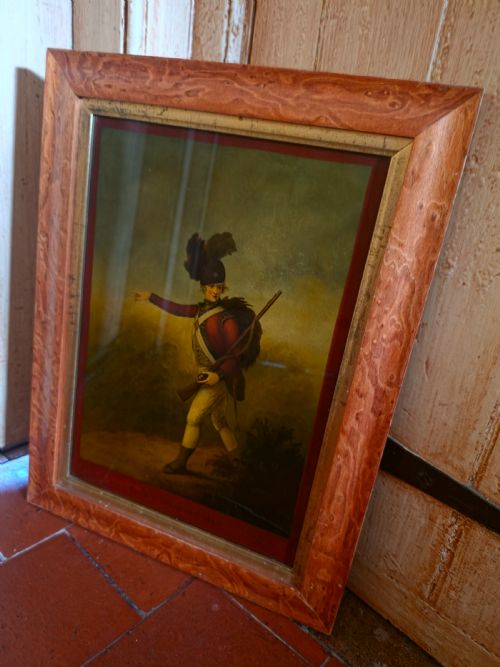
Subjects include royalty, religious scenes, military figures, literary characters, and domestic vignettes rendered directly onto the glass or applied via paper prints.
Materials and technique
Many examples utilise printed mezzotints or engravings glued face-down onto the glass, then carefully coloured by hand with oil paint or translucent pigments. The paper was often rubbed away or made transparent with oils to allow the paint layers to catch the light.
Antique Reverse Glass Artwork Retail Price Guide 2026
Typical asking prices for reverse glass artwork among the pieces listed under this phrase on Sellingantiques today, from the lower quarter to the upper quarter. They describe what is for sale here now, not the wider market.
Listings feature works spanning the eighteenth, nineteenth, and early twentieth centuries, utilising glass, wood, paper, and oil paint.
Judging quality and depth
The finest examples display meticulous brushwork and delicate hand-colouring that bring depth and luminosity to the subject through the transparent glass barrier. Early mezzotints transferred to glass demand a high level of technical precision to avoid distortion during the application process.
Framing and mounting also distinguish the pieces, with original wood frames, such as maple or gilt wood surrounds, contributing to the integrity of the object. Condition matters significantly, as pigment flaking or lifting behind the glass alters the visual impact.
Charles Spooner·Richard Purcell·Takabatake Kasho·Schweninger
The Antique Reverse Glass Artwork Glossary
- Mezzotint
- A printmaking method based on rasterising a plate by roughing it with thousands of little points; on these pieces, the resulting print is transferred to glass and hand-coloured.
- Chrystoleum
- A Victorian technique where a paper engraving is pasted face-down to glass, made transparent, and hand-painted from the back before being layered.
- Reverse painting
- The practice of applying paint to the rear side of a transparent support so the finished image is viewed through the clean glass.
- Export trade
- Goods produced in Asia specifically for Western markets, encompassing reverse glass mirrors and scenic panels executed in Chinese workshops.
Antique Reverse Glass Artwork: Frequently Asked Questions
How do I hang a reverse glass picture?
These fragile works require secure wall fixings and sturdy framing to support the weight of the glass panel safely.
Keep them away from direct sunlight and damp environments to protect the pigments and paper layers trapped behind the glass.
What is the difference between a chrystoleum and a reverse painting?
A reverse painting is applied directly to the glass by hand with oil paint or pigments, requiring the artist to work in reverse order from foreground to background.
A chrystoleum uses a pre-printed paper engraving glued face-down to the glass, which is then made transparent and hand-coloured from the rear.
Are these pieces fragile?
The glass substrate makes these artworks inherently delicate and vulnerable to impact, cracking, or pressure from the back.
Handle them with care, supporting the entire frame when moving them, and avoid pressing against the centre of the glass.