
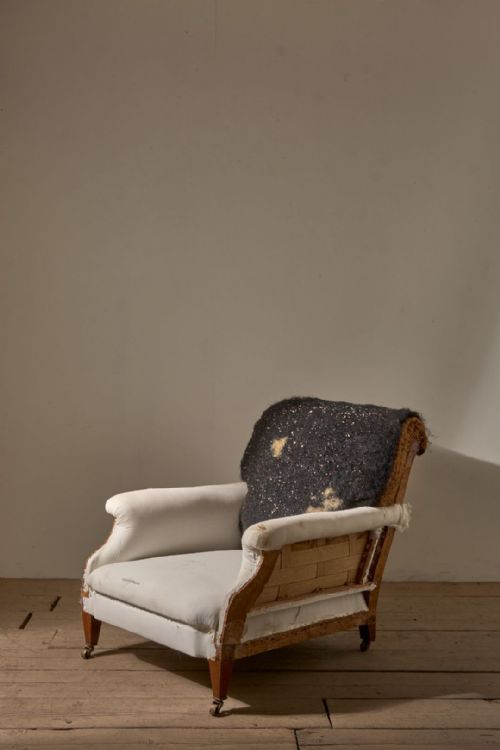


Antique Reupholstery Project
An antique reupholstery project offers an exceptional opportunity to restore period seating like armchairs, sofas, and chaises using traditional materials.
Antique Reupholstery Project
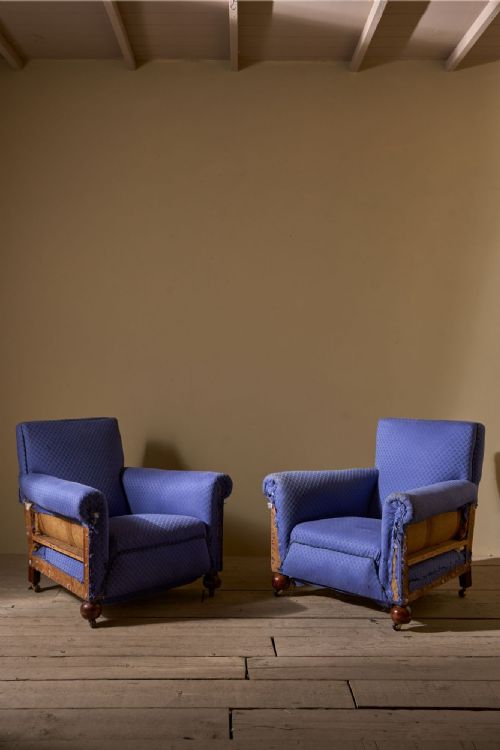
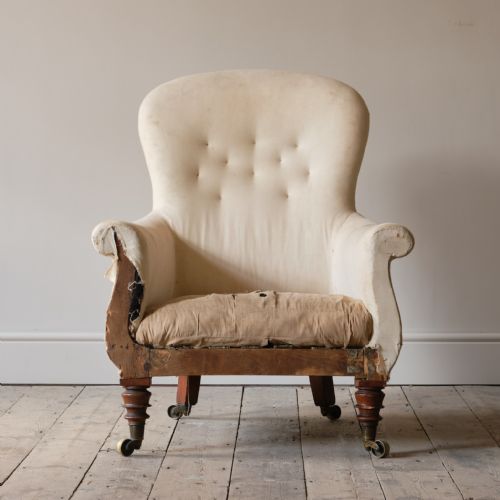
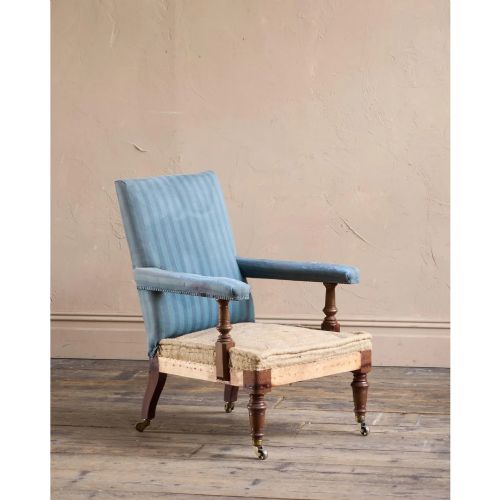
An antique reupholstery project involves period seating forms such as armchairs, sofas, settees, chaise longues, daybeds, and slipper chairs that require new fabric and internal restoration. Buyers seeking an antique reupholstery project will find frames originating from the Regency, Victorian, and 1930s periods, often built with exposed wood elements.
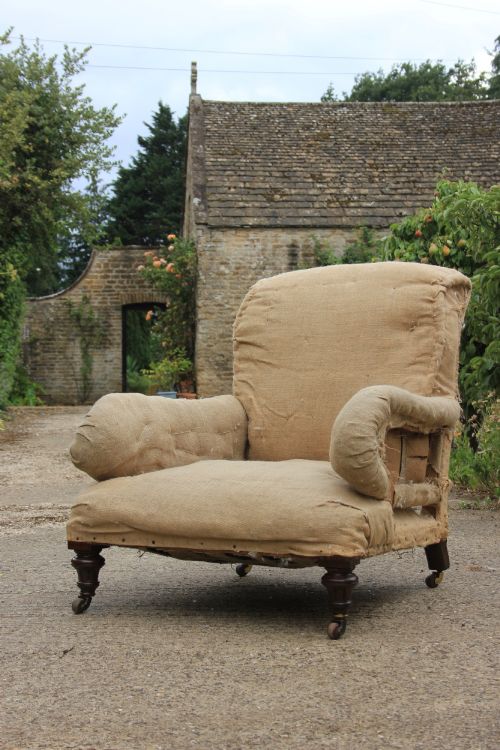
The pieces on this page span styles including Victorian, Regency, 19th Century French, Art Deco, William IV, English Country, Edwardian, and Napoleon III. Many of these items are presented specifically for recovering or re-upholstery, featuring existing calico or hessian foundations ready for transformation.
Armchairs and deep-seated country house chairs dominate the available forms, alongside matching pairs of chairs and larger drawing-room seating sets. Each frame provides a distinct historical foundation, whether carved from mahogany, walnut, or other hardwoods.
What varies in quality
The structural integrity of the underlying hardwood frame dictates the baseline quality of any project piece. Well-preserved mahogany and walnut frames with intricate carving display superior initial craftsmanship compared to simpler or less robust structures.
Proportion and stylistic attribution heavily influence the desirability of a frame, particularly pieces associated with recognised makers or distinct stylistic periods like Regency and Art Deco. The original silhouette and depth of the seating shape determine how successfully the finished piece will balance historical accuracy and comfort.
Seating forms range from deep-seated country house armchairs and sofas to bobbin day beds and slipper chairs.
SF CULLEN·Morison and Co·Holland and Sons
The Antique Reupholstery Project Glossary
- Calico
- A plain-woven cotton fabric commonly used as an inner lining or base cover beneath decorative upholstery textiles.
- Hessian
- A coarse woven fabric, often made from jute fibres, utilised as a traditional foundation layer for webbing and stuffing in period seating.
- Chaise longue
- An upholstered long chair designed for reclining, combining elements of a sofa and a single chair.
- Slipper chair
- A low-seated bedroom chair traditionally used by ladies while dressing, built without arms to accommodate voluminous period garments.
- Button back
- An upholstery style where buttons are deeply secured through the padding in a geometric pattern to create tufted indentations.
Antique Reupholstery Project: Frequently Asked Questions
What periods do these reupholstery projects span?
The available pieces originate from various historical periods, notably the Regency, mid-nineteenth century, Victorian era, and the 1930s. Each era brings distinct proportions and stylistic traits to the seating frames.
Buyers will encounter specific design movements such as Art Deco, William IV, Edwardian, and Napoleon III styles within the selection of armchairs and sofas.
Which furniture types are most common?
Armchairs and large country house sofas appear frequently, offering deep-seated comfort and substantial wooden frames. Other common forms include chaise longues, daybeds, slipper chairs, and salon chairs.
Pairs of chairs and multi-piece drawing-room sets also feature prominently among the items requiring new fabric.
How do I identify a Howard style armchair?
Howard style armchairs are characterised by their generous, deep-seated proportions and low-slung profiles designed for relaxed country house living. These pieces often feature specific maker attributions or distinct nineteenth-century framing techniques.
Examining the arm shape and overall heft helps distinguish these comfortable lounge chairs from formal drawing-room seating.
Are these pieces ready for immediate use?
These items are specifically offered as reupholstery projects and generally require new fabric, webbing, or internal padding before regular use. They are sold with the intention that the buyer will undertake restoration.
Underneath the current calico, hessian, or worn fabric lies a solid period frame awaiting a bespoke upholstery scheme.