





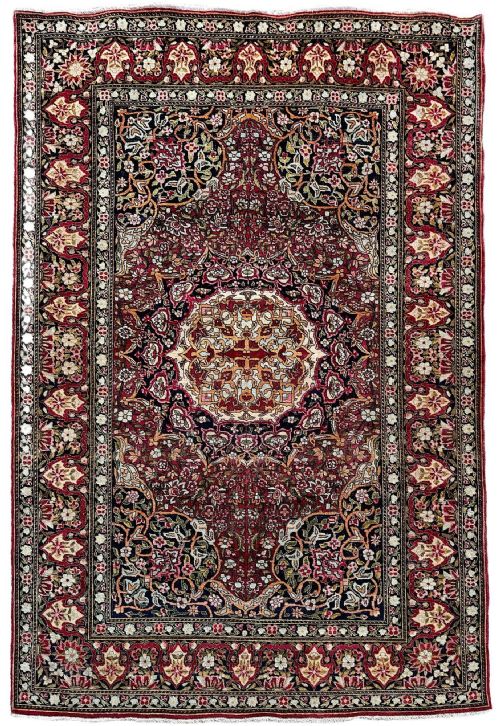

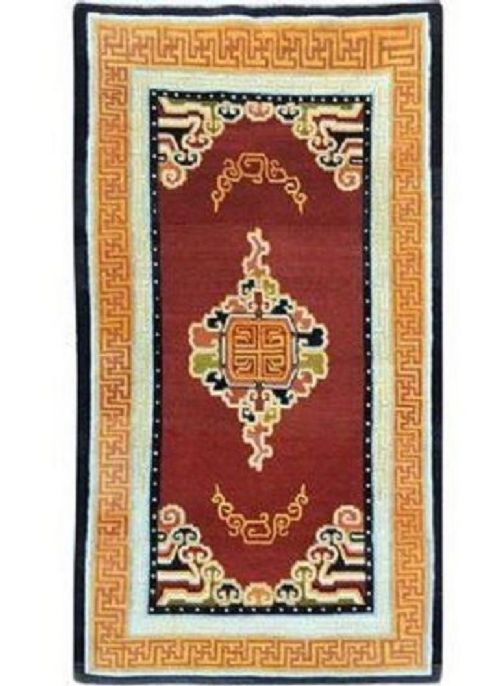
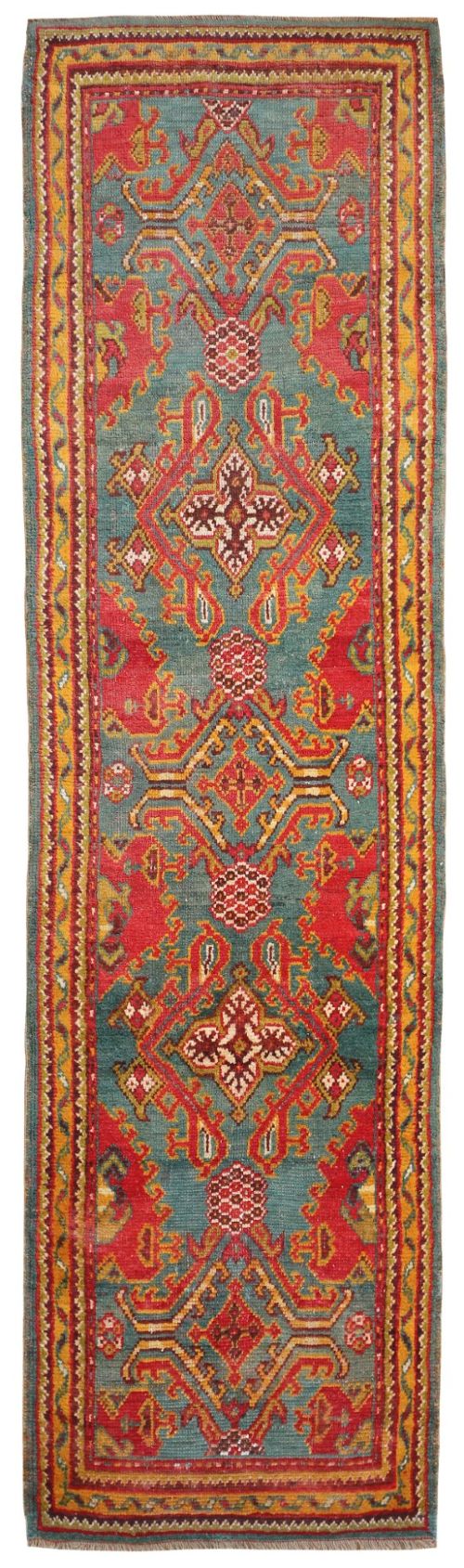
Antique Red Area Rug
An antique red area rug brings deep madder tones and tribal geometry into a room, grounding the space with centuries of woven character.
Antique Red Area Rug
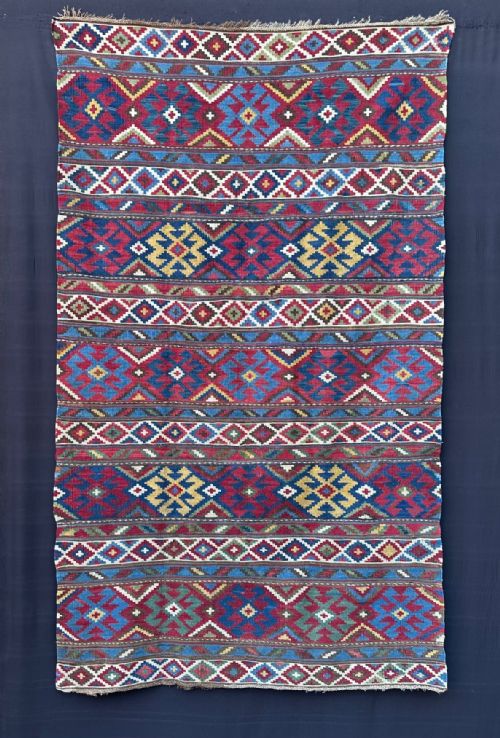
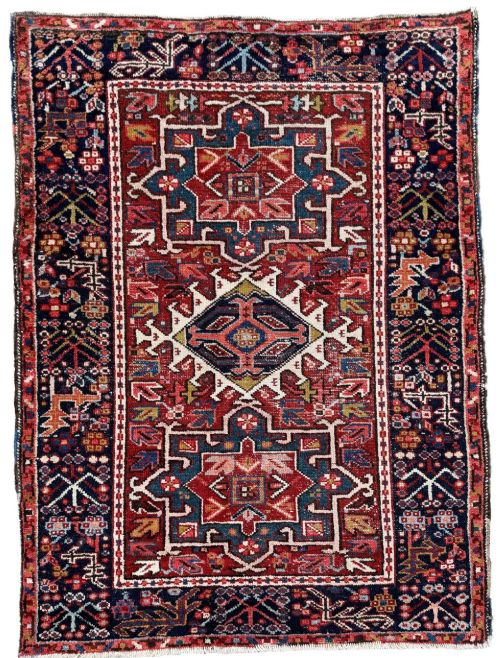
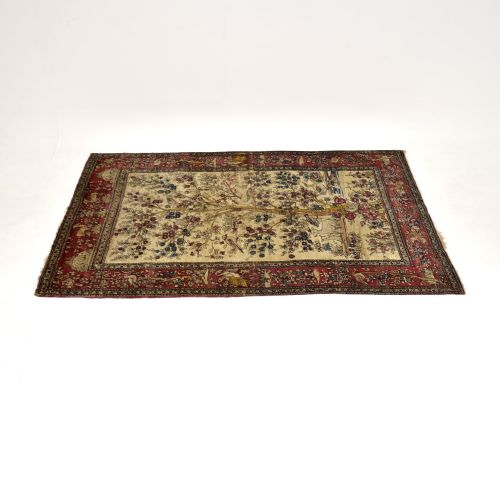
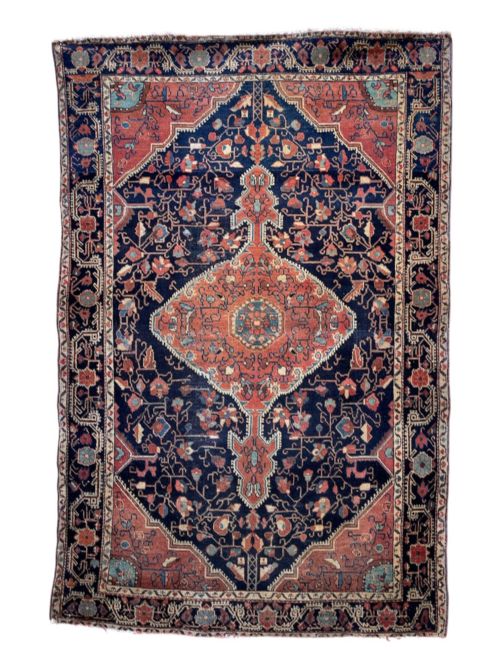
When you search for an antique red area rug, you encounter hand-knotted floor coverings hailing predominantly from Persian, Caucasian, Turkmen, and Anatolian weaving traditions. These textiles range from small prayer formats and village runners to substantial carpets woven by nomadic and settled workshops alike.
The specimens on this page date from the nineteenth century through the early decades of the twentieth century, encompassing tribal village pieces alongside refined city formats. Regional variations in design vocabulary distinguish pieces originating from specific areas such as Shirvan, Heriz, Kazak, or Saroukh.
Buyers frequently meet pieces featuring characteristic terracotta, rust, and crimson grounds embellished with geometric medallions, all-over lattice patterns, or central mihrab arches. Each rug reflects the distinct cultural motifs and colour palettes of the specific region or tribe that produced it.
How they were made
The structural foundation relies on hand-spun wool and cotton, utilised for warps and wefts to create a stable yet flexible textile matrix. Artisans knotted piles of hand-spun wool, occasionally incorporating silk highlights for decorative emphasis in select city carpets.
Weavers employed natural dyes extracted from plants and insects, achieving rich madder reds and varied secondary hues that mellow gracefully over time. These organic colourants interact with wool fibres to produce subtle tonal variations across the field of the carpet.
Antique Red Area Rug Retail Price Guide 2026
Typical asking prices for red area rug among the pieces listed under this phrase on Sellingantiques today, from the lower quarter to the upper quarter. They describe what is for sale here now, not the wider market.
What varies in quality
Knot density and structural integrity dictate the foundational tier of a piece, separating tightly woven village and city carpets from coarser tribal structures. The precision of the drawing and the clarity of the design motifs further distinguish master-woven examples from standard village productions.
The purity and depth of the natural dyes used for the red grounds determine the visual richness of the textile as light hits the pile. Superior wool quality ensures a lustrous surface texture that retains resilience and handles foot traffic successfully through decades of domestic use.
The Antique Red Area Rug Glossary
- Mihrab
- A niche design element originating in prayer rugs, depicting the direction of Mecca. This architectural motif often forms the focal point of Caucasian and Anatolian village rugs.
- Warp
- The vertical threads stretched tightly on the loom before knotting begins. These foundation threads visible at the fringe edge provide the structural backbone of the rug.
- Weft
- The horizontal threads passed through the warps after each row of knots to bind them securely in place. Multiple weft shots determine the handling stiffness of the woven carpet.
- Madder
- A natural dye derived from the root of the Rubia plant, yielding durable red tones. This botanical dye produces the characteristic rust and crimson hues seen across antique oriental carpets.
Antique Red Area Rug: Frequently Asked Questions
How do I clean an antique rug?
Professional specialist cleaning is essential for antique textiles to protect natural wool pile and organic dye integrity.
Regular gentle vacuuming without a beater bar prevents dust accumulation in the foundation threads.
Where were these rugs made?
These textiles originate from weaving centres across Persia, the Caucasus, Turkmenistan, and Anatolia.
Nomadic tribes, village communities, and urban workshops each developed distinct regional aesthetics and knotting techniques.
How do I identify regional rug designs?
Geometric medallions and bold primary colours typically indicate Caucasian or Turkmen tribal origins.
Flowering vines and curvilinear field patterns usually point towards traditional Persian city workshops.
Can I place these rugs in heavy traffic areas?
Sturdy wool construction and tight knotting allow many antique village carpets to endure daily hallway or living room use.
Adding a quality underlay prevents slipping and cushions the foundation against premature fibre wear.