

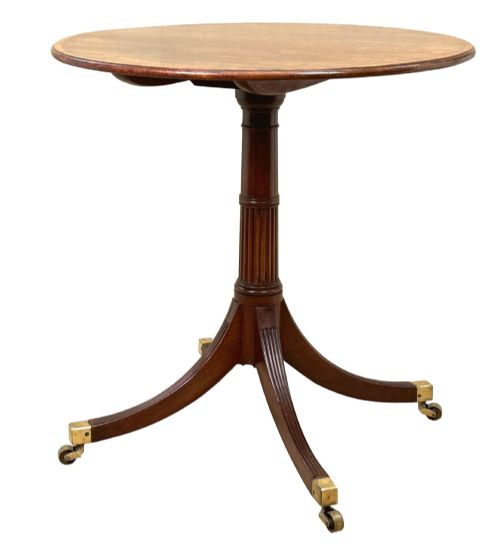
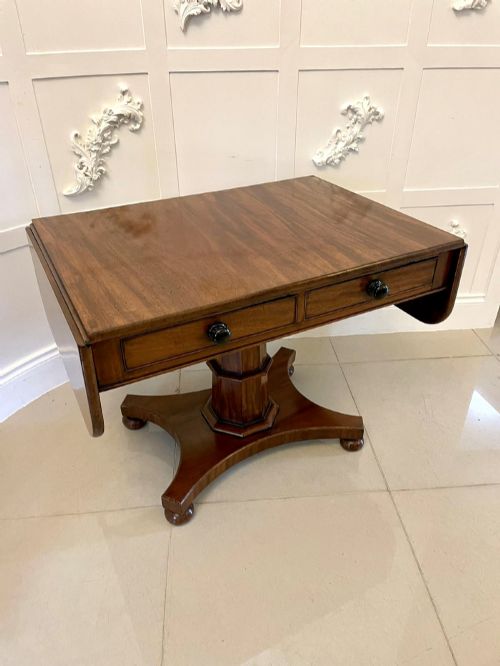

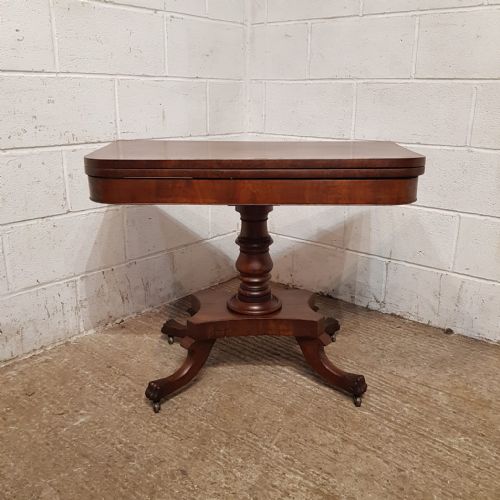
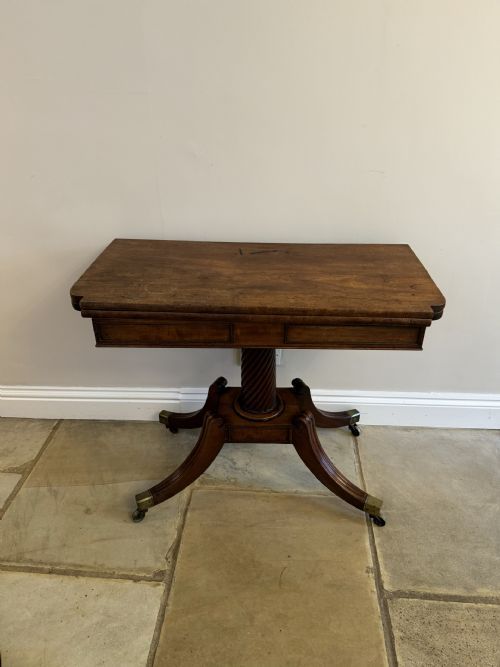


Antique Quadruped Side Table
An antique quadruped side table is a versatile timber piece standing on four feet, offering practical surface space with period character.
Antique Quadruped Side Table
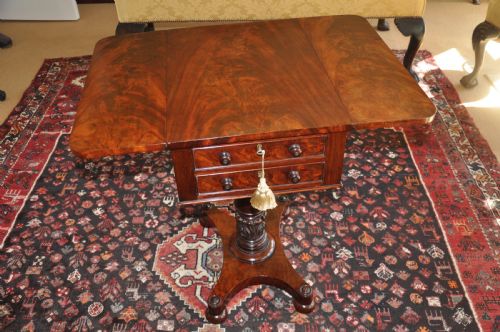
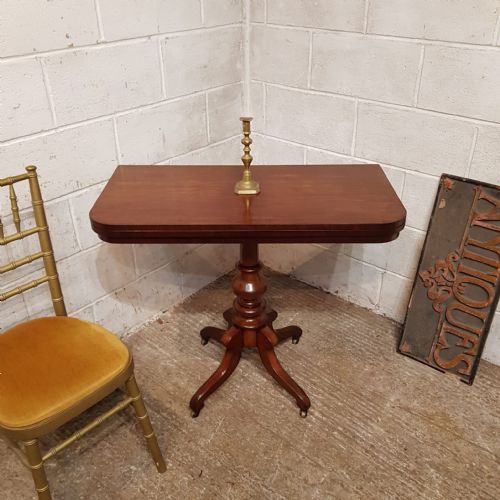
When you search for an antique quadruped side table, you encounter a selection of timber tables spanning the Georgian, Regency, and Victorian periods. These pieces appear in forms such as occasional tables, lamp tables, card tables, and Pembroke tables.
The material palette is predominantly mahogany and burr walnut, alongside oak and birch. Many examples incorporate folding tops, drawers, and pedestal bases supported on four legs.
The selection on this page demonstrates how cabinetmakers adapted the form for card games, tea service, and needlework. You find tables suited to corners, hallways, and central spaces within a room.
Materials and construction
Cabinetmakers utilised solid timbers and veneers of mahogany and burr walnut over secondary woods like oak and birch. Surface decoration often involved brass fittings, marquetry inlay, and figured wood grains.
Construction techniques include fold-over mechanisms for card and tea tables, drop flaps for Pembroke and sofa tables, and pedestal supports rising from four-legged bases.
Antique Quadruped Side Table Retail Price Guide 2026
Typical asking prices for quadruped side table among the pieces listed under this phrase on Sellingantiques today, from the lower quarter to the upper quarter. They describe what is for sale here now, not the wider market.
Some sewing tables managed to hide your mending inside a silk bag while you played cards on top.
Distinctions in quality
The standard of a piece depends on the choice of timber and the execution of veneers, such as burr walnut or figured mahogany. Superior examples display refined inlay, marquetry, and brass detailing.
Construction integrity defines the upper range, seen in smooth folding actions, well-fitted drawers, and stable pedestal bases with strong four-legged supports.
The Antique Quadruped Side Table Glossary
- Quadruped
- A table supported by four feet or a four-legged base. This configuration typically anchors a central pedestal or supports the corners.
- Pembroke table
- A drop-leaf table with hinged flaps on two opposing sides. It often includes one or two frieze drawers.
- Fold-over table
- A table with a hinged top that opens to double the surface area. These frequently served for card games or tea.
- Marquetry
- Decorative veneer work arranged in pictorial or geometric patterns using various woods. It appears on Victorian table tops.
- Pedestal base
- A central column or pillar supporting the table top. It frequently terminates in four divergent legs.
Antique Quadruped Side Table: Frequently Asked Questions
What is a quadruped base?
A quadruped base consists of four distinct feet or legs supporting a central column or the table corners. This design provides stability for tables with fold-over tops or pedestals.
Cabinetmakers utilised this arrangement across the Regency and Victorian periods on various occasional and card tables.
How were card tables used?
Card tables were kept folded against a wall until required for evening entertainment. When opened, the hinged top revealed a baize or polished wood surface for games.
Many examples feature pivoting tops that conceal a small compartment for storing playing cards and counters.
What is a Pembroke table?
A Pembroke table is a compact design featuring two hinged drop leaves on opposite sides. This allowed the table to expand when needed for writing or serving tea.
They often include a single drawer and were easily moved around a room due to their modest proportions.
How do I identify a Regency table?
Regency tables typically display classical restraint, clean lines, and dark mahogany timbers. Brass details and pedestal supports are common characteristics of this era.
Later Victorian interpretations often incorporate richer burr walnut veneers, floral marquetry, and more ornate carving.