
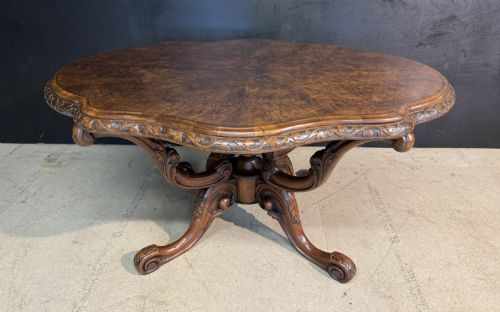
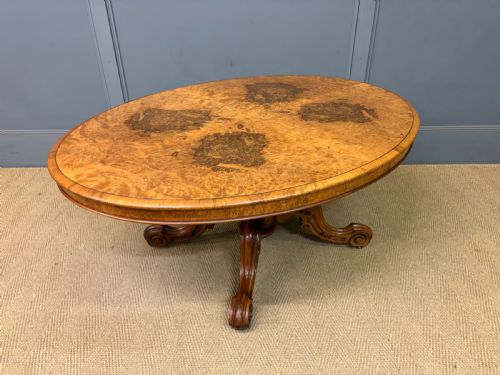

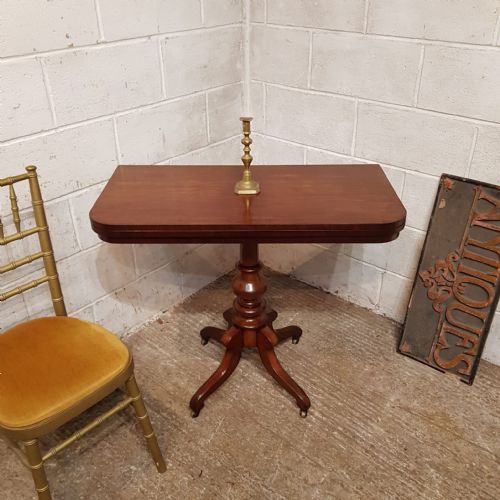


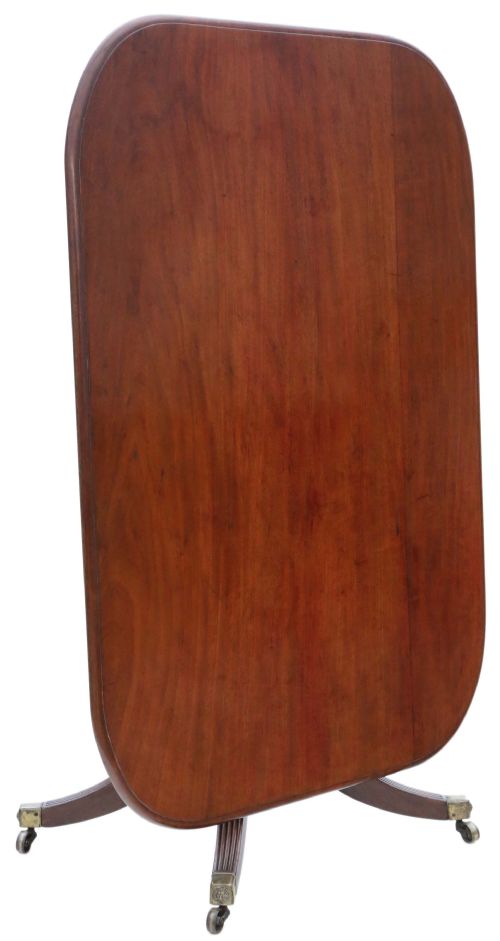


Antique Quadruped Base Table
An antique quadruped base table provides a stable four-footed platform that anchors a room while serving practical daily purposes.
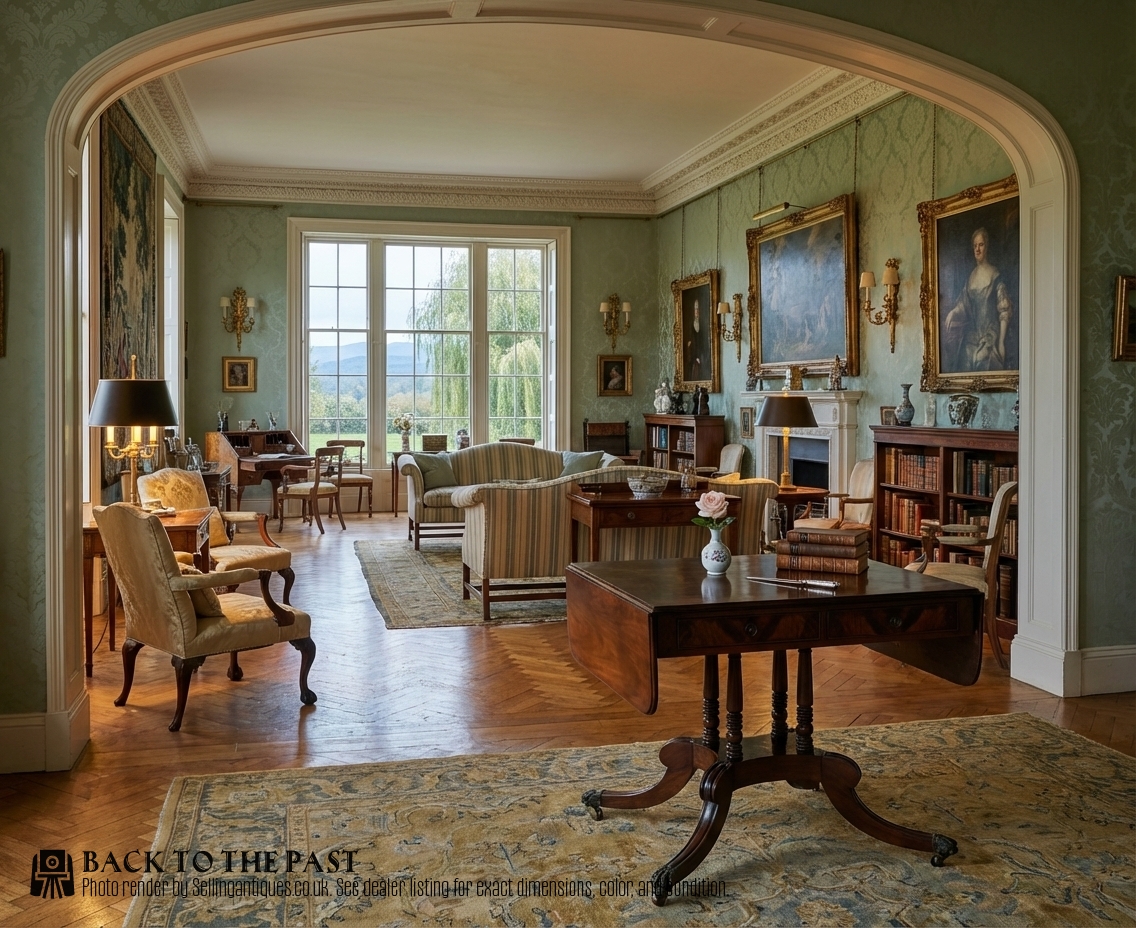
Antique Quadruped Base Table
An antique quadruped base table relies on a robust four-footed support system to sustain various top configurations. Buyers encountering this selection will discover centre tables, coffee tables, dining tables, side tables, card tables, tea tables, occasional tables, and card and games tables.
The assortment spans several distinct eras, incorporating pieces from the Georgian, Regency, William IV, Victorian, and Edwardian periods. Makers of these furnishings utilised structural formats ranging from pedestal and tilt-top designs to sofa and drop-flap layouts.
Mahogany and walnut predominate among the materials, accompanied by burr walnut, fruitwood inlay, mahogany veneer, oak, and brass accents. Each form adapts the four-footed pillar principle to domestic settings like halls, parlours, and dining rooms.
Materials and construction methods
Cabinetmakers constructed these tables primarily in solid mahogany, walnut, and oak, frequently applying finely figured veneers or crossbanding to the uppermost surfaces. Artisans incorporated fruitwood inlay and marquetry to decorate panels and borders on specific Victorian and Regency examples.
Supporting structures combine sturdy central pillars with four-way pedestal bases, sometimes featuring brass castors for mobility. Fold-over mechanisms, tilt-top actions, and pivot hinges were engineered to allow tops to rotate or open for dining, games, and writing.
Several tables fold away their secrets until evening parties demand an impromptu card game.
Assessing craftsmanship and execution
Superior examples display crisp hand-carving on the base and pedestal components, whereas lesser pieces rely on simpler turned or moulded elements. The selection of timber grain, particularly in figured walnut and feathered mahogany veneers, dictates the visual impact of the top surface.
The mechanical integrity of hinges on fold-over card and tea tables, alongside the stability of the central pillar and four feet, separates professional cabinet work from standard production. Well-fitted joints and intact crossbanding indicate higher workshop standards.
The Antique Quadruped Base Table Glossary
- Quadruped base
- A furniture support featuring four radiating feet extending from a central pillar. This configuration offers enhanced stability compared to three-legged tripod designs.
- Crossbanded
- A border technique where thin strips of veneer are laid perpendicular to the grain of the main surface. This frames the top with a contrasting grain direction.
- Marquetry
- An assembly of fitted wood veneers forming decorative pictorial patterns or floral motifs. Craftsmen apply this directly onto surfaces like coffee table tops.
- Loo table
- A large round or oval table designed for the nineteenth-century card game of loo. These usually feature tilt-top mechanisms supported by a pedestal and four-footed base.
- Fold-over table
- A dual-surface table with a hinged top that opens to double its surface area. It frequently functions as a card, games, or tea table.
Antique Quadruped Base Table: Frequently Asked Questions
What defines a quadruped base?
A quadruped base consists of four distinct feet spreading outward from a central column or pedestal. This layout provides balanced weight distribution across the floor.
Cabinetmakers utilised this support structure extensively during the nineteenth century for heavier formats like centre tables and dining tables.
How were folding tables used?
Fold-over tables served multi-purpose roles in period interiors, functioning as console or side tables against a wall when closed. Opening the hinged top revealed a baize-lined surface for card games or tea service.
They allowed households to maximise floor space in reception rooms without sacrificing table area when entertaining.
Which woods are most common?
Mahogany and walnut form the core of the listed pieces, appearing in both solid construction and veneer applications. Burr walnut and rosewood provide highly figured alternatives used for decorative effect.
Oak and fruitwoods appear less frequently, generally reserved for specific domestic or inlaid items.
How do I date these tables?
Dating relies on identifying stylistic markers, timber choices, and construction techniques associated with periods like the Regency or Victorian eras. For instance, brass paw castors and rosewood crossbanding point toward early nineteenth-century work.
Later Victorian pieces often incorporate heavy marquetry inlay and burr walnut veneers on larger proportions.