



Antique Putti Figurine
An antique putti figurine brings classical mythology and winged innocence into a room through cast metal, carved stone or glazed clay.
Antique Putti Figurine
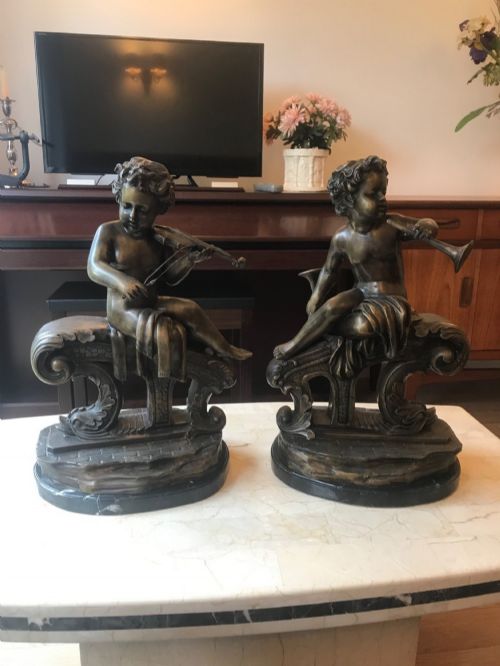
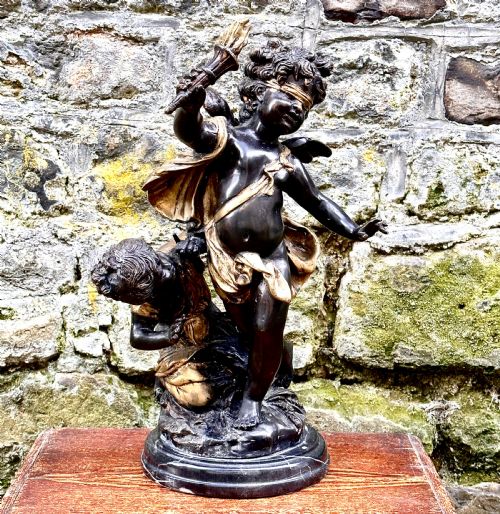
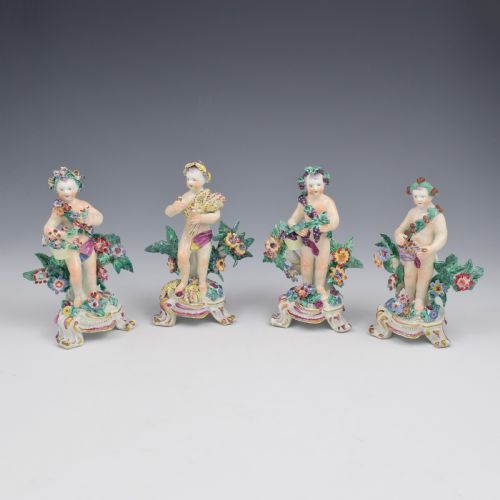
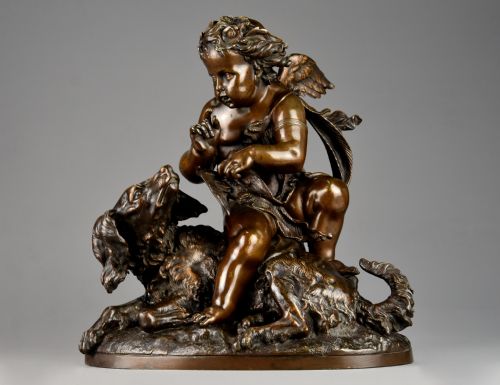
An antique putti figurine depicts winged infant boys modelled in the styles of the eighteenth and nineteenth centuries. These subjects derive from classical sculpture, appearing as playful attendants, musicians or allegorical figures.
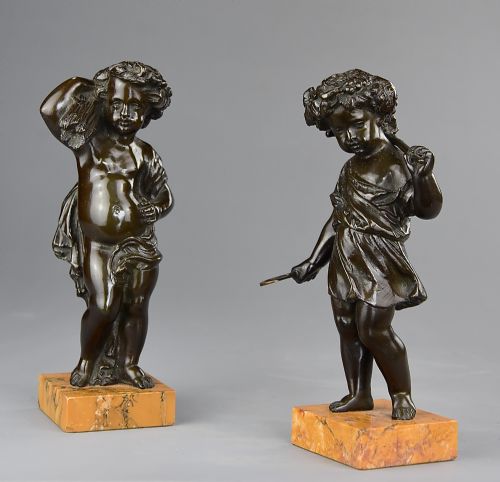
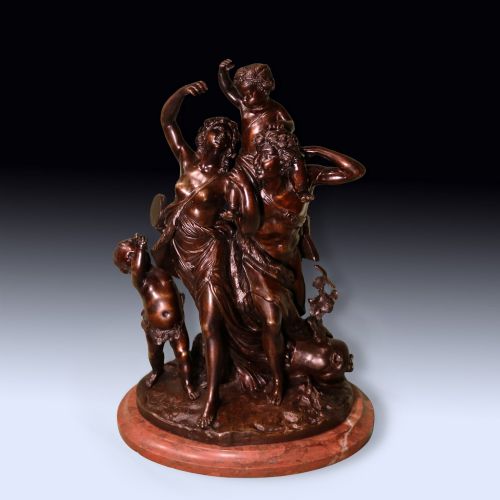
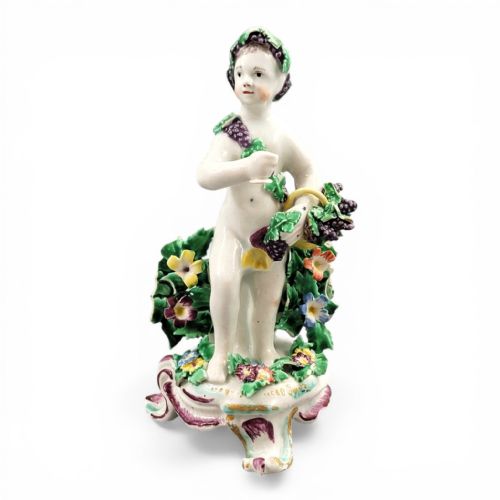
The pieces on this page span several decades, with nineteenth-century French and Italian bronzes alongside eighteenth-century porcelain figures from factories such as Bow and Meissen. Collectors encounter standalone desk bronzes, table lamps, clock mounts and pairs of shelf figures.
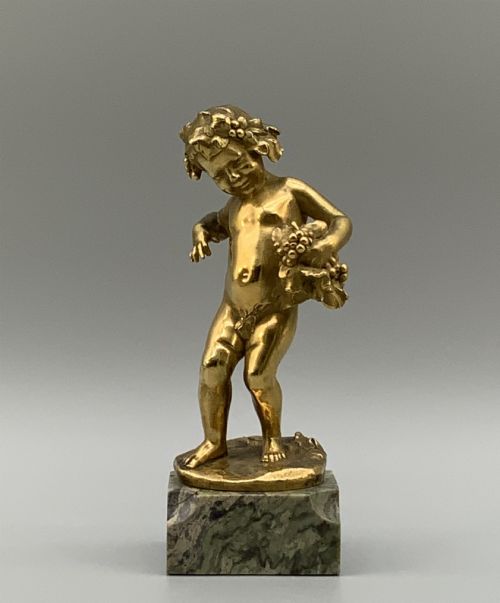
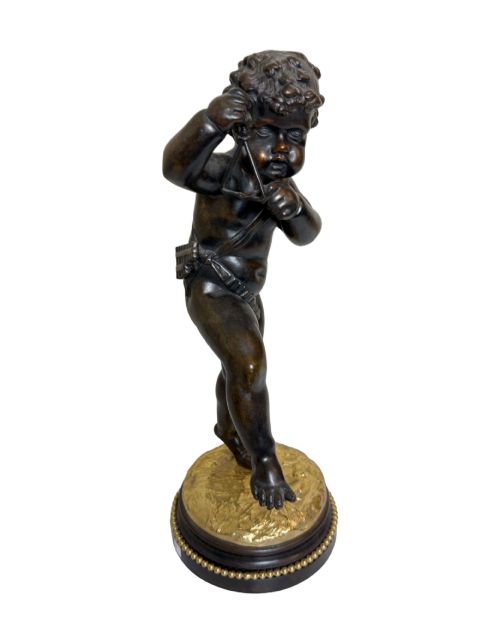
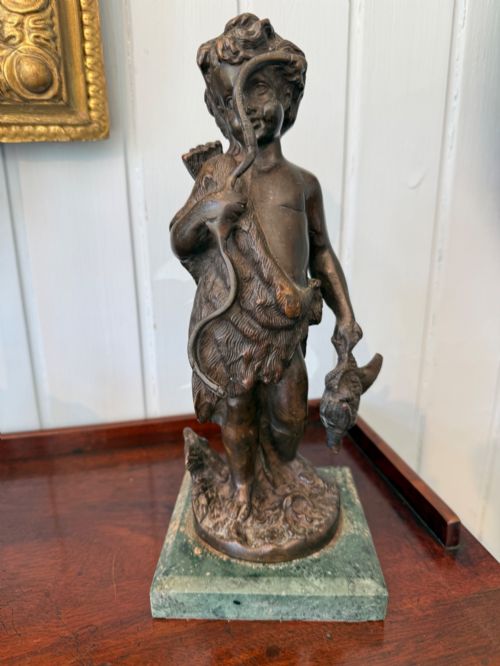
Makers often cast these figures to hold grapes, musical instruments or bows, linking them to themes of harvest, love and music. They sit upon marble bases or function as decorative elements on vases and mantel clocks.
Materials and production methods
Foundry workers cast the metal pieces using the lost-wax method in bronze, often applying a dark patination, or fire-gilt the surfaces to create ormolu. Marble bases provide weight and a neoclassical contrast to the metallic figures.
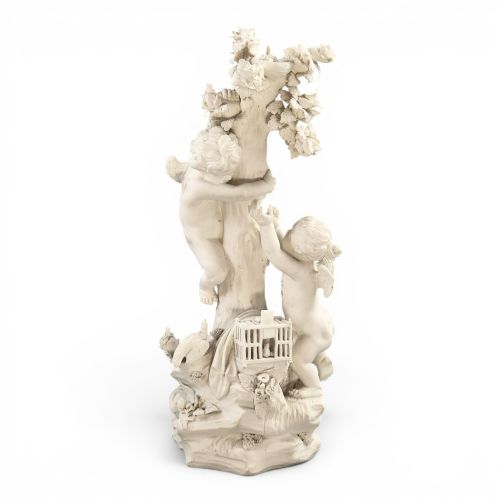
Ceramic examples rely on soft-paste or hard-paste porcelain, shaped in moulds and finished with hand-painted enamel colours or left unglazed as biscuit porcelain to resemble carved marble. Enamel and gold leaf frequently accent the porcelain garments and bases.
Listings include Neoclassical, Rococo Revival and Art Nouveau pieces spanning the eighteenth to the twentieth centuries.
What determines quality
The crispness of the chasing on bronze surfaces distinguishes superior castings from softer secondary productions. Master modellers achieved realistic musculature and feather detail in the wings, whereas lesser pieces lose definition in the hair and hands.
In porcelain, the delicacy of the moulding and the precision of the hand-painted enamels mark the difference between standard factory output and high-grade exhibition pieces. The quality of the glaze and the stability of the porcelain body also reflect the standing of the original maker.
Charles Louis Malric·Susse Freres·Claude Michael Clodion·Royal Dux Bohemia·H Schubert·Antonio Canova·Paul Scheurich·George Kemper·Edme Samson·Royal Worcester·Louis Auguste Moreau·Volkstedt·KPM Berlin·Aug Moreau·Kerr and Binns
The Antique Putti Figurine Glossary
- Putto
- A representation of a plump, winged infant boy, common in Renaissance and classical revival art. Plural putti.
- Ormolu
- Gilt bronze produced by applying a finely ground high-carat gold mercury amalgam to a bronze object. The piece is then heated to drive off the mercury, leaving a durable golden coating.
- Biscuit porcelain
- Unglazed porcelain fired once to vitrify the body, producing a matte white surface with a texture similar to carved marble.
- Lost-wax casting
- A metal-casting method in which a molten metal is poured into a mould that has been created by means of a wax model. Once the metal cools, the wax mould is destroyed to release the piece.
- Patination
- The surface coloration of metal developed naturally over time or accelerated through chemical application. It alters the tone of bronze from raw golden brown to deep brown or green.
Antique Putti Figurine: Frequently Asked Questions
What is the difference between a putto and a cherub?
In art history, a putto represents a secular, mythological infant figure derived from classical antiquity, often associated with love or wine. A cherub stems from biblical tradition, though makers and retailers during the nineteenth century frequently used both terms interchangeably.
Most decorative metal and ceramic figures marketed under these terms are actually putti, given their playful postures and connection to Bacchus or the seasons.
How do I care for antique bronze putti?
Bronze requires minimal intervention to preserve its original surface and patination. Dust the figure gently with a soft, dry brush and avoid applying commercial metal polishes, which can strip away historic patination.
Keep the pieces away from direct sunlight and damp environments to protect any underlying marble bases or applied gilt surfaces.
Are these figures solid bronze?
Many nineteenth-century sculptures and decorative figures are cast hollow to reduce weight and metal usage, while smaller statuettes and desk ornaments are sometimes cast solid. Foundry workers utilised bronze for durability and to achieve fine detail in the casting process.
Checking the underside or base often reveals the hollow interior or the threaded bolts used to secure the figure to its marble plinth.
How do I identify eighteenth-century porcelain putti?
Early porcelain figures from factories like Bow or Meissen exhibit a distinct glaze texture, often showing small pinpricks or crazing characteristic of early kiln firings. The modelling tends to be hand-finished with individual variations in the facial expressions and hand positions.
Underglaze blue factory marks on the base provide further confirmation, though many early figures remained unmarked.