


Antique Putti Clock
An antique putti clock brings sculptural figures of cherubs and cupids into domestic timekeeping, pairing gilt bronze and marble for a dramatic decorative statement.
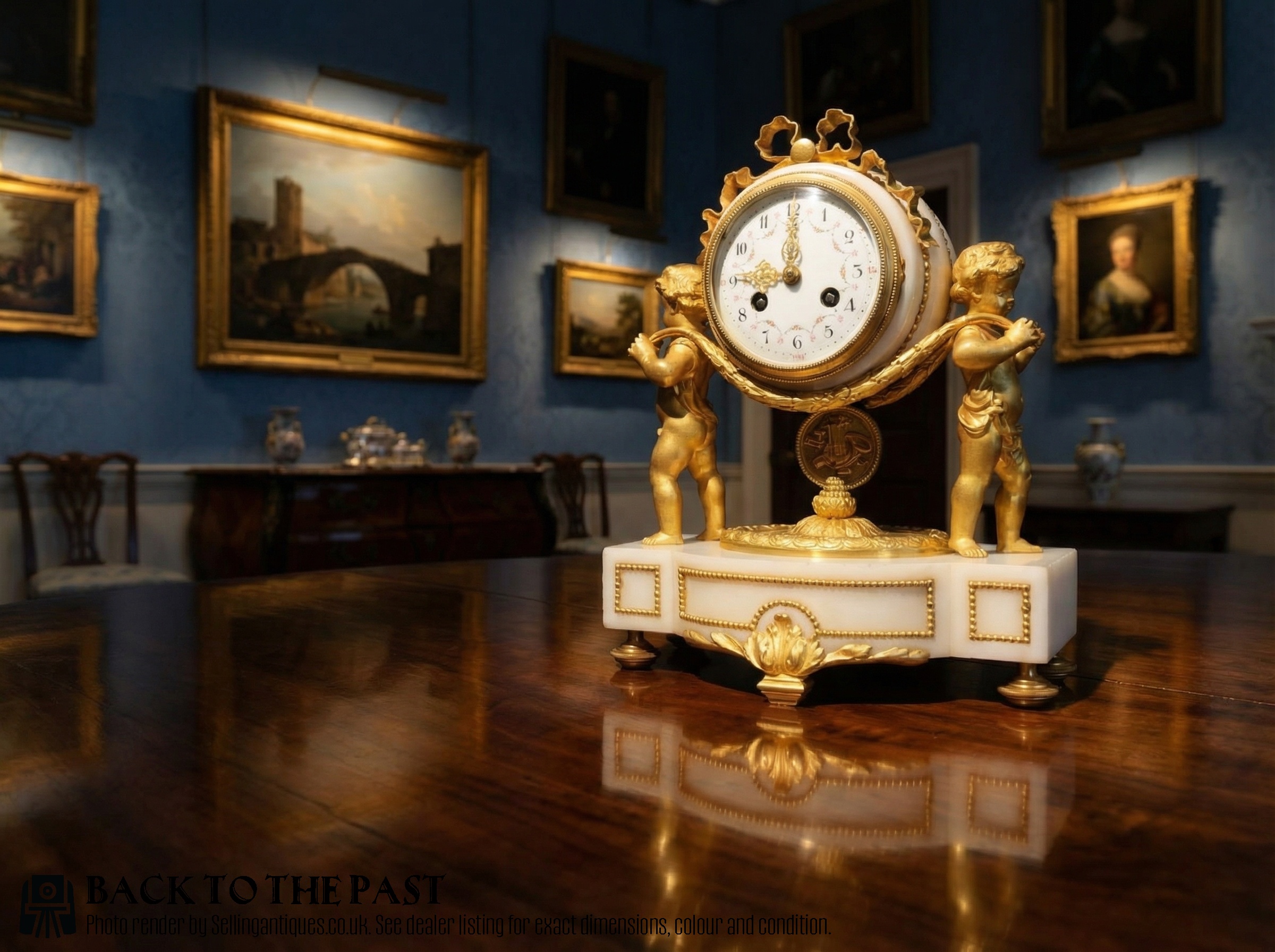
Antique Putti Clock
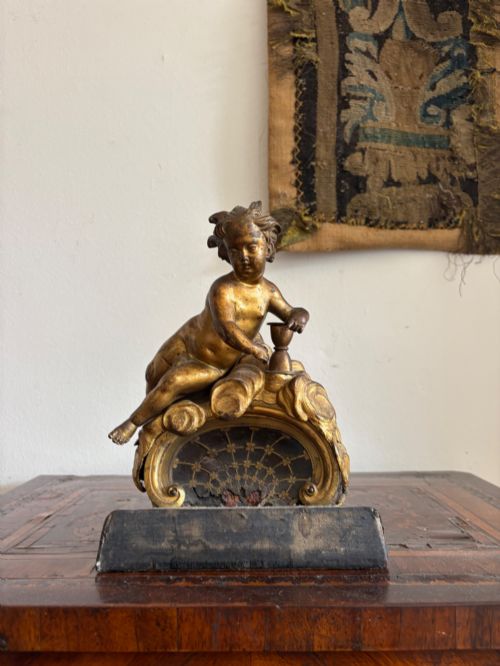
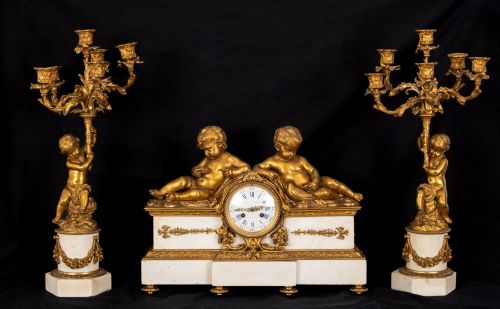
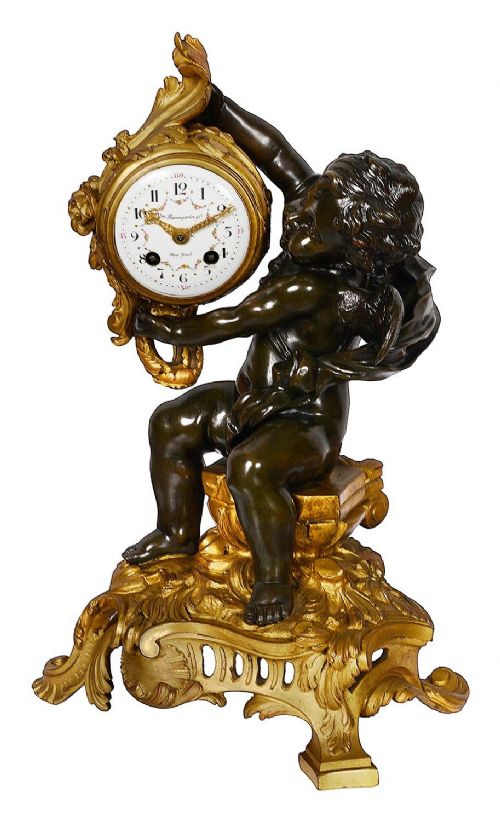
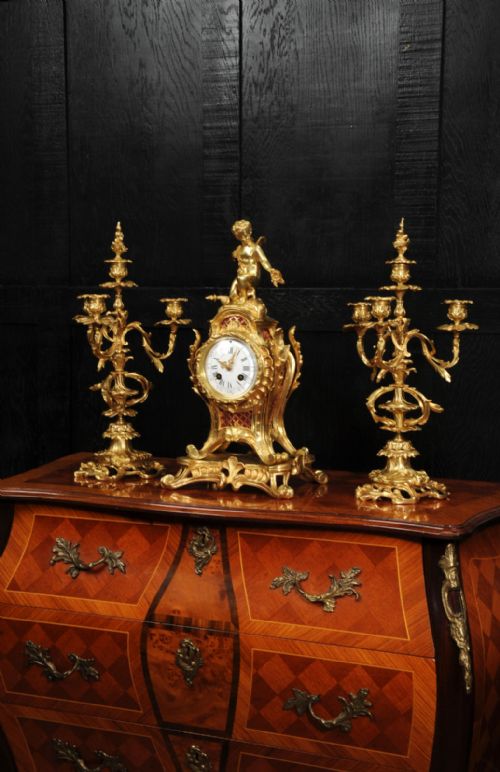
An antique putti clock centres on sculptural representations of cherubs, cupids, or putti interacting with the clock face, case, or base. These figures appear frequently alongside candelabras in matching clock garnitures or sets.
Most pieces seen here originate from French workshops spanning the nineteenth century, executed in popular revival styles such as Louis XVI, Rococo, and Empire. Mantel clocks dominate the selection, though wall clocks and table variants also occur.
Makers integrated putti either as freestanding bronze figures mounted beside the dial or as cast finials perched atop marble and ormolu housings. The scale ranges from miniature table pieces to large garnitures flanked by matching candelabras.
Materials and Manufacturing Techniques
Foundries cast these clock cases primarily in bronze or brass, subsequently applying mercury gilding or ormolu finishes to achieve a bright, durable metallic lustre. White and red marble plinths provide heavy, contrasting architectural bases for the metalwork.
Detailed figures of putti require skilled chasing and chiselling after casting to define hair, wings, and facial expressions before assembly. Enamel dials, often painted with numerals, sit protected behind glass doors or bezels within the cast housing.
One recorded clock set depicts Bacchus-themed putti enjoying wine alongside traditional timekeeping duties.
Assessing Craftsmanship and Execution
The choice and integration of secondary materials dictate overall visual success, with dense, unblemished marble and heavy fire-gilded ormolu outperforming lighter gilt metals and plated substitutes. Clock movements signed by known makers or Paris workshops also elevate the horological merit of the piece.
Le Roy Paris·Leon Message·Jollet et Cie·Phillipe H. Mourey·Bellenot Paris·John Bennett Cheapside London·Henry Berkeley Square London
The Antique Putti Clock Glossary
- Putti
- Plural of putto, representing plump, winged male infants derived from classical art and frequently utilised in Renaissance and revival decorative schemes. They appear routinely clambering over nineteenth-century clock cases.
- Ormolu
- Finely ground high-carat gold applied to a bronze base using a mercury amalgamation technique, yielding a rich yellow metallic finish. This process created the durable surface seen on many French revival clock cases.
- Garniture
- A set of matching decorative objects, typically comprising a central clock flanked by a pair of candelabras or vases designed for a mantelpiece. These matched suites share identical ormolu mounts and marble bases.
- Cartel clock
- A wall-mounted clock featuring an ornate frame made of wood, metal, or papier-mâché, popular in French interiors. They often incorporate asymmetrical scrollwork and figural mounts.
- Fusee
- A conical pulley used in spring-driven clocks to equalise the torque of the mainspring as it unwinds, ensuring steady timekeeping. This mechanical component appears in select English and French bracket or mantel clocks.
Antique Putti Clock: Frequently Asked Questions
Where should I place an antique putti clock?
These clocks demand a sturdy surface due to the considerable weight of their marble bases and bronze mounts. A mantelpiece, a heavy console table, or a dedicated bracket provides a secure location.
Keep the clock away from direct sunlight, heat sources, and damp exterior walls to protect the delicate ormolu gilding and the mechanical movement inside.
What maintenance do these clocks require?
A professional service every few years ensures the brass gears, pivots, and mainsprings remain free of hardened oils and dust. Regular servicing prevents unnecessary wear on vintage metal components.
Dust the ormolu and marble gently with a dry, soft cloth. Avoid commercial metal polishes, which strip away the historic mercury gilding.
How do I distinguish French and English styles?
French pieces on this page lean heavily towards ornate Rococo, Louis XVI, and Empire revival aesthetics featuring elaborate ormolu cast figures and marble. English examples often house single fusee movements within simpler architectural cases.
Signatures on the dial or backplate often denote the country of origin, with Parisian makers frequently marking the movement plates.