
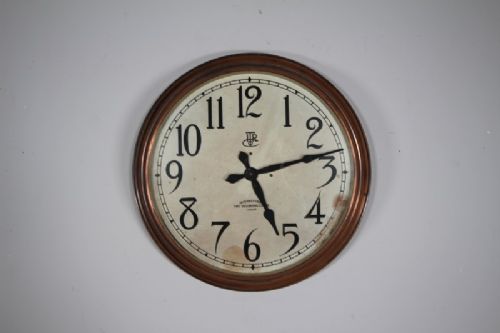
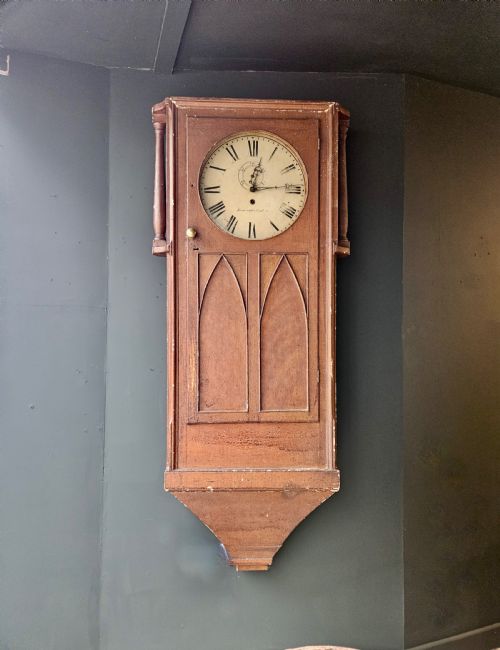
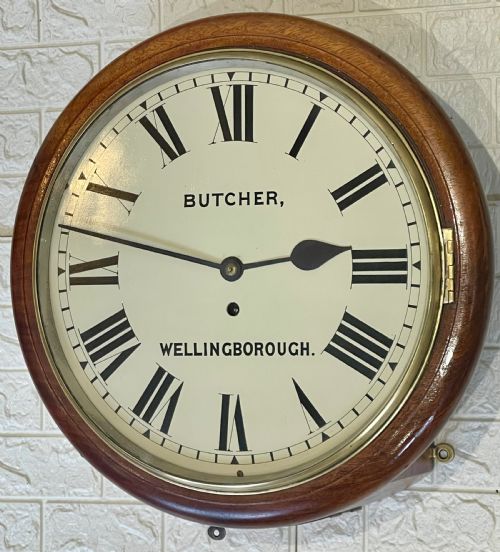
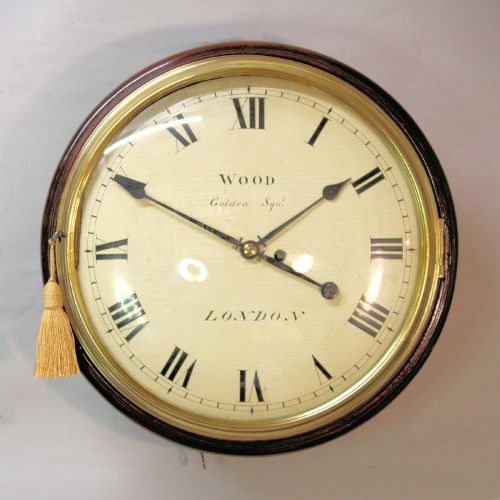
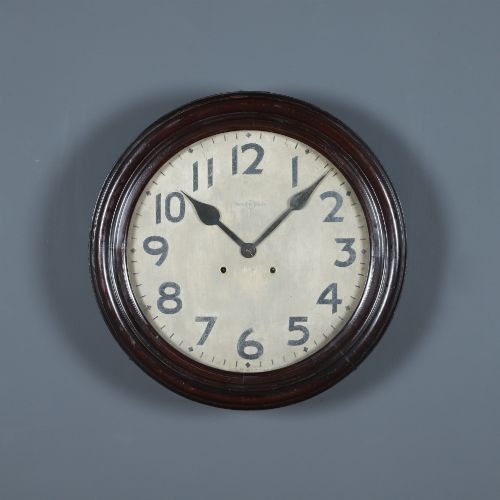


Antique Pub Wall Clock
An antique pub wall clock brings immediate character and presence to a room, driven by dependable fusee movements and heavy timber bezels.
Antique Pub Wall Clock
When you search for an antique pub wall clock, you are looking at substantial timepieces originally designed for public houses, railway stations, and commercial interiors during the Georgian, Victorian, and Edwardian eras. These clocks combine robust construction with clear dials built to be read from across a crowded room.
The versions you are most likely to meet on this page feature dependable fusee movements housed in mahogany, oak, or pine cases. Many adopt traditional dial configurations, ranging from simple painted faces to convex wooden dials surrounded by classic bezels.
Originating predominantly from English workshops, these pieces often reflect distinct regional preferences and period styles, including Gothic Revival and Sheraton influences. Their enduring appeal lies in this combination of utilitarian purpose and striking traditional design.
Materials and construction
Makers built these heavy cases using solid timbers like mahogany, oak, and pine, often finished with brass bezels and protective glass covers to shield the dial. The choice of wood provided the necessary rigidity to support heavy mechanical movements while withstanding busy commercial environments.
Internally, these clocks rely on chain-driven or single fusee movements designed to maintain even tension and accurate timekeeping as the mainspring unwinds. Dials were carefully painted or fashioned from convex wood, ensuring high legibility and durability over decades of continuous service.
Listings feature pieces spanning the Georgian, Victorian, and Edwardian periods, constructed from mahogany, oak, pine, brass, and glass.
Judging quality and character
Quality in these timepieces rests on the integrity of the movement and the preservation of the case timber. Examples featuring original paint finishes, well-maintained fusee movements, and unaltered dial faces stand apart from those with replaced components.
The refinement of the bezel, whether executed in brass or shaped wood like the Sheraton style, indicates the original tier of the piece. Superior examples retain their authentic structural harmony and the unblemished character acquired through a working life.
Harrods
The Antique Pub Wall Clock Glossary
- Fusee
- A conical pulley used in mechanical clocks to equalize the diminishing power of the mainspring as it unwinds. This mechanism ensures consistent torque and steady timekeeping.
- Bezel
- The ring of brass, wood, or metal that holds the glass protecting the clock face. It often hinges open to allow access for winding and hand adjustment.
- Drop dial
- A clock case featuring an extended lower portion below the circular dial, designed to accommodate a swinging pendulum in a compact vertical format.
- Convex dial
- A clock face curved outward toward the viewer, commonly carved from wood or shaped from metal to reduce glare and improve visibility.
- Tavern clock
- A large wall-mounted timepiece with a prominent dial and a pendulum trunk, traditionally hung in public houses and coaching inns for public timekeeping.
Antique Pub Wall Clock: Frequently Asked Questions
How do fusee movements work?
A fusee movement uses a conical pulley connected to the mainspring via a chain to maintain steady tension. As the spring loses power, the chain rides higher on the cone to keep the torque consistent.
This clever mechanical arrangement ensures the clock maintains accurate time throughout its entire winding cycle without losing momentum.
Where should I hang a heavy wall clock?
These substantial clocks require secure mounting directly into structural wall studs or brickwork using heavy-duty fixings. Because the timber cases and brass movements add significant weight, plasterboard alone will not support them safely.
Position the clock at a comfortable viewing height where the dial can be easily read and accessed for regular winding.
How do I wind a chain-driven clock?
Winding involves using a key inserted into the dial aperture to pull the drive chain upward until the internal weight or spring reaches its limit. Care must be taken not to overwind the mechanism.
Consulting the specific movement type helps determine the correct winding frequency, which typically ranges from daily to weekly intervals.
How can I tell a Victorian clock from a Georgian one?
Georgian and early nineteenth-century examples often display restrained lines, convex wooden dials, and delicate bezels reflecting Sheraton influence. Victorian pieces frequently introduce bolder proportions and varied regional case designs.
Examining the internal movement construction, timber grain, and dial typography helps confirm the specific period of manufacture.