


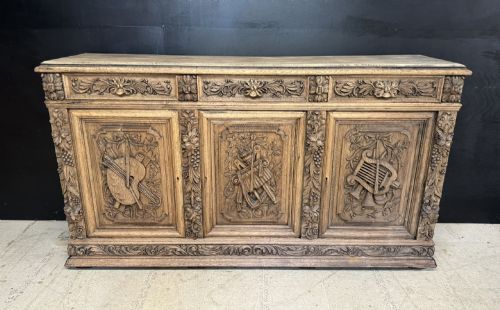
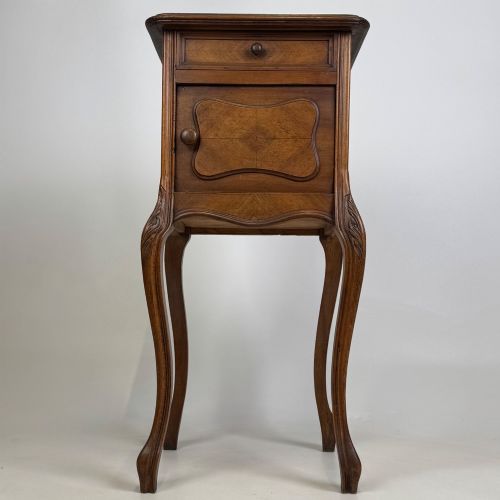
Antique Provincial Table
An antique provincial table brings the honest utility of rural life into a modern room, shaped by local hands from solid timber.
Antique Provincial Table
An antique provincial table represents the everyday domestic and working furniture of regional workshops, distinct from the refined urban output of capital cities. These pieces span the eighteenth, nineteenth and early twentieth centuries, created for practical use in farmhouses, country kitchens and provincial estates.
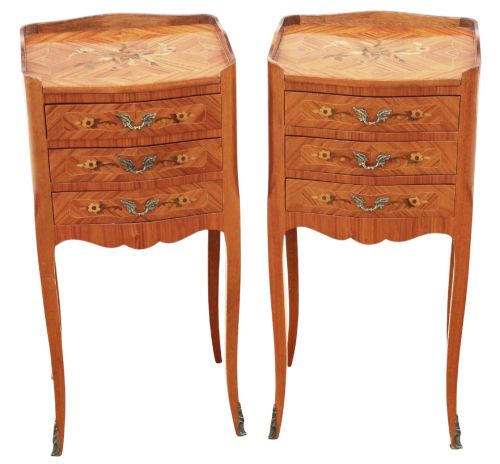
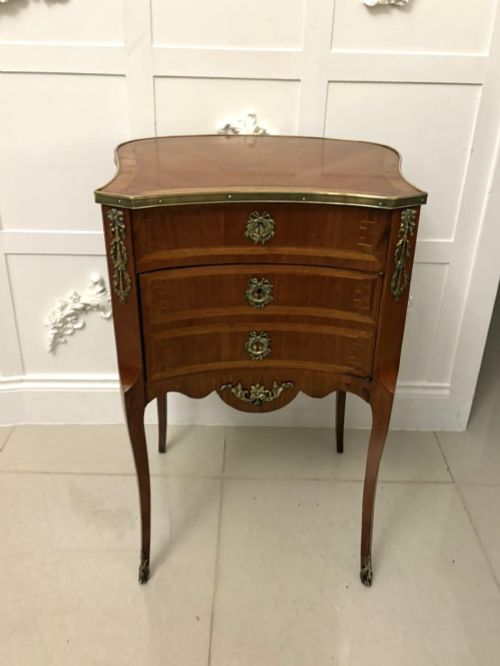
The selections available here lean heavily toward large dining and refectory tables, alongside smaller forms such as side tables, console tables, bedside cabinets and coffee tables. Oak, cherrywood, walnut and fruitwood dominate these listings, reflecting the local timber stocks available to regional cabinetmakers and carpenters.
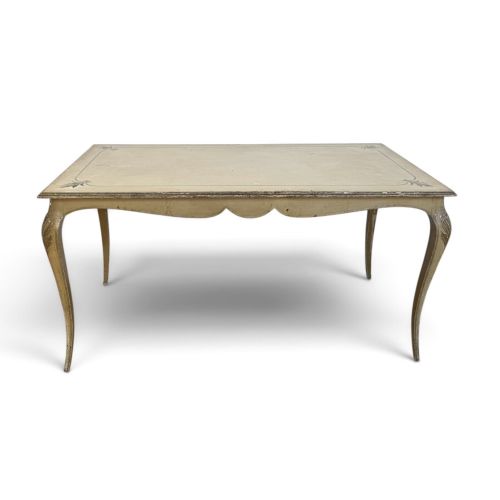
French provincial origins predominate among the styles seen, accompanied by English Georgian and regional country pieces. Buyers find everything from heavy plank-top dining boards to occasional lowboys and occasional writing tables carrying simple turned or cabriole legs.
How they were made
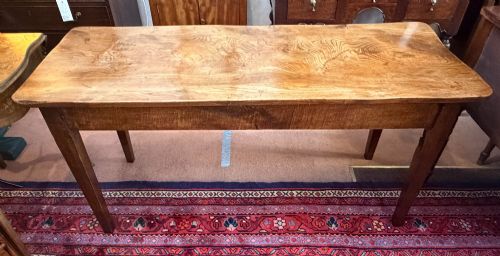
Construction relies on solid regional hardwoods such as oak, elm, walnut, cherrywood and fruitwood, joined with traditional framing methods built to withstand daily labour. Plank tops sit upon stretcher bases or heavy turned legs, held together by pegged mortise and tenon joints.
Surface finishes remain straightforward, often showing the natural grain of the timber enhanced by decades of wax, or surviving traces of old paint and cream washes. Details like marquetry inlay, parquet patterns, wrought iron stretchers and inset marble tops appear on select pieces from later periods.
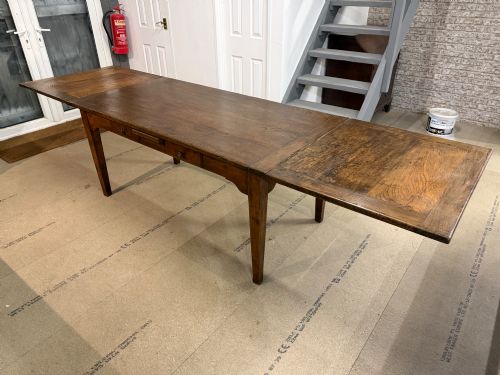
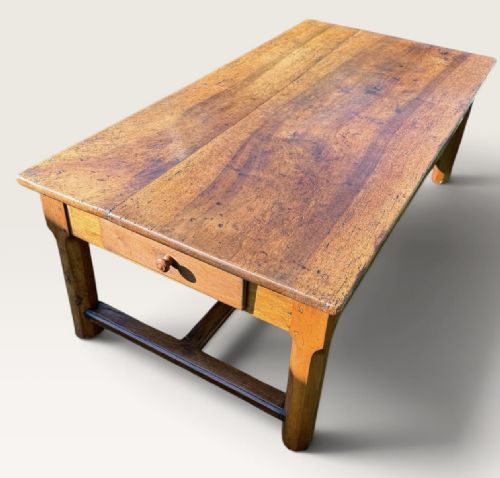
Working additions include drop leaves, drawer leafs, double extending mechanisms and functional storage drawers fitted with brass hardware. Every element serves the original purpose of a durable, hard-wearing domestic surface.
Several tables retain the faint ink stains and carved initials of generations who treated the furniture as a workspace.
What varies in quality
The integrity of the timber forms the primary distinction across the range, separating pieces built entirely from thick regional hardwoods from those utilising secondary softwoods in less visible areas. Grain selection, board width in the tabletop and the weight of the framing timber dictate the structural presence of the piece.
The skill of the regional carpenter shows in the proportion of the legs, the snugness of the joinery and the restraint of any carved ornamentation. Pieces displaying thoughtful proportions and original patination stand apart from heavier, unrefined examples.
The survival of original mechanisms, such as smooth-running extension frames, drawer leaves and unaltered hardware, preserves the functional integrity that defines better-made country furniture.
The Antique Provincial Table Glossary
- Refectory table
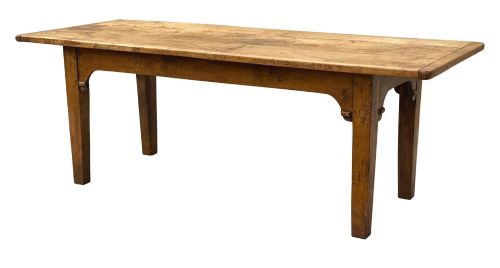
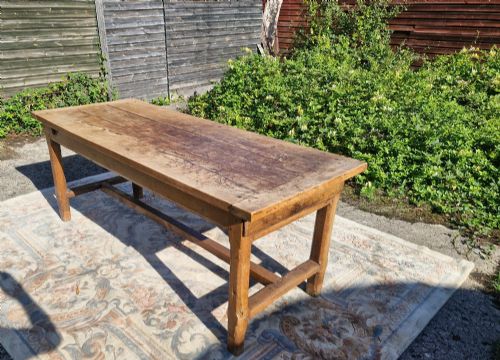
- A long dining table traditionally used in communal dining halls and large country kitchens. These heavy boards usually feature substantial trestle or four-leg bases connected by low floor stretchers.
- Lowboy
- A small eighteenth-century dressing or writing table standing on relatively tall legs, typically fitted with one or more drawers beneath the working surface. They originate largely from English provincial cabinetmakers.
- Marquetry
- The art of applying pieces of veneer to a structure to form decorative patterns and pictures. Regional makers applied this technique sparingly to elevate the appearance of walnut and fruitwood surfaces.
- Parquetry
- A geometric mosaic of wood pieces used for decorative floors and tabletops. Walnut versions often display this patterned arrangement on extending leaves.
- Cabriole leg
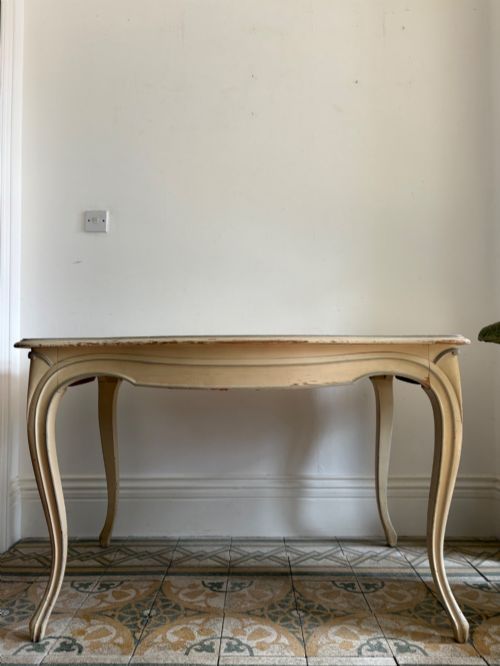
- A curved table leg featuring two distinct curves, bending outward gracefully at the knee and inward at the ankle. This form appears frequently on French provincial and Edwardian console and side tables.
- Drawer leaf
- An extension system where pull-out leaves slide from beneath the main tabletop to increase the surface area. This mechanism allows a compact table to accommodate larger gatherings.
Antique Provincial Table: Frequently Asked Questions
How do I clean an antique wooden table?
Maintain the surface by dusting with a dry cloth and applying a traditional beeswax sparingly to nourish the timber. Avoid modern liquid polishes that build up silicone layers over the grain.
Keep the timber away from direct heat sources and strong sunlight to prevent the wood from drying out or splitting along the historic joints.
Can I use an antique farmhouse table daily?
These tables were built for heavy domestic labour and kitchen work, making them remarkably resilient for modern family dining. Use mats under hot dishes and wipe spills promptly to protect the historic patina.
Embrace minor marks and surface indentations as part of the ongoing story of a piece that has survived for generations.
What is a refectory table?
A refectory table is a long, narrow dining table traditionally designed for communal meals in large rural houses and institutions. Their sturdy stretcher bases provide exceptional stability without obstructing chairs.
They function well as statement dining tables in open-plan modern spaces.
How do I date a provincial table?
Examine the construction methods beneath the top, looking at the hand-cut joinery, tool marks on the timber, and the type of fasteners used. Secondary woods and hardware styles also offer reliable clues to the period.
Compare the turned leg profiles and overall proportions against known regional design shifts from the eighteenth to the early twentieth century.