



Antique Press Screw
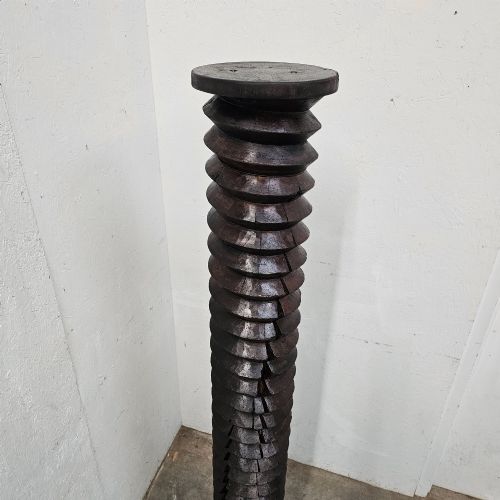
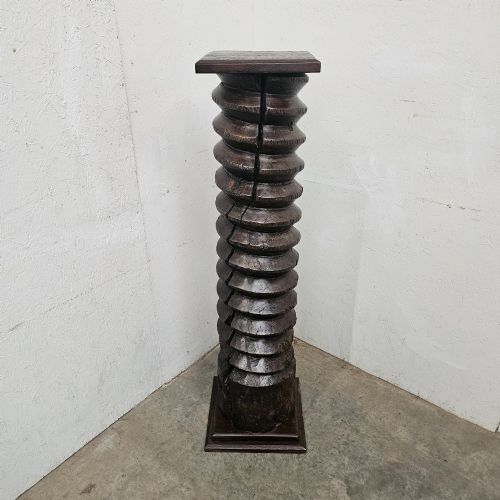
An antique press screw is a robust mechanical device of oak, mahogany, iron and brass designed to exert steady downward pressure for books, linen, cheese and wine.
Antique Press Screw
When you search for an antique press screw, you encounter heavy functional mechanisms from the Georgian, Victorian and nineteenth century periods. These utilitarian objects span domestic, agricultural and workshop use, reflecting an era when manual force was harnessed through threaded spindles.
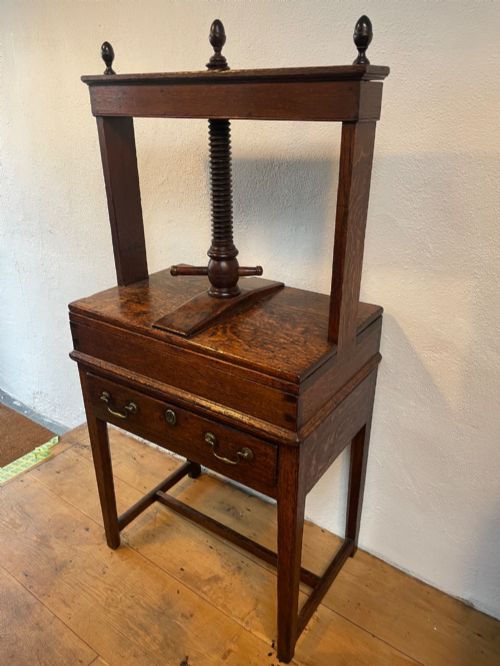
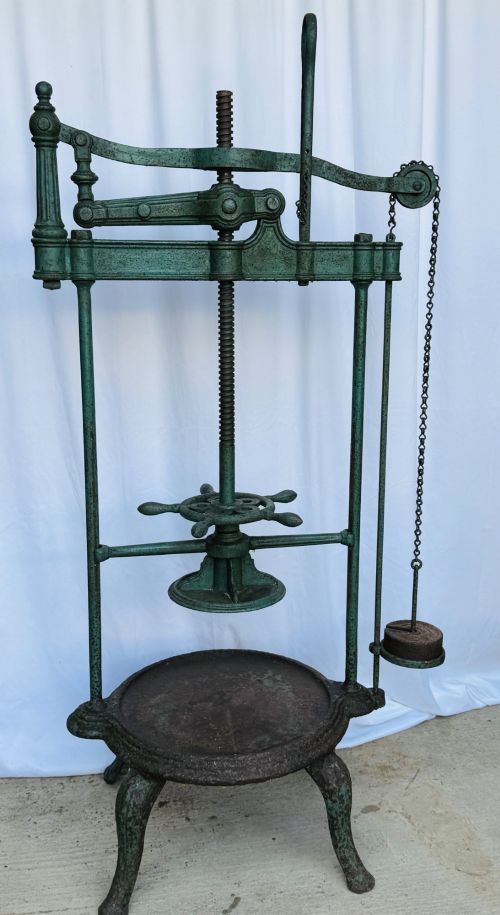
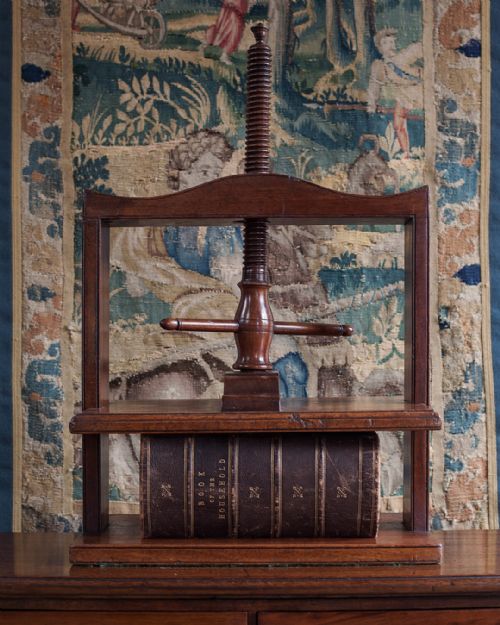
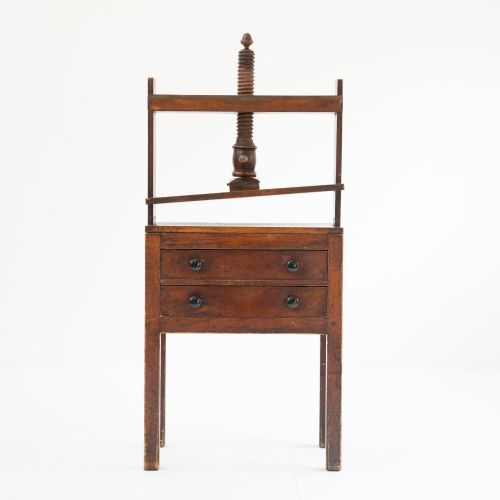
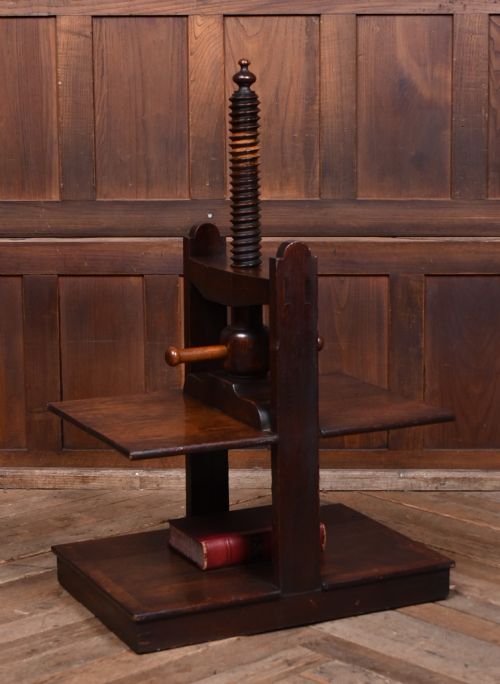
The versions most commonly met on this page are book presses and linen presses featuring timber or metal frames and large operating screws. You also find specialised apparatus such as cheese presses, wine press screw threads, and treen lemon squeezers.
Originating in country houses, farmhouses and workshops, these pieces combine dense hardwoods like oak and mahogany with forged steel and cast iron components. Their primary appeal lies in the visible engineering of the screw mechanism and the honest wear of daily labour.
How they were made
Makers constructed these presses using durable timbers such as oak, mahogany, elm and pine, joined to withstand intense mechanical stress. Frames are frequently dovetailed or heavily pegged, housing robust vertical wooden or metal screw threads.
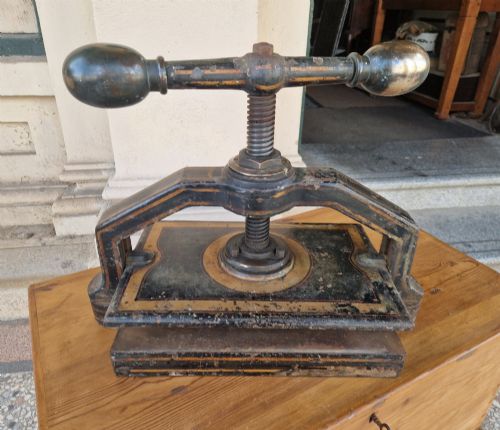
Metal elements including cast iron and forged steel provide the necessary torque and structural integrity for industrial or agricultural presses. Treen items like lemon squeezers are hand-carved from single blocks of dense wood.
Antique Press Screw Retail Price Guide 2026
Typical asking prices for press screw among the pieces listed under this phrase on Sellingantiques today, from the lower quarter to the upper quarter. They describe what is for sale here now, not the wider market.
Some past kitchenalia items shrink the daily chore of beverage making into a pocket-sized turn of a treen lemon squeezer.
What varies in quality
The distinction between ordinary utility items and superior examples lies in the integrity of the screw mechanism and the quality of the timber. Smooth operation of the threaded screw, free from excessive play or stripped threads, separates well-engineered pieces from worn ones.
Finer pieces display sophisticated cabinetmaking, such as figured mahogany panels and maker signatures, whereas rustic agricultural items prioritize sheer weight and utilitarian function over refinement.
Johnston’s of London
The Antique Press Screw Glossary
- Book press
- A heavy bench or table-top device utilising a threaded screw to flatten paper or bind books. These typically feature a wooden or iron platen driven downward by a top-mounted handle.
- Linen press
- A tall piece of furniture containing sliding trays enclosed by doors, sometimes incorporating an internal screw mechanism to press textiles flat. Georgian and Victorian examples often pair mahogany or oak with panelled construction.
- Treen
- Small domestic wooden objects shaped by turning or carving. These everyday items display the natural grain and wear of domestic handling.
- Cast iron
- Molten iron poured into a mould to create rigid mechanical parts and frames. It provides substantial weight and strength for industrial and domestic presses.
- Forged steel
- Metal shaped through heating and hammering to produce durable screw threads and operating handles. This material withstands high tension without fracturing.
Antique Press Screw: Frequently Asked Questions
What is an antique press screw used for?
These devices apply mechanical leverage to flatten paper, press textiles, squeeze fruit, or shape cheese. Each design corresponds to the specific domestic or agricultural task it performed.
Today, they serve as striking sculptural objects in studies and kitchens, often retaining their original working capability.
How do I date a wooden book press?
Dating relies on timber choice, construction methods, and hardware styles across the Georgian and Victorian eras. Earlier pieces tend to show simpler joinery and hand-cut threads.
Examining the wear patterns and the transition from all-wood construction to hybrid iron and timber frames also helps establish the period.
Are these presses still in working order?
Many of the screw mechanisms remain entirely functional, turning smoothly along their threaded shafts. The combination of dense hardwoods and robust metals preserves their mechanical integrity.
Gentle cleaning and waxing help maintain the movement of the screw without altering the historical patina.
Where should I place a heavy press?
Due to their substantial weight in cast iron and dense oak, these pieces require sturdy tables, pedestals or low storage surfaces. Book presses function well as heavy desk accessories or decorative focal points.
Ensuring adequate support prevents damage to modern furniture from the concentrated weight of the metal and wood components.