



Antique Preserve Jar
An antique preserve jar brings the rich weight of the dining table into focus, spanning cut glass, silver plate and green glazed terracotta.
Antique Preserve Jar
When searching for an antique preserve jar, collectors encounter a diverse group of domestic vessels designed for table service, ranging from silver-mounted table glass to French earthenware storage containers. The most frequent examples on this page combine cut glass or lead crystal with sterling silver or silver plate mounts, often complete with matching spoons.
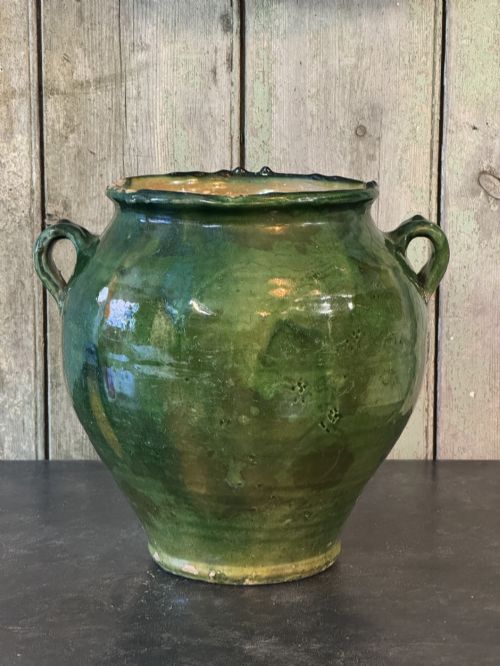
The selection also reaches into continental European traditions, including French green glazed terracotta confit pots and blown glass pickling jars. Earlier centuries provide Georgian and early Victorian silver mustard pots, alongside earthenware jam pots by makers such as Plichta.
Tableware forms extend to lidded butter dishes, biscuit barrels, honey jars on stands, and novelty silver-mounted apple or drum shapes. These pieces served to present sweet preserves, condiments and jams directly to the dining room table during breakfast and afternoon tea.
Materials and construction
Makers utilised heavy lead crystal and cut glass for bodies, creating faceted surfaces that caught the light around breakfast and dining tables. These glass vessels were frequently paired with cast and hallmarked sterling silver mounts, hinged lids and silver-plated stands.
Pottery examples rely on traditional earthbound techniques, utilising terracotta bodies finished with green glazes or salt-glazed earthenware. Blown glass production methods are evident in older pickling jars and storage vessels, showing characteristic pontil marks and bubbles within the metal of the glass.
Antique Preserve Jar Retail Price Guide 2026
Typical asking prices for preserve jar among the pieces listed under this phrase on Sellingantiques today, from the lower quarter to the upper quarter. They describe what is for sale here now, not the wider market.
Factors of quality
The distinction between standard domestic wares and exceptional pieces rests upon the crispness of the glass cutting and the weight of the silver mounts. Finer examples display deeply refractive crystal and well-balanced frames from established silversmiths.
Novelty forms and sculptural creations, such as apple-shaped pots or automated self-opening lids, command attention through mechanical ingenuity and sculptural modelling. The survival of original matching spoons and undamaged lids also elevates the standing of any container.
Hukin and Heath·Asprey and Co·Plichta Pottery·Richard Ginori·Walker and Hall·George Unite·T S Cuthbert·Martin and Hall·Mappin and Webb·John Grinsell
The Antique Preserve Jar Glossary
- Confit pot
- An earthenware storage vessel from France, typically featuring a green lead glaze over terracotta. These pots were originally utilised for preserving meats and fruits.
- Lead crystal
- A high-quality variety of glass containing metal oxide that increases weight and brilliance. It allows for deep, sharp facets that scatter light across the table.
- Silver plate
- A layer of silver fused to a base metal foundation, commonly utilised for frames, stands and hinged lids during the nineteenth and twentieth centuries.
- Salt-glazed
- A pottery finish achieved by throwing common salt into the kiln during high-temperature firing. This creates a durable, slightly textured surface resembling orange peel.
Antique Preserve Jar: Frequently Asked Questions
What were antique preserve jars used for?
These vessels were placed upon the dining table to hold fruit preserves, marmalade, honey and condiments during formal meals and household teas.
They allowed hosts to serve sweet accompaniments directly from decorative glass and silver containers rather than utilitarian kitchen crocks.
How do I identify glass periods?
Early nineteenth-century pieces often feature heavier lead crystal with hand-cut facets and polished pontil marks on the base. Later Edwardian and Art Deco examples tend towards lighter machine-pressed glass paired with silver plate.
Examining the depth of the cut and the clarity of the glass reveals the manufacturing era.
How should I clean silver mounts?
Silver-plated and sterling mounts require gentle wiping with a soft, dry microfiber cloth to remove dust and prevent tarnish accumulation. Avoid harsh chemical dips that strip the aged patina from recessed areas of the metal.
Glass bodies can be washed separately in warm soapy water while keeping moisture away from delicate hinges.
Are replacement spoons important?
Finding a piece with its original matching spoon enhances its completeness and collecting appeal. Many preserve jars were sold as sets with dedicated slotted spoons designed to rest inside the lidded opening.
Replacement spoons can still serve functionally, though matching period hallmarks adds greater interest.