



Antique Pottery Column
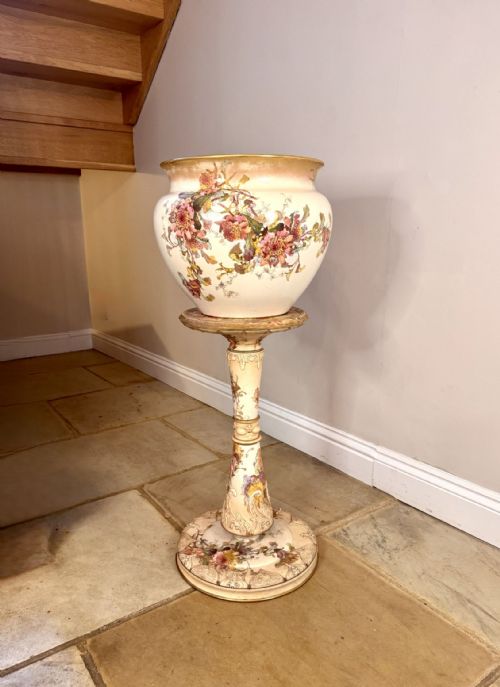
These antique pottery column pieces are architectural supports and pedestals designed to elevate planters and art in grand interiors.
Antique Pottery Column
Makers utilised these vertical ceramic forms to create focal points in hallways and reception rooms, combining structural utility with rich surface decoration. The listings demonstrate how these columns served primarily as display furniture rather than purely structural architectural elements.
How they were made
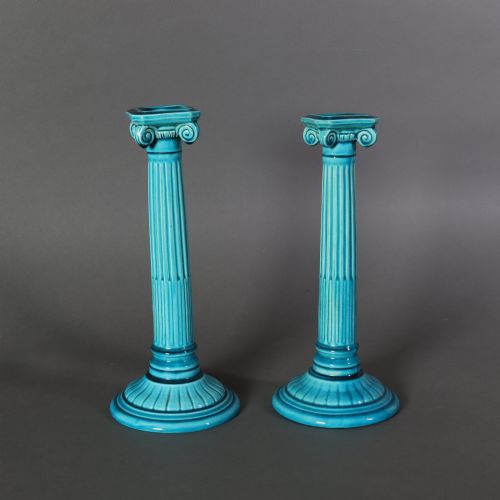
Potters constructed these heavy vertical columns using durable earthenware and ceramic bodies capable of supporting substantial jardinieres on top. Makers shaped the tall shafts on large wheels or in moulds, integrating fluted designs, naturalistic textures, and structural support rings.
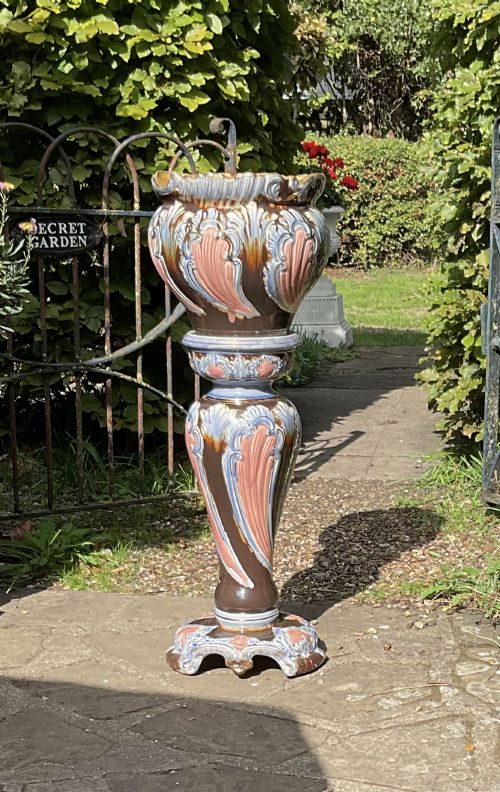
Artisans applied vibrant coloured glazes, majolica enamels, and faience finishes to the ceramic surfaces before firing to achieve deep surface sheens. Select pieces incorporate applied gold leaf highlights to accentuate the moulded decorative details and architectural fluting.
Listings feature earthenware materials spanning from eighteen-sixty through the Edwardian period, uniting Victorian rustic, aesthetic movement, and Arts and Crafts styles.
What varies in quality
Quality in an antique pottery column rests on the crispness of the moulded architectural details and the richness of the glaze application. Superior examples display even, vibrant majolica or faience surfaces without pooling, alongside robust structural thickness that prevents wobbling under heavy planters.
The sophistication of the design dictates distinction, moving from utilitarian plant stands to ambitious art pottery pieces featuring naturalistic or aesthetic movement motifs. Matched pairs and complete jardiniere sets demonstrate a higher level of original execution than single, separated components.
Royal Doulton·Burmantofts·Woodlesford Art Pottery
The Antique Pottery Column Glossary
- Jardiniere
- A large ornamental pot or planter designed to hold growing plants. These vessels sit atop the pottery columns found in nineteenth-century interiors.
- Majolica
- A type of earthenware coated with an opaque tin-lead glaze and painted with metallic oxide colours. This technique produces the bright, glossy surfaces seen on many Victorian stands.
- Faience
- Tin-glazed earthenware popular during the nineteenth century for decorative art pottery and architectural pieces. It provides a smooth, receptive ground for rich coloured glazes.
- Earthenware
- Porous pottery fired at relatively low temperatures and rendered impermeable through glazing. It forms the heavy structural body of these columns and plant stands.
- Aesthetic Movement
- A late-nineteenth-century design style emphasising visual beauty over narrative content. Pieces from this movement display refined forms and nature-inspired motifs.
Antique Pottery Column: Frequently Asked Questions
Can these columns hold heavy planters?
These ceramic columns were specifically manufactured to bear the substantial weight of large earthenware jardinieres and damp soil. Their robust earthenware construction provides the necessary load-bearing capacity for indoor display.
Buyers should inspect the base and top platform to ensure the weight distributes evenly across the column structure. Most complete sets were engineered together precisely for this purpose.
How do I care for glazed majolica surfaces?
Maintenance requires only gentle dusting with a soft cloth and occasional cleaning with a damp sponge. Avoid harsh chemical cleaners that can dull the historical glaze or damage exposed ceramic bodies.
Protect the unglazed undersides from moisture by using protective pads beneath the column base. This prevents dampness from rising through the porous earthenware over time.
Where were these columns placed originally?
Victorian and Edwardian households positioned these tall stands in entrance halls, bay windows, and principal reception rooms. They served to elevate prized ferns and flowering plants into prominent lines of sight.
Pairs were often placed flanking doorways or framing fireplaces to create symmetrical interior arrangements. Single columns functioned as standalone display points for sculptural art objects.
How do I distinguish Arts and Crafts examples?
Arts and Crafts pottery columns focus on simpler, structural forms that highlight the natural qualities of the clay and glaze. They frequently reject excessive ornamentation in favour of honest craftsmanship and subtle earth tones.
These pieces align with the design philosophies of the late nineteenth and early twentieth centuries. Makers emphasised utility and material integrity over traditional Victorian revival styles.