


Antique Pot Holder Stand
An antique pot holder stand brings functional charm to interior displays, uniting period craftsmanship with botanical or tabletop arrangement.
Antique Pot Holder Stand
The term antique pot holder stand encompasses a varied selection of vessels, plant supports, and serving frames designed to elevate containers from surfaces. These pieces emerge predominantly from the Victorian and Edwardian eras, alongside later twentieth-century examples.
Buyers encounter forms ranging from mahogany plant stands and brass jardinières to silver-plated frames holding cranberry glass preserve bowls and condiment sets. Materials span timber, metal, and glass, reflecting domestic needs of the nineteenth and twentieth centuries.
Materials and construction
Metalworking techniques shape many pieces, utilising brass, copper, cast iron, and silver plating to create durable frames, wirework stands, and decorative mounts. These metals often pair with cut glass, cranberry glass, or ceramic inserts.
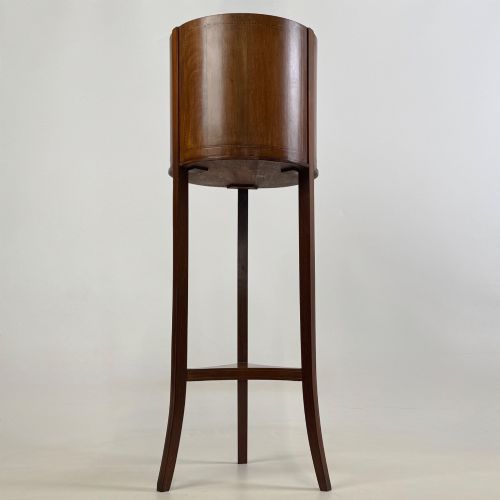
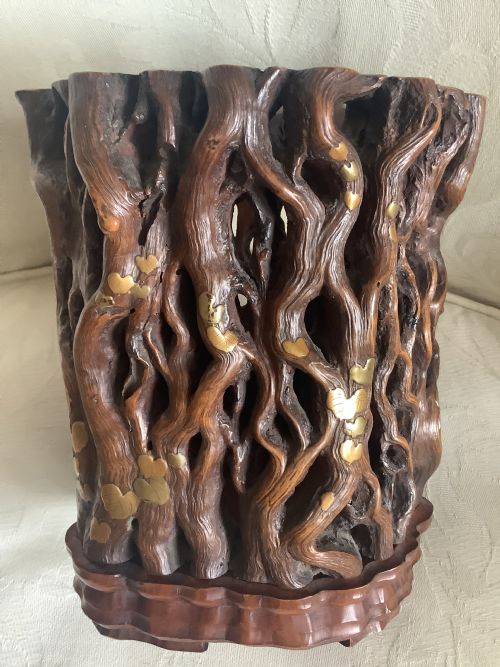
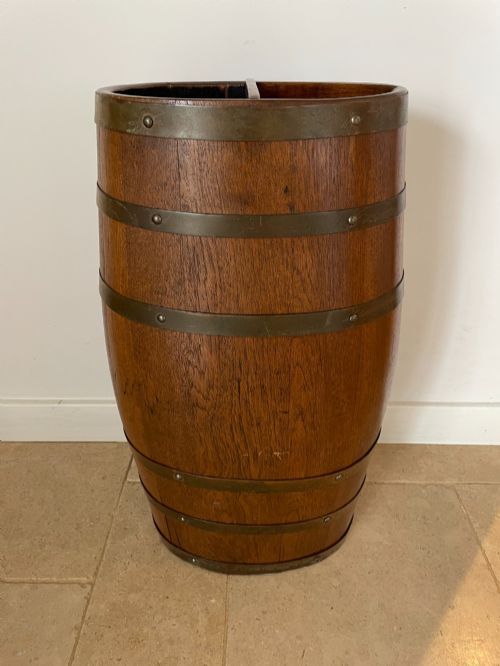
Woodworking traditions appear in mahogany, oak, walnut, and hardwood constructions, incorporating coopered barrel designs, ebonised finishes, and turned supports to hold planters and botanical displays.
Listings feature oak, mahogany, and brass across Victorian and Edwardian periods.
Assessing quality and execution
Quality rests in the harmony of materials and the integrity of the original pairing between stand and vessel, such as fitted glass bowls or matching ceramic inserts. Superior examples demonstrate crisp casting, careful joinery, and intact silver plating.
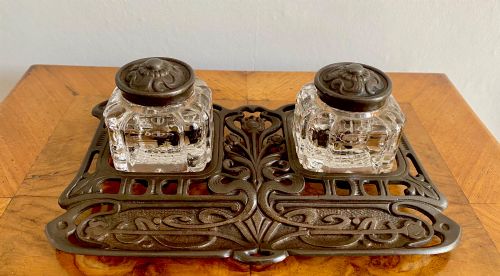
Design ambition distinguishes standard utilitarian items from more sculptural works, seen in expressive Art Nouveau metalwork, detailed woodwork, or integrated accessories like original ink bottles and condiment sets.
The Antique Pot Holder Stand Glossary
- Jardinière
- A decorative pot or stand designed to hold a plant or flower arrangement. These containers often sit upon matching pedestals or floor stands.
- Cruet set
- A matched collection of small glass bottles or jars held within a dedicated metal frame for condiments at the dining table.
- Cranberry glass
- A rich pinkish-red glass produced by adding gold chloride to the molten metal, popular during the Victorian period for tableware and decorative vessels.
- Coopered
- Constructed from wooden staves bound together with metal hoops, a technique traditionally used for barrels and replicated in small stands.
Antique Pot Holder Stand: Frequently Asked Questions
What is an antique pot holder stand used for?
These stands serve primarily to elevate botanical pots, preserve dishes, or condiment sets off tabletops and floors. They protect underlying surfaces while displaying decorative items.
In period interiors, larger versions held indoor plants or jardinières, while smaller silver-plated frames supported glass bowls during dining.
How do I date an Edwardian stand?
Edwardian pieces generally date from the reign of King Edward VII between nineteen hundred and nineteen ten. Look for stylistic cues such as lighter mahogany timbers and refined brass work.
Makers of this era often combined traditional furniture forms with flowing Art Nouveau motifs, distinguishing them from heavier Victorian designs.
Are glass inserts usually original?
Original glass inserts match the exact dimensions, tint, and wear patterns of their metal or wooden stands. Cranberry glass bowls and cut glass bottles original to the piece fit snugly into the framework.
Replacements often show modern manufacturing marks or differ subtly in thickness compared to the supporting frame.
How do I clean brass stands?
Cleaning depends on the desired finish, as many collectors prefer to leave an aged patina rather than polish metal to a bright shine. Gentle dusting and wiping with a soft cloth preserve the surface.
Harsh chemical polishes remove historical wear and can damage delicate silver plating or surrounding wooden components.