


Antique Port Artwork
Antique port artwork captures maritime hubs and bustling harbours across various periods, offering a glimpse into historic seafaring life that collectors value for its atmospheric depth.
Antique Port Artwork
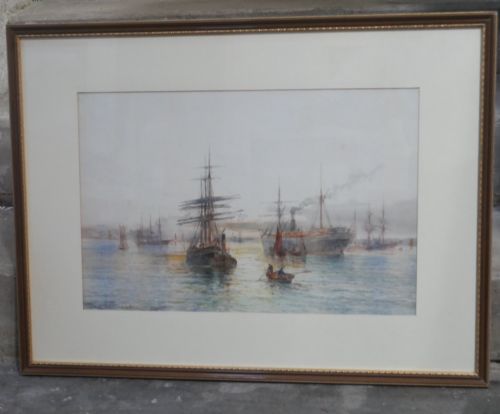
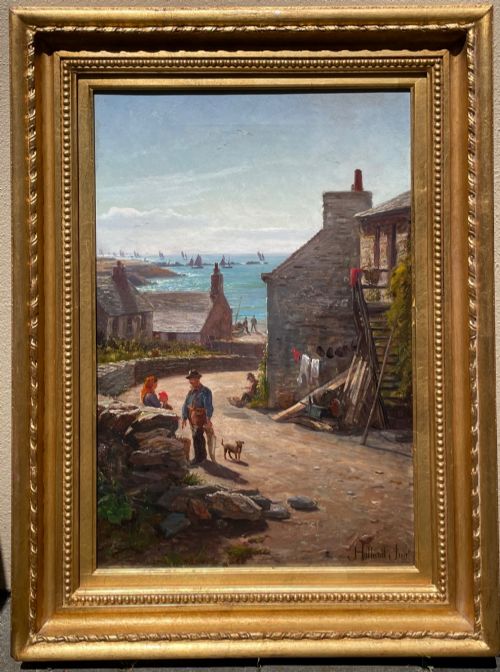
Antique port artwork encompasses paintings and watercolours depicting harbours, coastal towns, and maritime scenes. These pieces record the pivotal role of ports in trade and travel from earlier centuries.
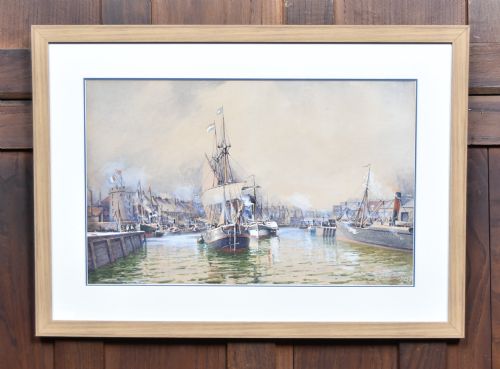
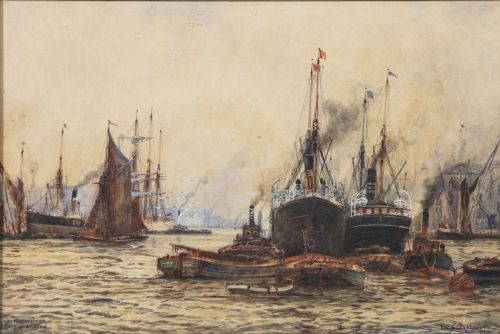
Mediums vary from oil paintings on canvas to delicate watercolours on paper. Each piece presents a specific viewpoint of maritime activity, executed by artists recording the commerce and character of the waterfront.
Materials and Techniques
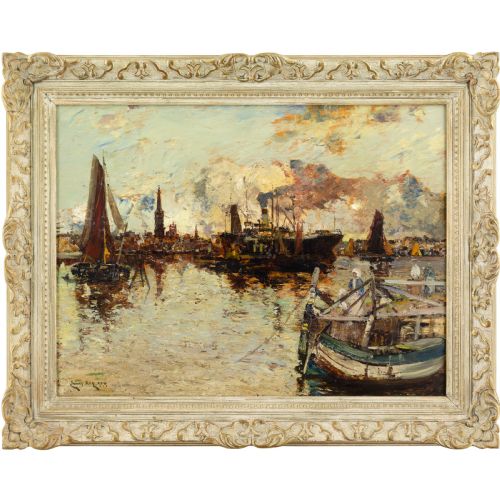
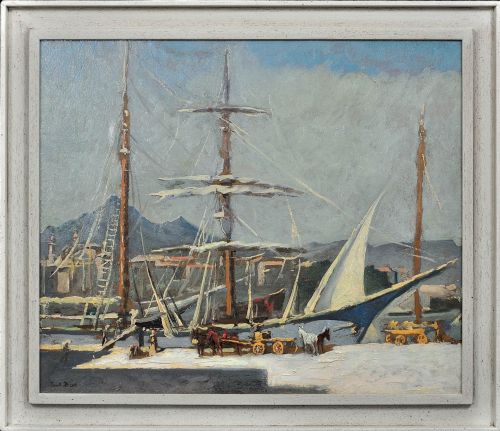
Artists utilised oil paint on canvas or panel to build rich, textured surfaces that could withstand the depiction of sea spray and overcast skies. Watercolour on paper was favoured for lighter, more immediate impressions of harbour light.
Frames often consisted of wood, sometimes with giltwood finishes, serving to enclose and protect the painted surface. Canvas stretched over wooden supports provided a stable foundation for expansive landscape compositions.
Listings feature oil paint, watercolour, and canvas, recording nineteenth and twentieth-century maritime scenes.
Assessing Quality
Quality rests upon the artist's command of light, atmosphere, and maritime architecture. Stronger works convey the movement of water and the specific atmosphere of a location rather than relying on stiff formulae.
The integration of brushwork and medium condition dictates the visual success of the piece. Well-preserved surfaces retain their original pigment depth and structural integrity within the frame.
James Kay RSW·Frank William Scarbrough·John Holland·Paul Delvaux·Tom Clough·Herbert Royle·Henri Ottman·Ludwig Hermann·Francis Moltino·John William Gilroy·Charles Eyres Simmons·Stephen Brownlow
The Antique Port Artwork Glossary
- Oil on Canvas
- A painting medium where pigments bound in drying oil are applied to stretched fabric. This technique allows for rich colour blending and textured brushwork.
- Watercolour
- A paint consisting of colour pigments suspended in a water-based solution, typically applied to paper. It yields translucent washes that capture bright daylight effectively.
- Giltwood
- Wood that has been treated with a thin layer of gold leaf or gold paint. Frames utilising this finish were common for displaying significant maritime paintings.
- Impressionism
- A nineteenth-century art movement characterised by relatively small, thin, yet visible brush strokes and an emphasis on accurate depiction of light. Artists applied these principles to capture transient harbour moments.
Antique Port Artwork: Frequently Asked Questions
What periods do these paintings come from?
The available selection spans from the seventeenth century through to the early twentieth century, with strong representation from the Victorian and Edwardian eras. Painters of these periods documented both domestic harbours and continental European ports.
Specific dates on listings provide exact context, showing shifts in style from classical landscape traditions to post-impressionist interpretations of light and water.
How should I care for antique watercolours?
Watercolours on paper require protection from direct sunlight to prevent the fading of delicate pigments. Framing behind conservation glass helps shield the paper from humidity and environmental pollutants.
Maintaining stable indoor temperatures preserves both the paper support and the original wooden or giltwood frames that accompany these works.
Are these works original paintings?
The listings consist of original hand-painted works, including oil paintings on canvas and panel, as well as watercolour paintings on paper. Each piece represents a unique artistic creation rather than a modern reproduction.
Signatures, brushwork texture, and material examination confirm the period authenticity of these historical maritime depictions.
Where were these port scenes painted?
Locations range widely across British harbours such as Whitby and the Port of London, alongside international sites including the French Riviera, Rome, and Antwerp. Artists frequently travelled to coastal hubs to capture commercial shipping and local seafaring life.
Titles often specify the exact port, offering a direct record of how these coastal landscapes appeared in past centuries.