


Coastal Wall Decor Painting
Coastal wall decor painting brings the salt air and open sea into a room through maritime scenes captured across the centuries.
Coastal Wall Decor Painting
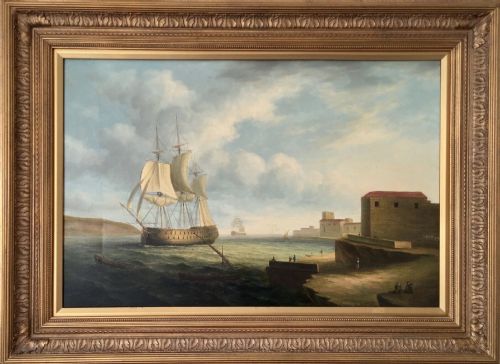
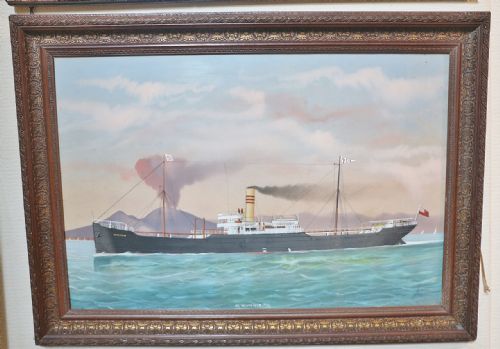
When you search for coastal wall decor painting, you enter a maritime world of harbours, galleons, and quiet estuaries captured on canvas, wood, and paper. These works span periods from the Victorian era and Edwardian times through to the mid-century modern aesthetic, recording changing light over British and European shores.
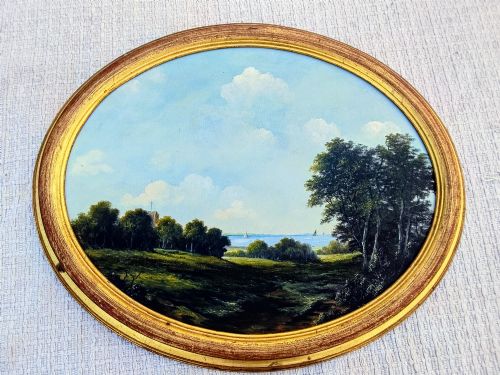
The most common pieces you will meet here are framed oil paintings and watercolours depicting fishing trawlers, coastal views, and naval vessels. From Cornish harbours to Mediterranean ports, these artworks preserve local maritime history in various formats, including oval canvases and rectangular panels.
Beyond standard framed pictures, the selection includes related decorative objects such as vintage yachting signs, half models of boats, and wooden oars. These diverse items share a common nautical theme, offering buyers different ways to dress a wall with maritime heritage.
Materials and technique
Artists primarily applied oil paint or watercolour onto canvas, wood panels, or paper, often building thick impasto textures to render the rough movement of sea and spray. These traditional painterly methods were paired with supportive wooden substrates, sometimes housed within gilded wood or oak frames.
Watercolours rely on transparent washes on paper to capture the pale skies and reflective water of lochs and estuaries, frequently mounted under glass for protection. Oil paintings on canvas or panel utilise heavier mediums that allow deeper colour saturation and enduring surface stability.
Several grumpy old sea captains stare out silently from nineteenth-century canvas panels.
What varies in quality
Quality in these coastal works rests on the artist's command of light, atmosphere, and maritime architecture, separating masterly depictions of rigging and hull from stiff or generic renderings. Superior pieces display confident brushwork that genuinely conveys the weight of water and the openness of coastal air.
The integrity of the physical materials also dictates value, with original frames, stable canvas stretched properly across wooden bars, and well-preserved paper without excessive foxing marking the finer examples. Works by documented painters with established exhibition histories command attention through superior provenance.
Edward Matthew Elliott·Helen Layfield Bradley·Sir David Murray RA·Frank Wood·H. Hadfield Cubley·Charles Cameron Baillie·James Kinnear·Johan Jens Neumann·Paul-Louis Barruel·Thomas Bush Hardy·Arthur Joseph Meadows
The Coastal Wall Decor Painting Glossary
- Impasto
- A technique where paint is laid on an area of a surface in very thick layers, usually thick enough that the brush or painting-knife strokes are visible. This adds a tactile, three-dimensional quality to the depiction of churning waves and thick clouds.
- Gilded wood
- Wood that has been treated with a thin layer of gold leaf or gilt powder, commonly found on decorative frames of the nineteenth and early twentieth centuries. This finish enhances the formality and presence of the artwork it surrounds.
- Watercolour
- A painting method in which the paints are made of pigments suspended in a water-based solution, known for luminous washes on paper. It requires precise brushwork because corrections are difficult to make once the pigment sinks into the fibres.
- Panel
- A flat piece of wood used as a rigid support for a painting instead of canvas, frequent in earlier maritime works. Panels provide a stable surface that resists the slackening common to stretched fabrics over long decades.
Coastal Wall Decor Painting: Frequently Asked Questions
What periods do these paintings come from?
The works span from the late nineteenth century through the Edwardian era and into the mid-twentieth century. This timeline covers traditional maritime scenes alongside later mid-century interpretations.
Buyers will find Victorian and Edwardian pieces sitting alongside 1920s and 1950s interpretations of coastal life.
How should I care for an oil painting on canvas?
Keep paintings away from direct sunlight and dramatic shifts in temperature and humidity to prevent the canvas from sagging or cracking. Dust the surface gently with a soft, dry brush.
Avoid using water or chemical cleaners on the paint surface or the wooden frame.
What is the difference between canvas and panel supports?
Canvas is a flexible woven fabric stretched over a wooden frame, giving a slight bounce and textured surface to the paint layer. Panels are rigid wooden boards that provide a completely firm foundation.
Both materials were used extensively across different maritime painting traditions.