


Antique Porcelain Trumpet Vase
These antique porcelain trumpet vase examples bring distinct form and hand-painted artistry to any room, offering classic display pieces for interiors.
Antique Porcelain Trumpet Vase
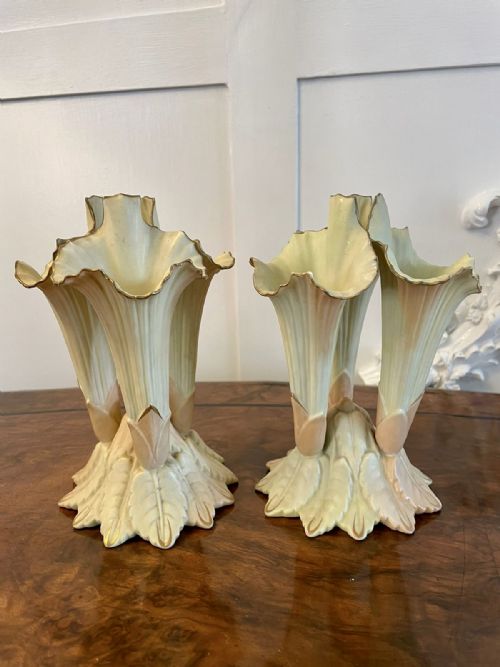
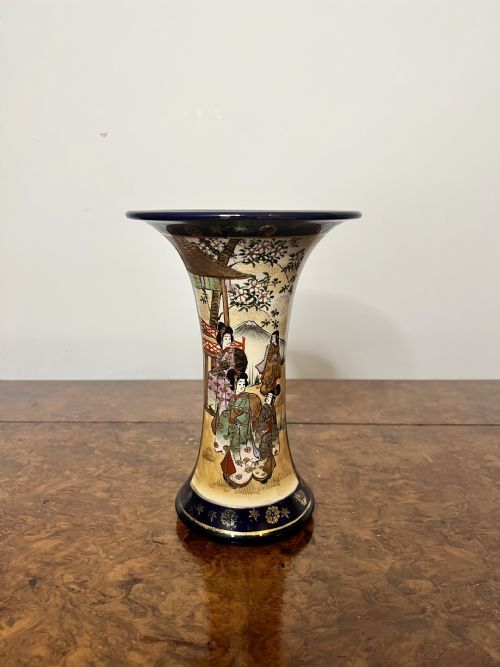
An antique porcelain trumpet vase presents a characteristic flared neck that widens steadily toward the rim, reminiscent of the musical instrument. These decorative vessels appear in forms ranging from Japanese Arita and Satsuma wares to English Royal Worcester creations. Buyers seeking an antique porcelain trumpet vase will encounter pieces spanning from the seventeenth century through to the mid-twentieth century.
The selection includes pairs, garnitures, and single spill vases decorated with cobalt blue underglaze, enamel, and gold leaf. Japanese Edo and Meiji period examples sit alongside English porcelain from the Edwardian and later eras. Each piece serves as a traditional receptacle for stems or stands alone as a decorative object.
Materials and methods of production
Potters shaped fine clay bodies on the wheel before applying glazes and mineral pigments. Cobalt pigment and cobalt blue underglaze provided deep blue decoration beneath clear finishes on early pieces, while later makers utilised polychrome enamels.
Gilding and gold leaf added metallic highlights to rims and panels across various periods. Surface textures such as moriage relief work appeared on Japanese ceramics, while English manufactories focused on hand-painted botanical or avian scenes.
Some tiny spill vases spent centuries near hearths watching fires burn out.
Distinctions in quality and execution
The precision of the hand-painted brushwork distinguishes superior examples from standard production. Signed works by noted artists demonstrate greater mastery in detail and composition.
The clarity of the glaze and the crispness of the porcelain body indicate the skill of the kiln firing. Richness in the application of enamel and gold leaf elevates the visual depth of the vessel.
Locke And Co·Royal Worcester
The Antique Porcelain Trumpet Vase Glossary
- Spill vase
- A small cylindrical or flared vessel traditionally used to hold taper candles or spills for lighting fires. These pieces often feature painted floral or landscape motifs.
- Imari palette
- A traditional Japanese decorative scheme typically employing cobalt blue, iron red, and gilt on a white porcelain ground. This style influenced ceramic production across multiple centuries.
- Moriage
- A Japanese ceramic technique where slip is piped onto the surface in dots or lines to create raised decorative patterns. This texture is frequently accented with gilding.
- Garniture
- A set of three or more matching vases designed to be displayed together on a mantelpiece or cabinet. These sets often share a cohesive decorative theme.
- Underglaze
- Pigment applied to the unglazed ceramic body before the transparent glaze layer is fired in the kiln. Cobalt blue is the most common pigment used in this method.
Antique Porcelain Trumpet Vase: Frequently Asked Questions
Where were Imari vases made?
Imari wares were produced in the town of Arita in Hizen province, Japan, and exported through the port of Imari. These pieces became popular in European royal courts during the seventeenth and eighteenth centuries.
The distinctive blue, red, and gold palette defines the aesthetic of these early Japanese export ceramics. Later makers in various regions subsequently drew inspiration from these designs.
What distinguishes Satsuma ware?
Satsuma ceramics feature a characteristic ivory-coloured, crackle-glazed earthenware body painted with detailed enamel and gilt motifs. These vessels often depict traditional Japanese figures, landscapes, and floral patterns.
The style evolved significantly during the Meiji period to satisfy international demand for decorative export art.
How do I identify spill vases?
Spill vases generally feature narrow, upright bodies designed to hold paper spills or wooden matches near a fireplace. Their compact proportions distinguish them from large display garnitures.
Many English and Japanese examples from the nineteenth and early twentieth centuries adopt this practical domestic form.