
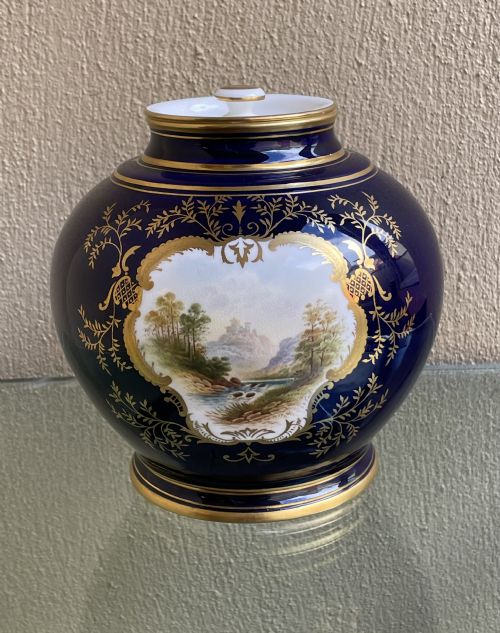


Antique English Landscape Vase
These antique English landscape vases are painted ceramic vessels depicting scenic views that bring pastoral charm to any room.
Antique English Landscape Vase
When you search for an antique English landscape vase, you look at hand-painted ceramic vessels designed to display scenic views, rivers, and cattle. The selection on this page spans periods from the Georgian and Regency eras through to the Edwardian period and the early twentieth century.
The forms vary across vases, bough pots, ewers, urns, and potpourri vessels. You are most likely to encounter porcelain pieces from factories such as Royal Worcester and Coalport, decorated with topographical scenes or Highland cattle.
How they were made
Makers shaped fine porcelain and ironstone into varied vessel forms before applying detailed hand-painted scenery. Skilled artists painted naturalistic landscapes and cattle subjects directly onto the ceramic body.
Makers finished many of these pieces with rich gilding, gold leaf, and enamel highlights. The application of gold accents around the rims and handles complements the painted panels.
Materials across the selection include porcelain, ironstone, enamel, and applied gold leaf.
What varies in quality
The distinction between standard production and the finest work lies in the skill of the artist and the detail of the painted scene. Signed pieces by notable painters demonstrate superior brushwork and artistic execution compared to unmarked factory output.
The precision of the gilding and the preservation of the enamel colours also divide the tiers. Pieces retaining crisp gold leaf and vibrant pigments show higher original craftsmanship.
Coalport·Flight Barr and Barr·Royal Worcester·W Factory
The Antique English Landscape Vase Glossary
- Bough pot
- A ceramic vessel designed to hold cut branches or flowers. These containers often feature pierced covers for arranging stems.
- Gilding
- The application of gold leaf or gold paint to ceramic surfaces. This technique adds decorative borders and highlights handles.
- Ironstone
- A heavy, durable type of earthenware developed in the nineteenth century. It provides a robust alternative to standard porcelain.
- Ewer
- A large jug with a wide spout and a curved handle. These decorative vessels were often matched with basins or used independently as ornaments.
- Spill vase
- A tall, narrow vessel intended to hold wax tapers for lighting fires. Makers decorated these small cylinders with detailed landscape scenes.
Antique English Landscape Vase: Frequently Asked Questions
What is an antique English landscape vase?
These ceramic vessels are decorative pieces painted with scenic views, riversides, and pastoral subjects by British potteries.
They range from Georgian bough pots to Edwardian spill vases and larger nineteenth-century garnitures.
How were landscape vases used?
Many of these vessels functioned as ornamental mantelpiece objects rather than functional containers for water.
Some forms, such as bough pots and potpourri vases, were specifically designed to hold greenery or dried flowers.
How do I identify the period of a vase?
Period identification relies on factory marks, ceramic bodies, and stylistic details typical of eras like the Regency or Edwardian years.
Signatures from specific artists also help narrow down the date of production.
Who are the notable makers?
Prominent factories represented include Royal Worcester and Coalport, alongside earlier firms like Flight Barr and Barr.
Individual artists such as Harry Davis and E O Ball also signed notable painted examples.