





Antique Porcelain Fish
These antique porcelain fish range from Meiji plates to Qing jardinieres, bringing delicate aquatic forms and painterly maritime scenes into domestic interiors.
Antique Porcelain Fish
When someone searches for antique porcelain fish, they encounter an international mix of decorative plates, large jardinieres, and sculptural figures originating from Japanese, Chinese, and English kilns. The pieces take the physical form of swimming creatures or bear painted surface designs depicting koi, carp, and dragon fish.
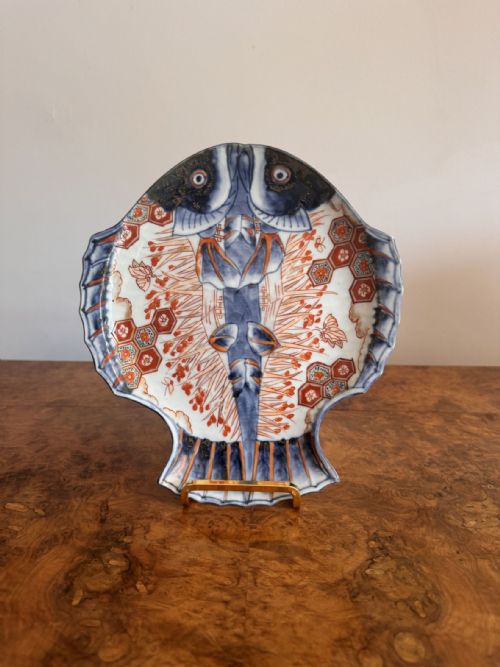
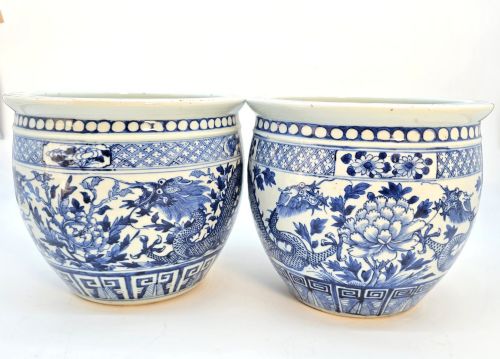
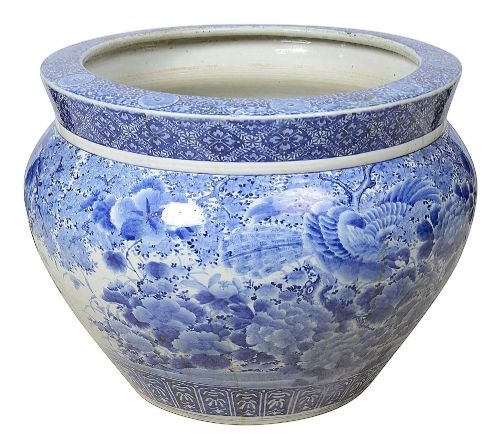
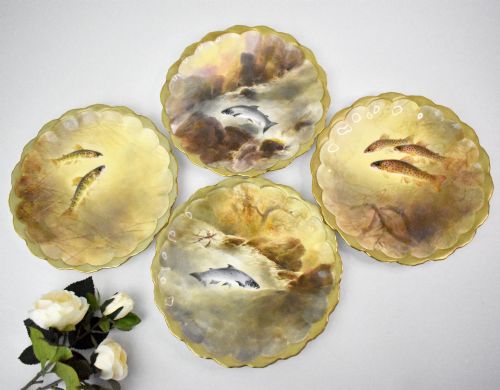
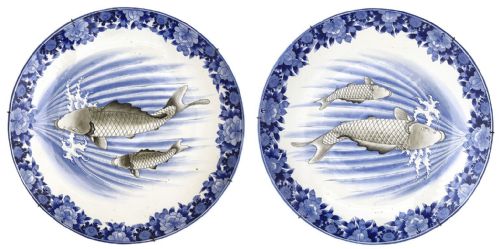
The most common examples on this page are nineteenth-century Chinese blue and white fish bowls and Japanese Meiji period Imari plates shaped directly as fish. Buyers also meet English bone china tableware, including painted plates from makers such as Royal Doulton and Royal Worcester.
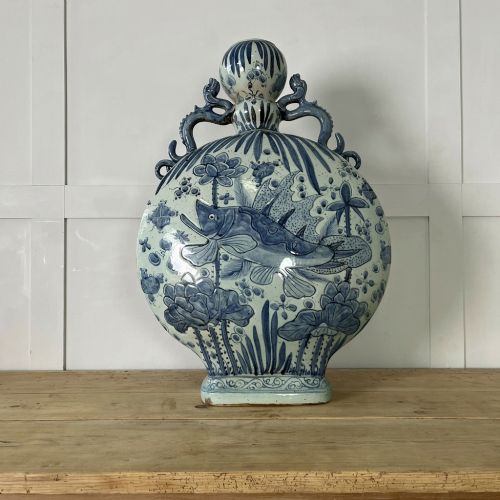
Forms stretch from utilitarian fish bowls and planters to cabinet plates, incense burners, and moon flasks. These objects bridge decorative arts and natural history subjects, reflecting diverse cultural reverence for aquatic life.
What varies in quality
The standard of these objects rests upon the precision of the hand-painting, particularly in the rendering of scales, fins, and water plants. Master artists executed fluid, confident brushstrokes that impart vitality to the fish, whereas lesser examples show stiff or formulaic linework.
The depth and clarity of the cobalt underglaze or the vibrancy of the enamel palette dictate visual success. Heavier potting and balanced proportions in large forms like jardinieres and fish bowls separate superior studio output from standard commercial output.
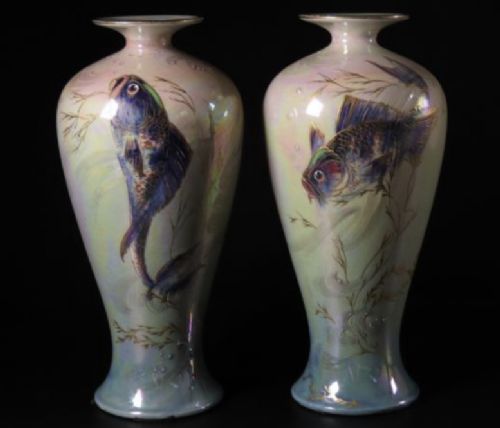
One unusual Japanese vase manages to look entirely amusing while depicting a quiet aquatic scene.
Walter Slater·Joseph Birbeck Senior·Royal Doulton·Royal Worcester·Royal Crown Derby·Royal Copenhagen·Mason
The Antique Porcelain Fish Glossary
- Jardinere
- A large ornamental pot or bowl designed to hold growing plants. These heavy vessels frequently feature blue and white fish motifs.
- Imari
- A style of Japanese porcelain decorated in underglaze blue, iron red, and gold. Pieces in this tradition often take the literal silhouette of a fish.
- Celadon
- A term for pottery denoting both wares glazed in jade green and the green glaze itself. This translucent finish often highlights moulded twin fish designs.
- Bisque
- Unglazed ceramic fired once to create a matte, porous texture. Figures on fishing boats utilise this material for skin and textile details.
- Lustre
- A type of ceramic glaze that imparts a metallic sheen. English makers applied this technique to create iridescent surfaces on fish design vessels.
Antique Porcelain Fish: Frequently Asked Questions
How do I identify a Meiji period fish plate?
Meiji period items typically display distinct Japanese aesthetic influences, utilising Imari palettes or complex moulded fish silhouettes.
Look for dynamic interpretations of marine life combined with dense border patterns characteristic of late nineteenth-century export wares.
What is the difference between a jardiniere and a fish bowl?
While both describe deep ceramic vessels, fish bowls were traditionally constructed to hold live swimming fish indoors.
Jardinieres generally function as decorative cachepots for housing potted plants rather than containing water and aquatic fauna directly.
How should I display a porcelain fish plate?
Plates shaped like fish or painted with koi benefit from plate hangers mounted securely on walls to reveal their unusual silhouettes.
Cabinet plates and decorative dishes also sit well within glass-fronted display furniture to protect delicate enamel and gold leaf details.