


Antique Porcelain Coffee Service
These antique porcelain coffee service sets bring cabinet-level refinement to the table, offering a tangible link to eighteenth-century gatherings and twentieth-century design.
Antique Porcelain Coffee Service
An antique porcelain coffee service encompasses sets of cups, saucers, cans, and pots designed for serving after dinner or during formal morning calls. The examples gathered under this search span diverse eras, moving from eighteenth-century soft-paste porcelain to twentieth-century bone china.
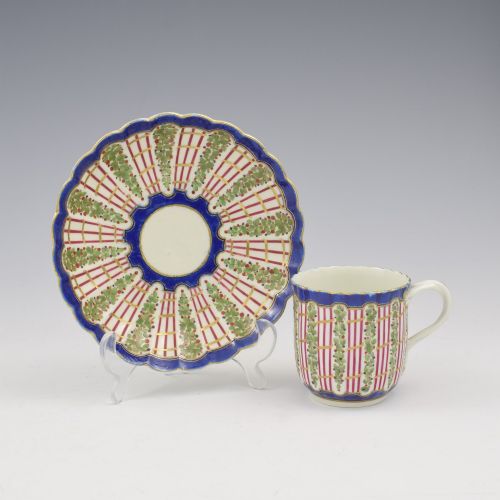
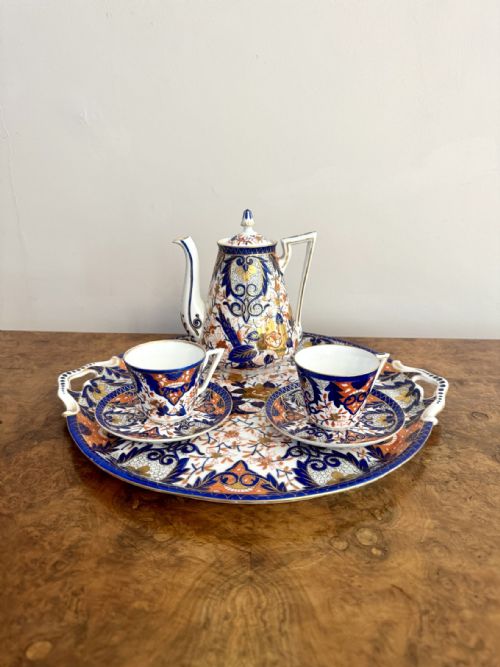
The forms vary from intimate tête-à-tête services for two to larger six-person settings equipped with liqueur pairings and silver mounts. Buyers encounter everything from early English Worcester porcelain decorated with hop trellis patterns to vibrant Edwardian handpainted sets.
Stylistic influences shift across the periods represented, including Georgian, Victorian Imari, Belle Epoque, and Art Deco. Pieces range from Neoclassical Russian Imperial porcelain manufactures to French Limoges productions.
Materials and manufacture
Makers utilised porcelain, bone china, and soft-paste porcelain as the primary ceramic bodies for these wares. Potters shaped cups and pots by hand or utilised early industrial techniques before firing the clay to high temperatures.
Surface decoration relied upon careful handpainting, intricate enamel work, and applied gold leaf or heavier gilding to highlight rims and handles. Glazes sealed the ceramic body, providing a smooth finish that protected the delicate pigments beneath.
Some sets included dedicated liqueur spaces alongside the coffee cups, ensuring the host could offer a swift fortification after the caffeine.
Assessing quality and execution
Quality rests upon the crispness of the porcelain body and the precision of the glaze application. Finer sets display steady handpainted brushwork and carefully applied gold leaf rather than mechanical transfers.
The sophistication of the form and the integrity of supplementary materials, such as silver mounts, distinguish superior services. Completeness within a multi-piece setting also elevates the standard of the ensemble.
Shelley·Elkington·Coalport·Ahrenfeldt and Asalvary·Russian Imperial Porcelain Manufactory
The Antique Porcelain Coffee Service Glossary
- Soft-Paste Porcelain
- An early ceramic composition made from glass frit and white clay rather than true china clay. It produces a warm, creamy tone under the glaze.
- Demitasse
- A small cup used for serving strong black coffee or espresso after a meal. These often accompany larger porcelain services.
- Gilding
- The application of gold leaf or powdered gold to the surface of porcelain. It is typically fired at a low temperature to bond with the glaze.
- Enamel
- Opaque glass-based pigments applied over the fired glaze to add colour and pattern. Enamels require subsequent low-temperature firings to fix them.
- Bone China
- A porcelain variant incorporating bone ash, known for high strength and a bright white translucency. It became a staple of British ceramic production.
Antique Porcelain Coffee Service: Frequently Asked Questions
What is a demitasse?
A demitasse is a small cup specifically designed for holding strong coffee after a meal. These cups form a key component of many antique coffee services.
They are paired with matching saucers and often feature delicate handpainted decoration or gold leaf trim.
How do I care for antique porcelain?
Antique porcelain requires gentle hand washing in lukewarm water with mild soap. Avoid soaking pieces with gilt or enamel decoration to protect the surface.
Store the sets securely in cabinets where they are protected from accidental knocks and extreme temperature shifts.
What is soft-paste porcelain?
Soft-paste porcelain is an early ceramic mixture containing glass frit rather than hard-paste ingredients. It was widely used by eighteenth-century factories.
This material has a softer appearance and a warmer tone beneath the glaze compared to later hard-paste china.
Can I use these sets for serving coffee?
While these sets were created for functional use, many collectors prefer to display them as decorative art. Historic glazes and old gilding can be sensitive to modern detergents and heat.
If you choose to use them, handle them with extreme care and avoid dishwashers entirely.