




Antique Ceramic Coffee Service
An antique ceramic coffee service brings the elegance of past dining rooms to the modern table, offering matched vessels for pouring morning brews.
Antique Ceramic Coffee Service
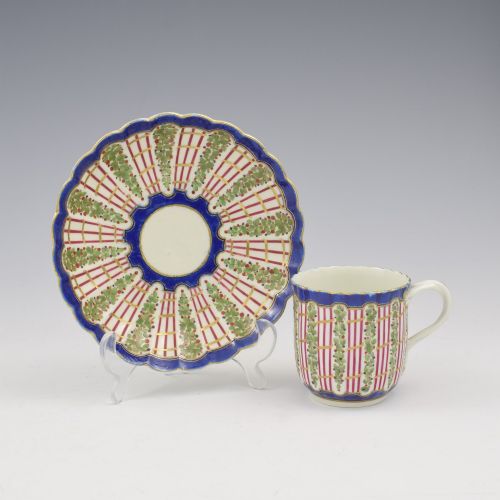
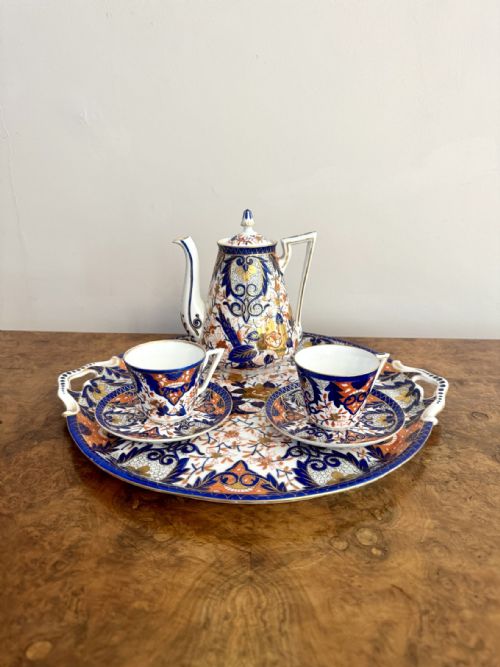
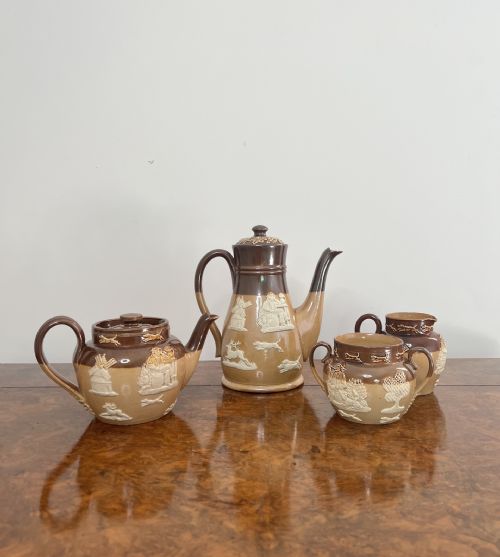
An antique ceramic coffee service comprises matched groupings designed for serving coffee, appearing across periods from the eighteenth century to the twentieth century. These sets take forms such as coffee sets, tea and coffee sets, and individual cups and saucers.
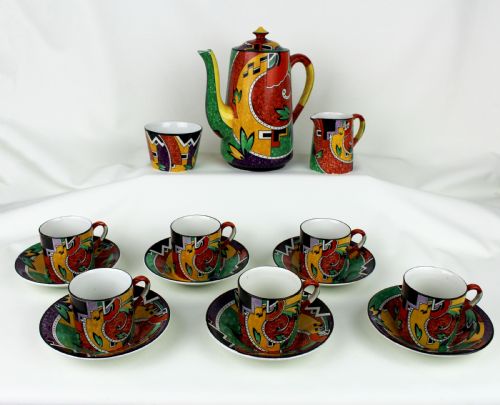
The most frequent versions encountered on this page span styles like Art Deco, Edwardian, Georgian, Victorian, Belle Epoque, and Neoclassical. Makers from various European centres contributed to these groupings, utilising materials characteristic of their respective eras.
Buyers will find pieces ranging from early porcelain coffee cups and saucers to extensive services featuring silver mounts or intricate enamel work. Each set reflects the social rituals of its specific period, from Georgian drawing rooms to Art Deco breakfast tables.
Materials and construction methods
Potters shaped these services using porcelain, bone china, and earthenware, applying glazes to seal the ceramic body before decoration. Many pieces received hand-painted motifs or transfer-printed designs beneath or above the glaze.
Finishing touches often included gold leaf, gilding, or gilt highlights applied to handles, rims, and borders. Some twentieth-century sets incorporated silver mounts to enhance the durability and appearance of the ceramics.
Some sets feature jazz patterns designed to keep your morning espresso lively.
Assessing quality and craftsmanship
Quality in an antique ceramic coffee service rests on the fineness of the ceramic body and the precision of the form. Finer porcelain pieces exhibit thinner walls and greater translucency compared to heavier earthenware alternatives.
The execution of the decoration dictates the distinction between standard and superior pieces. Hand-painted patterns and carefully applied gilding demonstrate higher artisan skill than simpler mass-produced output.
Clarice Cliff·Shelley·Coalport·Ahrenfeldt and Asalvary·Russian Imperial Porcelain Manufactory·Doulton
The Antique Ceramic Coffee Service Glossary
- Porcelain
- A hard, white, vitrified ceramic material fired at high temperatures. It forms the foundation of many fine coffee sets.
- Gilding
- The application of gold leaf or gold powder to the surface of ceramics. This technique highlights rims, handles, and decorative motifs.
- Bone china
- A type of porcelain incorporating bone ash for added strength and whiteness. It allows for thinner, more delicate vessel walls.
- Earthenware
- A porous ceramic fired at lower temperatures than porcelain. It requires a glaze to become impermeable to liquids.
- Enamel
- A glassy substance fused to ceramic surfaces through firing. It provides vibrant, durable colours in hand-painted designs.
Antique Ceramic Coffee Service: Frequently Asked Questions
How do I date an antique ceramic coffee service?
Dating relies on maker marks, stylistic indicators, and the type of ceramic body used in the pieces. Stylistic cues such as Georgian shapes or Art Deco patterns help narrow down the period of manufacture.
Examining the base for factory stamps or hand-written pattern numbers provides more precise chronological placement. Comparing the glaze and gilding techniques to documented examples confirms the era.
Are these coffee services safe to use daily?
Most antique ceramic coffee services are best reserved for display or occasional gentle use. Historic glazes and delicate gold leaf can wear down with frequent washing.
Hand washing in lukewarm water with mild soap protects the fragile ceramic bodies and painted details. Avoiding dishwashers and microwaves preserves the integrity of older porcelain and bone china.
What is the difference between porcelain and earthenware sets?
Porcelain is fired at much higher temperatures, resulting in a dense, non-porous material that often appears translucent. Earthenware is more porous and requires a complete glaze to hold liquid.
Porcelain services generally feel lighter and display finer detail work than their earthenware counterparts. Both materials served distinct markets across the eighteenth and nineteenth centuries.
How should I display a coffee service at home?
Displaying a coffee service safely involves placing the pieces in a stable cabinet or on a dedicated sideboard away from heavy foot traffic. Arranging cups alongside saucers and the main pot creates a balanced visual presentation.
Ensuring adequate shelf depth prevents accidental tipping of tall coffee pots or creamers. Keeping pieces out of direct sunlight protects delicate enamel colours and gilding from fading.