




Antique Porcelain Chocolate Cup
An antique porcelain chocolate cup is a specialist drinking vessel designed for rich morning cocoa, combining fine ceramic bodies with elaborate handles and saucers.
Antique Porcelain Chocolate Cup
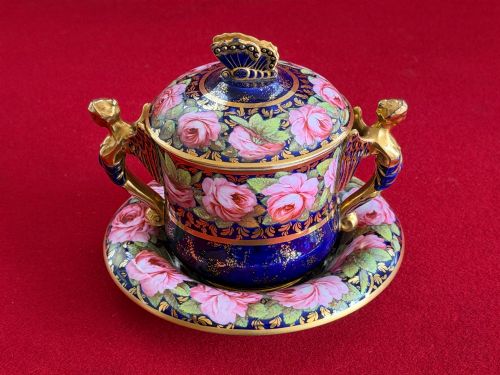
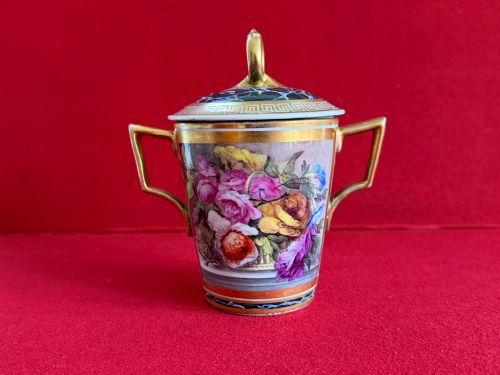
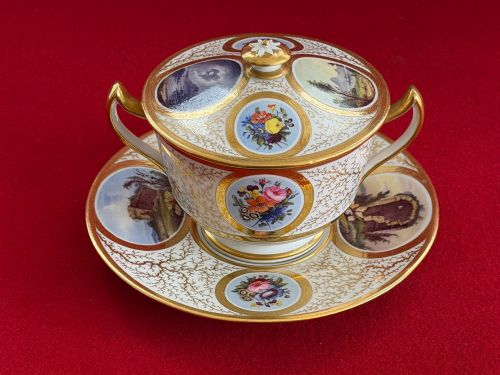
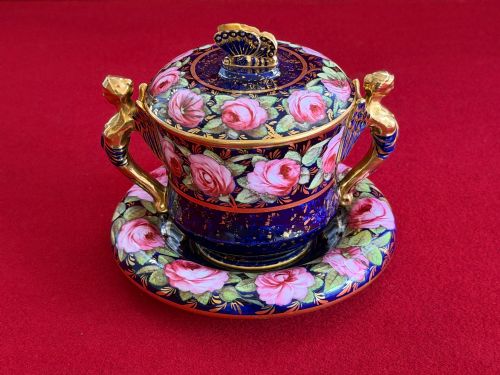
An antique porcelain chocolate cup is a specialised vessel designed specifically for serving rich cocoa, often accompanied by a matching saucer, stand, or cover. When exploring this selection, buyers encounter fine examples originating from English factories like Spode and Worcester, alongside continental pieces from Paris, Russia, and Vienna.
The forms span several distinct periods, with Georgian and Regency pieces sitting alongside nineteenth-century works and eighteenth-century Chinese exports. Many of these items include dedicated covers to keep the thick, warm beverage hot, reflecting the wealthy dining habits of their original owners.
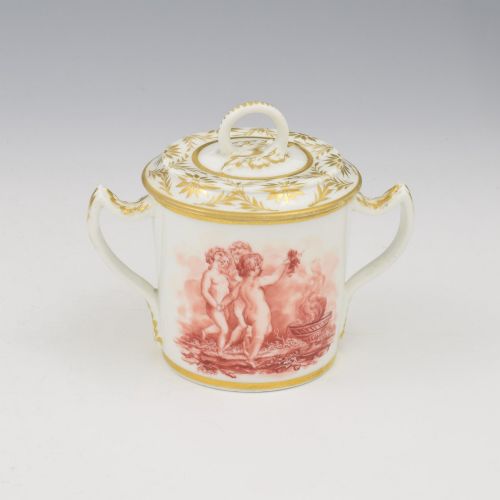
The specific variety most commonly met on this page is the English porcelain chocolate cup from the early nineteenth century, featuring hand-painted details or intricate handle formations. These sophisticated drinking vessels bridge the gap between utilitarian tableware and decorative display items.
Materials and production
Makers utilised high-fired porcelain and bone china as the primary base materials for these cups, providing a sturdy yet refined white body capable of holding hot liquids. Artisans then applied delicate enamel painting and rich gold leaf or gilding to elevate the visual appeal of the ceramic surface.
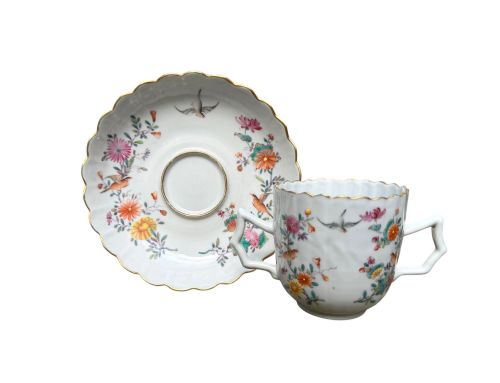
Production techniques involved intricate moulding for specialised components such as image handles and tight-fitting covers. Skilled painters decorated the porcelain with sepia putti, allegorical woodland scenes, and famille rose motifs before a final kiln firing fixed the colours permanently.
Antique Porcelain Chocolate Cup Retail Price Guide 2026
Typical asking prices for porcelain chocolate cup among the pieces listed under this phrase on Sellingantiques today, from the lower quarter to the upper quarter. They describe what is for sale here now, not the wider market.
Early morning chocolate drinking was once considered a vital medicinal and restorative routine for the aristocracy.
Distinguishing quality
The standard of an antique chocolate cup depends heavily on the precision of its hand-painted decoration and the crispness of its moulded details. Pieces featuring finely executed figural scenes or elaborate gilding demonstrate superior artistry compared to simpler production wares.
Completeness also dictates the standing of a piece within the range. Cups that retain their original matched stand, saucer, and cover hold greater integrity than those missing components, reflecting the original workshop output more accurately.
Spode·Barr, Flight & Barr·Flight, Barr & Barr·Bloor Derby·Grainger's Worcester·Manufacture de la Reine·Kusnetzoff·Royal Vienna
The Antique Porcelain Chocolate Cup Glossary
- Trembleuse
- A specialised saucer and cup combination featuring a raised ring or well in the centre designed to hold the vessel securely and prevent spills.
- Image Handle
- A sculptural handle formed into a specific figurative or decorative shape rather than a standard loop.
- Famille Rose
- A palette of opaque enamel colours dominated by pink, introduced in Chinese porcelain production during the eighteenth century.
- Imari
- A decorative style inspired by Japanese export wares, typically employing a palette of underglaze blue, iron red, and gold.
- Putti
- Depictions of plump, winged infant figures, frequently used as decorative motifs in Regency and neoclassical painting.
Antique Porcelain Chocolate Cup: Frequently Asked Questions
What is a chocolate cup?
A chocolate cup is a specialised vessel created for drinking thick, warm cocoa during the eighteenth and nineteenth centuries.
These pieces were typically smaller than standard mugs and often included lids and specialised saucers to accommodate the rich beverage.
Why do some cups have covers?
Covers were used to keep the rich chocolate drink warm and to retain its aromas while resting between sips.
They also added an extra layer of decorative elegance to the set for formal morning service.
How do I date an antique cup?
Dating relies on identifying factory marks, paste composition, and the specific painting style characteristic of periods like the Regency or Georgian eras.
Stylistic cues such as neoclassical motifs or hand-potted forms also help narrow down the decade of production.
Can I use these for drinking?
While these are historic ceramic items, many collectors prefer to display them safely behind glass rather than subject them to daily use.
Thermal shock and modern dishwashers can easily damage fragile nineteenth-century porcelain and delicate gold gilding.