


Antique Pine Shop Fittings
Antique pine shop fittings bring robust utility and distinct character into modern interiors through banks of drawers, display counters, and modular shelving units.
Antique Pine Shop Fittings
When you search for antique pine shop fittings, you encounter utilitarian furniture designed for commercial trade during the nineteenth and early twentieth centuries. These survivors from retail history include banks of multi-drawers, shop counters, drapers cabinets, and display steps originating from English, French, and Hungarian workshops.
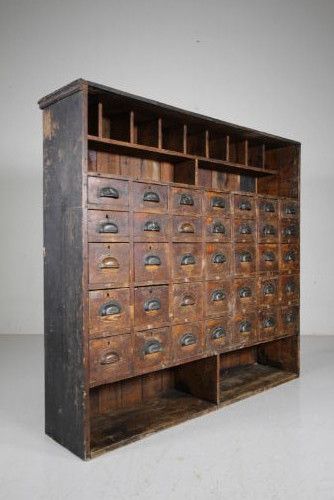
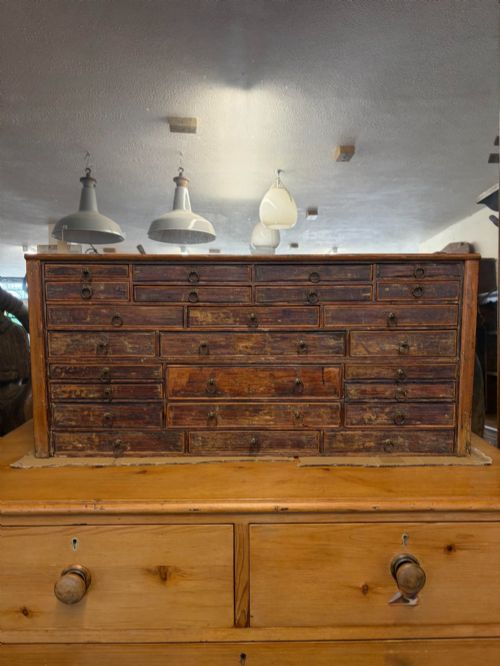
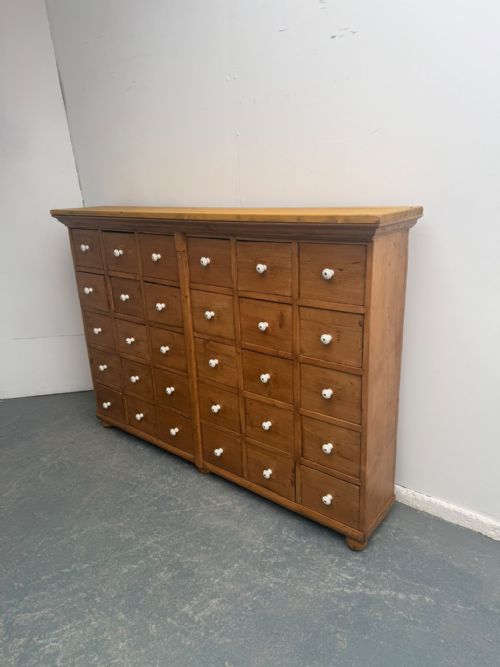
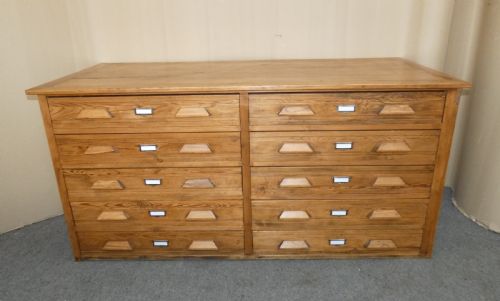
The most common form met here is the large bank of drawers, often containing twenty-five to fifty individual compartments originally built to organise haberdashery, hardware, or groceries. Alongside these multizone drawer units, sturdy shop counters and glazed display cabinets appear frequently in the listings.
Dating primarily from the Victorian era and the broader nineteenth century through to the 1920s, these pieces combine heavy-duty pine construction with utilitarian practicality. Surviving examples frequently retain original painted finishes in white, cream, green, or muted tones applied during their working lives.
How they were made
Construction relies heavily on solid pine and pitch pine timbers selected for strength and durability under daily commercial use. Joinery is straightforward and functional, designed to bear heavy loads in busy shops rather than display decorative cabinetmaking flair.
Metal hardware such as brass pulls, iron handles, and cast iron brackets support the wooden framework of drawers and counters. Painted finishes in various colours were frequently applied to protect the wood and display merchant sign-writing.
Glass panels feature in display cabinets and shop fittings where goods needed to remain visible to customers while protected from dust. Individual components like library ladders and pigeon hole units utilise sturdy wooden framing secured with iron fasteners.
Many multi-drawer units still carry the faint ghost impressions of old haberdashery labels stuck firmly to the drawer fronts.
What varies in quality
Scale and compartment density distinguish exceptional commercial furniture from standard utility pieces, with multi-drawer banks holding thirty to fifty drawers commanding particular attention. The presence of original maker markings or contemporary merchant sign-writing elevates a piece from a generic storage item to a documented historical artefact.
The integrity of original painted surfaces significantly shapes the character of these fittings. Patina developed through decades of commercial handling and successive layers of historic paint indicate authentic working-life wear rather than later decorative interventions.
Luxmore's of Ilfracombe
The Antique Pine Shop Fittings Glossary
- Bank of drawers
- A large multizone storage unit containing numerous small compartments. These tall or wide carcass units were standard in haberdashers, apothecaries, and hardware stores for sorting small stock.
- Drapers table
- A long, wide wooden table utilised in textile and cloth retail. These surfaces allowed merchants to measure and cut fabrics efficiently in front of customers.
- Epicerie steps
- Tiered wooden shelving units originating from French grocery stores. They held provisions or dry goods at an angle for display.
- Shop counter
- A heavy timber barrier separating the merchant from the customer. These working surfaces often incorporate drawers or shelving facing the shop assistant.
- Sign-writing
- Hand-painted lettering applied to furniture for business identification. Original merchant inscriptions document the exact commercial origin of a fitting.
Antique Pine Shop Fittings: Frequently Asked Questions
What were antique pine shop fittings used for?
These robust wooden items served commercial purposes in nineteenth and early twentieth-century retail environments. Merchants utilised multi-drawer units, counters, and shelving to store, organise, and display dry goods, hardware, and textiles.
Over decades of daily trade, these fittings endured heavy use behind shop counters and in stockrooms. Their practical design prioritised accessibility and durability over decorative refinement.
How do I live with shop fittings at home?
Integrating commercial furniture into domestic spaces requires appreciating their substantial scale and utilitarian aesthetic. Large banks of drawers provide exceptional storage capacity for modern kitchens, studios, or living rooms.
Allowing the original painted finish and honest surface wear to remain intact preserves the historical context of the piece. They function effectively as islands, sideboards, or focal storage units in contemporary interiors.
How do I date Victorian shop furniture?
Examining construction methods, timber selection, and hardware provides reliable clues for dating nineteenth-century commercial pieces. Victorian examples often utilise solid pine or pitch pine alongside cast iron or brass fittings characteristic of the period.
Documented examples sometimes feature original merchant sign-writing or structural stamps that tie them directly to known operating businesses of the era. Secondary wood types and nail construction also help narrow down the manufacturing decade.
Are painted finishes on shop fittings original?
Determining the age of paint layers involves inspecting the surface for natural wear, chipping, and multiple historic coats. Working shop furniture frequently received protective coats of paint or specific brand colours during its commercial life.
Patina accumulated through decades of handling creates a distinct texture that modern decorative repainting struggles to replicate. Surviving traces of early sign-writing further confirm the authenticity of the finish.