






Antique Pietra Dura
Antique pietra dura brings together hardstones and marbles, forming intricate floral and avian mosaics set into furniture and decorative objects.
Antique Pietra Dura
When you examine antique pietra dura, you encounter inlaid stone mosaic work utilising hardstones like malachite, lapis lazuli and marbles to create pictorial scenes, geometric patterns or botanical motifs.
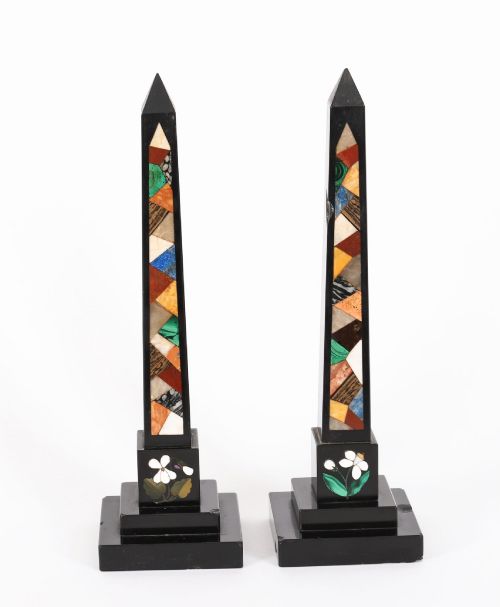
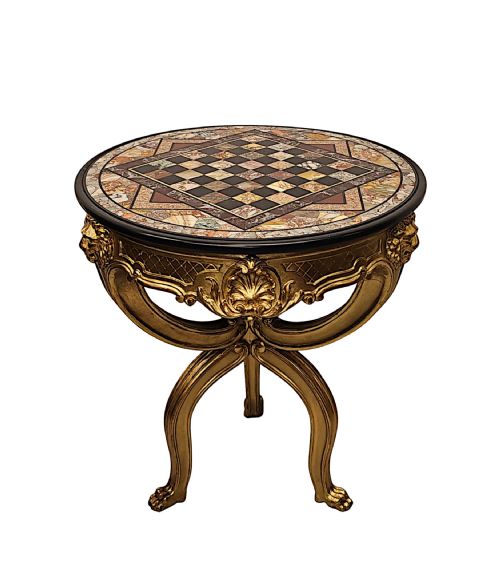
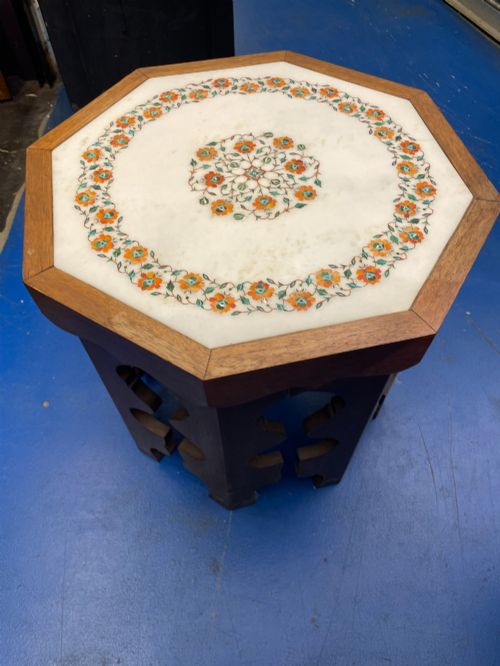
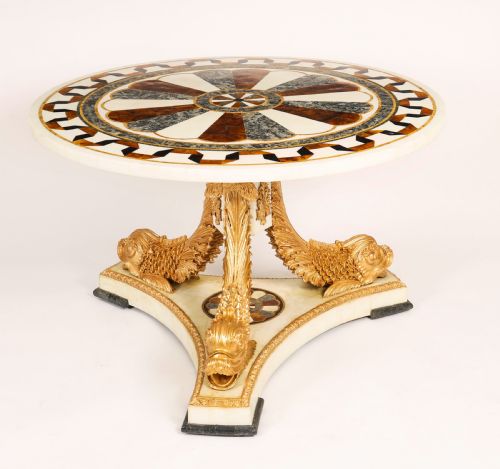
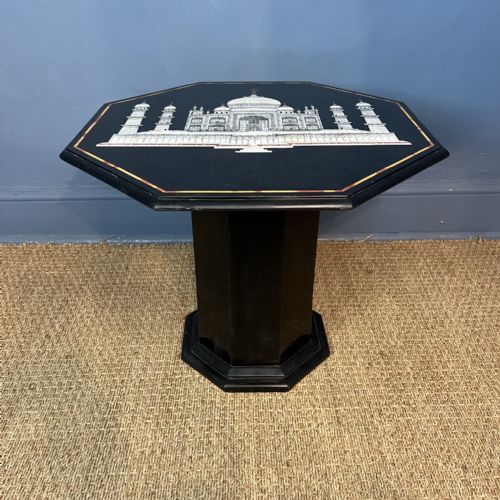
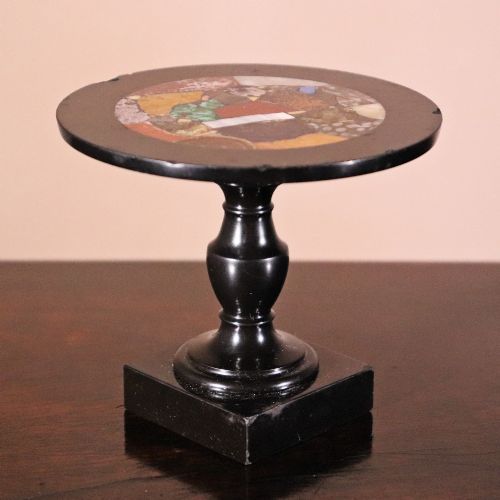
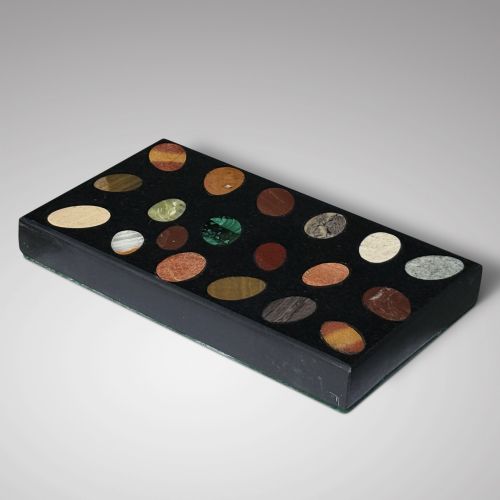
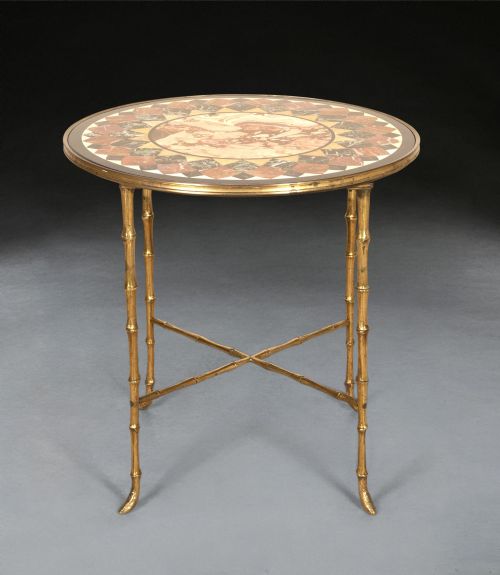
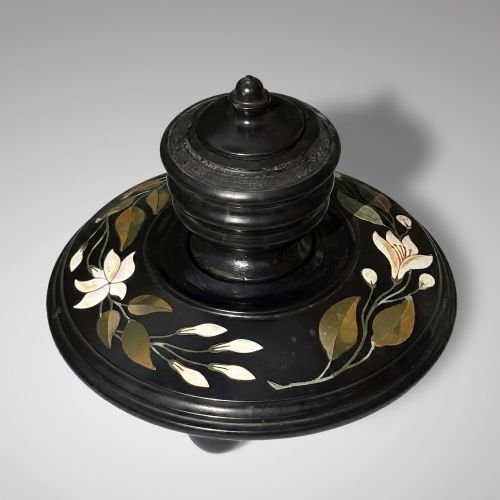
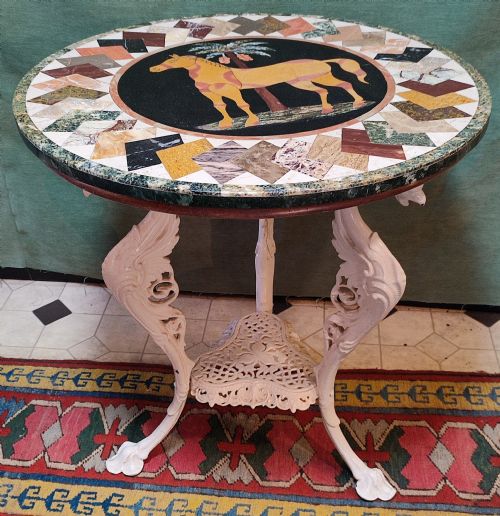
The most common forms on this page are occasional and centre tables featuring specimen marble tops, alongside smaller decorative objects such as paperweights, jewellery caskets, inkwells and obelisks.
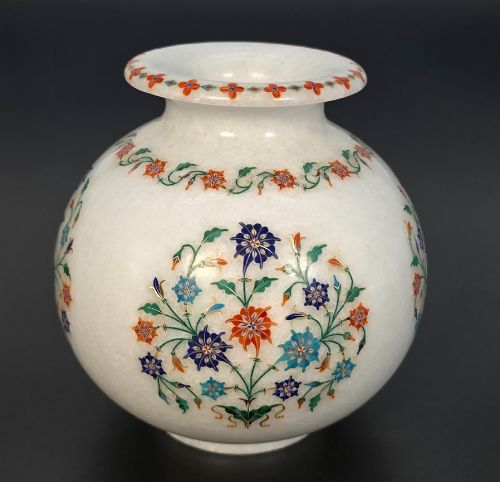
Originating largely from Italian workshops, particularly Florence, these pieces also appear in English Regency and Victorian adaptations, as well as Indian marble inlaid work from the Raj period.
Materials and construction
Craftsmen cut thin slices of coloured hardstones and marbles, shaping them precisely to fit tightly within hand-chiselled recesses in a solid marble or slate matrix.
The stone panels are mounted into diverse structural supports, pairing marble or hardstone surfaces with ebonised wood, mahogany, walnut, brass and ormolu mounts.
Antique Pietra Dura Retail Price Guide 2026
Typical asking prices for pietra dura among the pieces listed under this phrase on Sellingantiques today, from the lower quarter to the upper quarter. They describe what is for sale here now, not the wider market.
Listings feature 19th-century occasional tables, jewellery caskets and obelisks built from marble, ebonised wood, and brass.
Judging quality in stone inlay
Quality rests in the tightness of the joints between the individual stone tesserae and the precision of the botanical or avian drawing, where top-tier examples show virtually invisible adhesive lines.
James Shoolbred·Woodley family·Betjemann
The Antique Pietra Dura Glossary
- Pietra dura
- Hardstone mosaic technique involving finely cut and fitted coloured stones glued to a base panel. This Italian term translates literally to hard stone.
- Specimen marble
- Marble types gathered from various quarries and utilised together in a single top or panel. Collectors prize these for their geological variety.
- Ashford marble
- A Derbyshire dark limestone embedded with fossils, used locally for inlaid obelisks, paperweights and miniature tables. It is not a true metamorphic marble.
- Ormolu
- Gilded bronze mounts applied to furniture, boxes and clocks. The process involves coating bronze with a mercury and gold amalgam.
- Credenza
- A sideboard or cabinet used for display and storage, often mounted with pietra dura plaques, brass and ebonised wood during the nineteenth century.
Antique Pietra Dura: Frequently Asked Questions
How do I clean an antique pietra dura table top?
Dust the surface regularly with a soft, dry cloth to prevent particulate accumulation in the stone joints. Avoid all acidic cleaners, vinegar or water on polished marble and hardstone.
For stubborn grime, consult a professional restorer rather than using domestic cleaning agents. Moisture can penetrate hairline fractures in the historic stone mosaic and weaken the adhesive bed.
Where were these stone inlaid pieces originally made?
The technique centres historically on Florence in Italy, where workshops produced panels for export during the Grand Tour. British cabinet makers subsequently incorporated these imported Italian panels into local furniture.
Other regional variations emerged, including Ashford marble work in Derbyshire and inlaid marble production in India during the nineteenth century. Each region utilised local geological materials alongside traditional cutting methods.
Are pietra dura panels fragile?
The individual hardstone slices are relatively durable, but the panels rely on historic backing slate or marble that can fracture under heavy impact. Sudden temperature changes can also stress the bond between the mosaic and the support.
Position tables and decorative objects away from direct heat sources and radiators. Support stone panels fully when moving furniture to prevent torsion in the wooden frames.
What is the difference between mosaic and pietra dura?
Standard tile mosaics utilise small, uniform cubes of stone or glass set into mortar to form pictorial backgrounds. Pietra dura employs custom-cut, shaped hardstone veneers meticulously fitted together like a jigsaw puzzle.
The resulting flush surface of a pietra dura panel is polished to a mirror finish, whereas traditional mosaics retain a textured, grout-filled surface structure.