



Antique Picture Wall Gallery
These antique picture wall gallery selections group framed watercolours, mezzotints and prints to bring character and depth to residential walls.
Antique Picture Wall Gallery
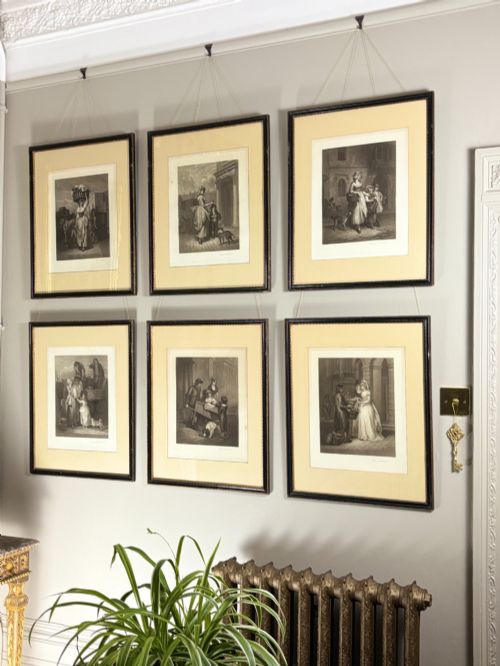
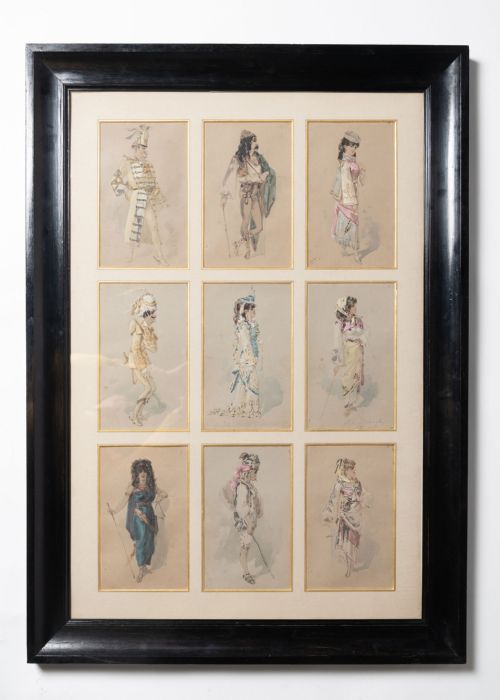
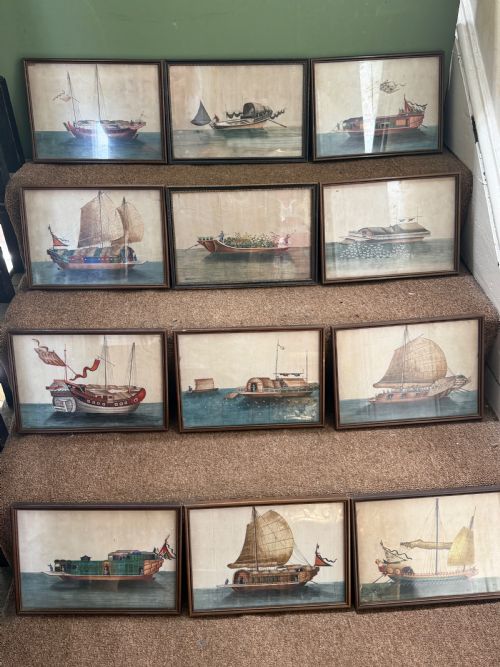
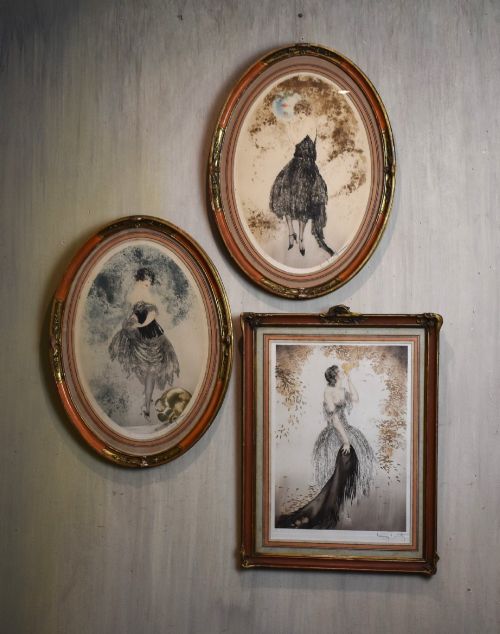
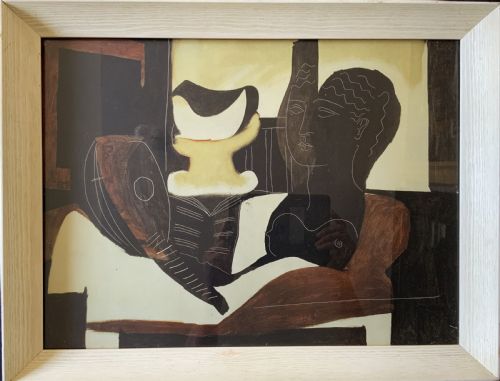
An antique picture wall gallery brings together sets of framed art, wall art and prints spanning the 19th Century, Regency, Edwardian and 1930 periods. You encounter matching suites, such as sets of mezzotints, watercolours and photographic prints, designed to be hung together as a cohesive display.
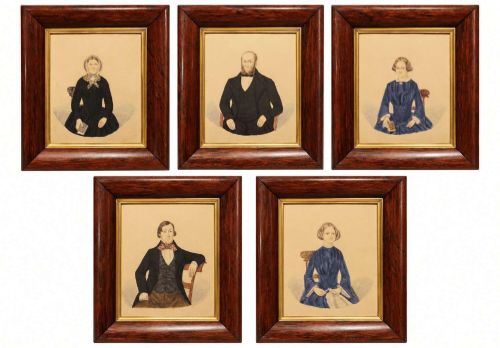
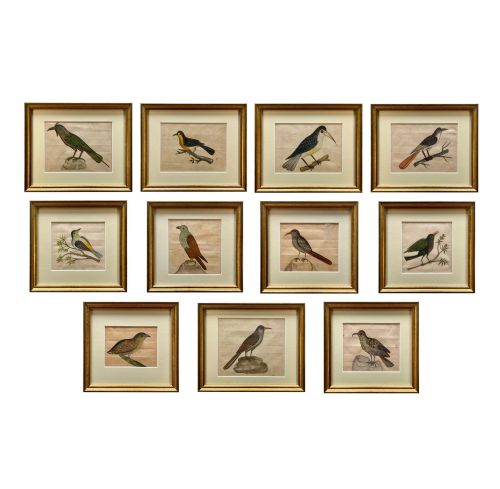
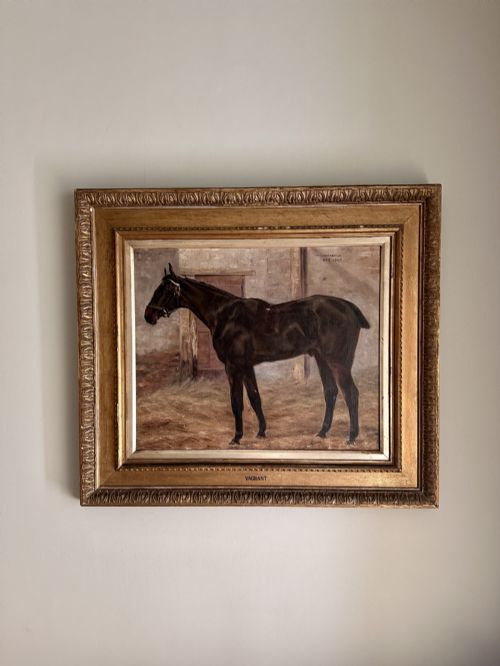
The selection ranges from Regency watercolour portraits in rosewood frames and Chinese Export gouache paintings to equine portraits and botanical or ornithological studies. Sets vary from pairs and trios up to larger groupings of six, eight, twelve or twenty-seven pieces.
Origin and medium diversity shape the category, taking in Company School Indian bird watercolours alongside French engravings and British sporting art. These curated groups offer immediate scale and decorative impact for an interior scheme.
Materials and construction
Works in an antique picture wall gallery utilise traditional media including watercolour, gouache, oil on canvas, paper and photographic print. Engravings and mezzotints are frequently hand-tinted or coloured, carrying the distinct ink qualities of their period.
Framing forms an integral part of the physical object, with wood frames often finished in gold leaf or constructed from figured timbers such as rosewood. Glazing protects the delicate paper supports, watercolours and prints beneath.
Antique Picture Wall Gallery Retail Price Guide 2026
Typical asking prices for picture wall gallery among the pieces listed under this phrase on Sellingantiques today, from the lower quarter to the upper quarter. They describe what is for sale here now, not the wider market.
Listings feature works spanning the 19th Century, Regency, Edwardian and 1930 periods, executed in watercolour, oil on canvas, gouache and paper.
Distinctions in quality
Quality rests upon the crispness of the impression in printed works and the brushwork finesse in watercolours or oils. Complete, matching sets maintained in their original frames carry greater integrity than assembled groups.
The sophistication of the secondary elements, such as rosewood graining and gold leaf gilding on the frames, separates standard decorative groupings from finer artistic examples.
Thomas G Appleton·Fred Fitzpatrick·Louis Icart·Edward Stodart·F. Petitjean
The Antique Picture Wall Gallery Glossary
- Mezzotint
- A printmaking process of the intaglio family where the copper plate is roughened to produce rich tonal gradations and deep darks. It allows for subtle rendering of light and shadow.
- Gouche
- An opaque water-based paint consisting of pigment, water and a binding agent such as gum arabic. It dries to a flat, matte finish.
- Company School
- A term for art produced in India by native artists working for patrons of the British East India Company. These works blend traditional Indian miniature techniques with Western perspective.
- Regency
- An English stylistic period dating from the early 19th century, known for refined neoclassical elegance, rosewood furniture and restrained ornamentation.
Antique Picture Wall Gallery: Frequently Asked Questions
How do I hang a picture gallery?
Start by laying the framed pieces out on a flat surface or floor to test the overall arrangement and spacing before transferring them to the wall. Keep consistent gaps between frames to unify sets of different sizes.
Ensure that picture hooks are anchored securely into wall studs or use appropriate fixings, particularly for heavier wooden and glass-fronted frames from the 19th century.
Are these prints or original paintings?
The category includes both original watercolours and gouaches alongside printed works like mezzotints, engravings and photographic prints. Individual titles specify whether a piece is an original painting, a hand-tinted print or a signed mezzotint.
Examining the surface under magnification reveals the telltale dot patterns of prints versus the distinct brush strokes of watercolours and oils.
How should I care for antique paper art?
Protect watercolours, mezzotints and prints by hanging them away from direct, strong sunlight to prevent fading of the paper supports and hand-tinted colours. Maintain stable room temperatures to avoid humidity damage.
Keep the glass clean using a cloth sprayed with cleaner rather than applying liquid directly to the frame, which can seep into the paper behind.
Do matching sets have to stay together?
Sets originating from the same period and artist, such as series of botanical studies or portraits, hold greater historical and visual cohesion when displayed as a group. Keeping them together preserves their original intent.
Arranging a complete set across a wall creates a balanced focal point that single pieces cannot achieve on their own.