
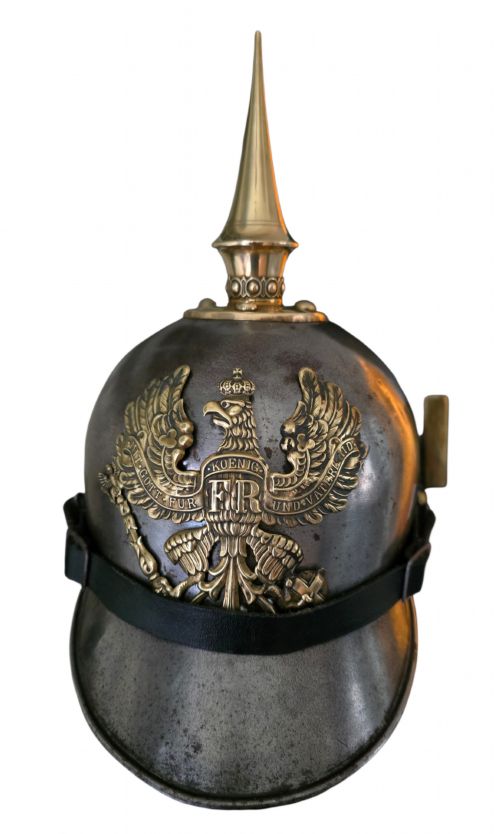


Antique Pickelhaube Helmet
These antique pickelhaube helmet pieces are spiked military headgear carrying Imperial German and 19th Century military style, prized for authentic period history.
Antique Pickelhaube Helmet
When you search for an antique pickelhaube helmet, you encounter spiked military headgear originating from nineteenth and early twentieth century campaigns. The selections on this page centre on military helmets and headgear carrying Imperial German and Kaiserreich styles.
You meet examples spanning the nineteenth century up to the First World War period, including items associated with Prussian infantry and pionier battalions. These forms reflect the official military equipment of historical European armed forces.
How they were made
Construction relies heavily on leather, boiled leather, and steel bodies shaped to form the protective shell. Artisans fitted these structures with brass trim, silver plate, and metal front plates to designate regiment and rank.
Additional components such as horsehair appear on specific military headgear configurations. The joining of these metal and organic materials creates the distinctive profile characteristic of the period.
The listings on this site feature periods ranging from the nineteenth century through to nineteen eighteen, utilising materials such as boiled leather, brass, and steel.
What varies in quality
The distinction between standard service pieces and officer variants lies in the refinement of the metal fittings and plate details. Better examples maintain the original integrity of the leather body and secure attachment of the spike.
Variations in quality also depend on whether the helmet retains its original regimental plates, brass elements, and internal components without later replacement or extensive restoration.
The Antique Pickelhaube Helmet Glossary
- Pickelhaube
- A spiked military helmet worn by nineteenth and early twentieth century German military forces. It is the defining piece of headgear for this search phrase.
- Kaiserreich
- The German Empire period spanning from eighteen seventy-one to nineteen eighteen. Items from this era reflect Imperial military standards.
- Boiled leather
- Leather treated by heating in water or wax to make it stiff and durable. This material formed the primary structural shell for many helmets.
- FR Eagle Plate
- The front plate insignia displayed on certain Prussian military helmets. It denotes specific royal ciphers and regimental identity.
Antique Pickelhaube Helmet: Frequently Asked Questions
What is a pickelhaube helmet?
A pickelhaube is a spiked military helmet primarily associated with the German military during the nineteenth and early twentieth centuries. These pieces served as standard issue and officer headgear.
They reflect the formal military dress and field equipment of the period, characterised by a prominent vertical spike atop a leather or steel body.
How do you date a pickelhaube?
Dating relies on examining the construction materials, such as the shift from boiled leather to steel in later periods. Regimental markings and the style of the front plate also indicate specific manufacturing eras.
Changes in metal fittings and imperial ciphers help narrow the timeframe between the nineteenth century and the First World War.
What materials were used?
The primary body construction utilised leather or boiled leather, while later examples incorporated steel shells. Fittings and spikes were predominantly brass or silver plated.
Certain configurations also integrated horsehair into the design for specific military units and dress occasions.
Were there different versions for officers?
Officer helmets featured finer materials and more ornate metal fittings compared to other ranks configurations. These variants often displayed higher quality silver plate and detailed regimental insignia.
Standard soldiers typically wore simpler leather or steel helmets built for field durability rather than parade display.