


Antique Pet Artwork
These antique pet artwork pieces capture beloved animals in oil, watercolour, and pastel, offering a tangible connection to historical companions.
Antique Pet Artwork
When you search for antique pet artwork, you encounter representations of dogs, cats, rabbits, and birds rendered across several centuries. The selections span major periods from the Regency era through the mid-twentieth century, capturing the deep bonds between owners and their animals.
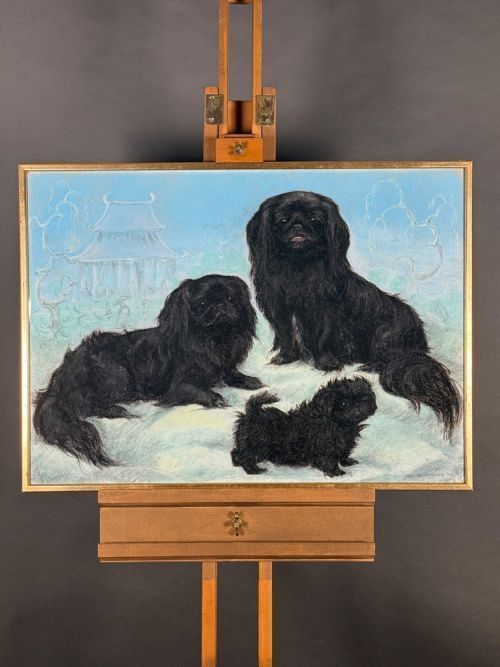
You are most likely to meet nineteenth-century oil paintings on canvas or board, alongside Victorian genre pieces and early twentieth-century watercolours. These works range from intimate studies of Pekingese dogs and Persian kittens to large-scale portraits of prized greyhounds and spaniels.
Portraits of individual animals sit alongside narrative scenes, such as children with dogs in cottage gardens or cats gathered for a tea party. The subjects include named champions and cherished domestic pets alike, recorded with distinct regional and stylistic variations.
Materials and Techniques
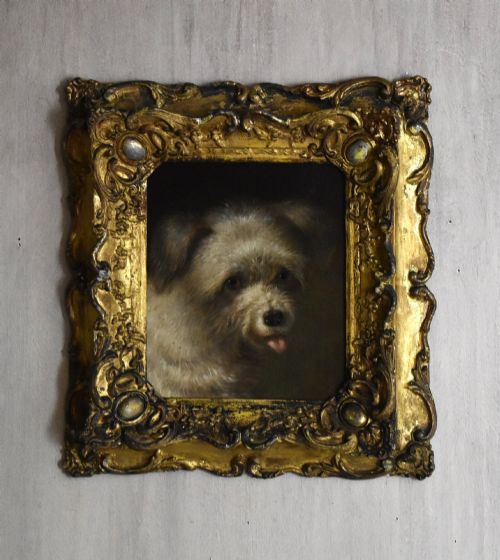
Artists relied primarily on oil paint applied to canvas, wood panels, or millboard, building up rich textures to render fur and light. Watercolour and pastel on paper appear frequently in domestic scenes and rapid studies, offering a lighter touch.
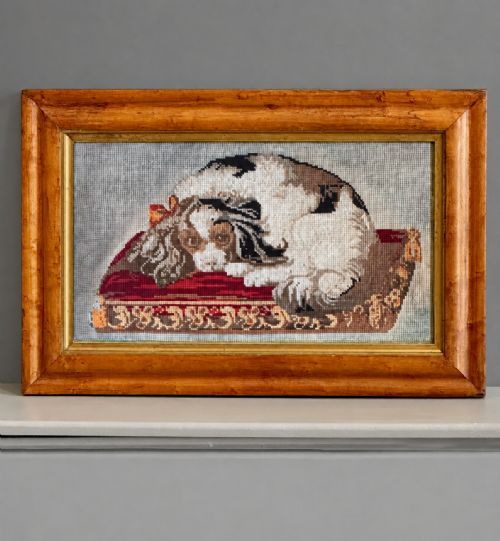
Many works retain their period framing, including giltwood moulding and burr maple frames that complement the painting style. Textile pieces utilise needlework techniques like Berlin wool work to recreate specific dog breeds in thread.
Several cats appear in the middle of a tea party.
Assessing Quality and Execution
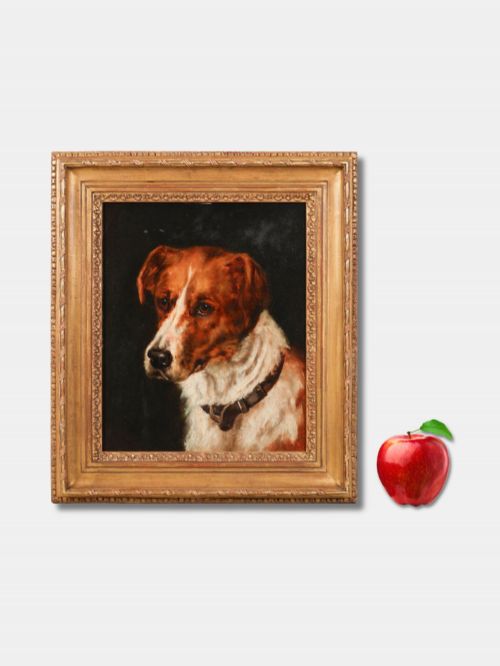
Quality rests upon the artist's command of anatomy, expression, and light, distinguishing a master observation from a stiff provincial record. Skilled handling of oil paint brings realism to the texture of a coat and the alert posture of a terrier.
Condition and originality also define the standard, particularly the preservation of the paint surface and the retention of the original period frame. Works attributed to documented painters or specific regional schools often display superior composition and draughtsmanship.
Martin Theodore Ward·William Barraud·Agnes Augusta Talboys·Christian Lindner·John Henry Dell·Valentine Thomas Garland·Florence Mabel Hollams·Philip Eustace Stretton·Arthur Claude Strachan·Samuel John Carter·Henry John Sylvester Stannard·Frank Owen Salisbury
The Antique Pet Artwork Glossary
- Berlin work
- A type of nineteenth-century needlework using brightly coloured wools on canvas, often following a printed grid pattern to depict animals.
- Giltwood
- Wood that has been coated with a thin layer of gold leaf, commonly used for traditional picture framing during the Victorian and Regency periods.
- Genre painting
- Artwork that depicts aspects of everyday life, frequently featuring domestic pets interacting with children or owners in domestic interiors.
- Chromolithograph
- A multicolour planographic printing technique used to reproduce original artworks commercially during the Victorian era.
- Pastel
- A dry medium of powdered pigment used for drawing on paper, valued for its soft texture and blended colour transitions.
Antique Pet Artwork: Frequently Asked Questions
What periods do these pieces date from?
The inventory spans the Regency era through the mid-twentieth century, with a strong concentration of Victorian and Edwardian works.
Dates are established through stylistic markers, signatures, and framing methods typical of specific decades.
How should I care for an oil painting?
Keep paintings away from direct sunlight and fluctuating humidity to protect the canvas and wood panel from warping or cracking.
Dust the surface gently with a dry, soft brush and avoid using liquid cleaners on the paint or giltwood frame.
Are watercolours safe to hang in light?
Watercolours and pastel drawings on paper are sensitive to ultraviolet light and can fade if placed in bright, direct sunshine.
Display these works on interior walls away from windows using conservation-grade glass for added protection.